

One coordinated build scope · clear customer approvals
Turnkey PCB Assembly Services
Turnkey PCB assembly combines bare-board fabrication, component procurement, PCB assembly and the agreed inspection or test plan under one coordinated order. Full turnkey means the supplier sources the boards and components. Partial turnkey means the customer consigns selected items while the supplier manages the rest.
The benefit is not simply fewer purchase orders. A well-defined turnkey workflow creates one controlled handoff for PCB data, BOM revisions, placement files, assembly drawings, approved substitutions, inspection evidence and delivery quantities. OrinewPCB reviews that package before confirming scope, cost or schedule.
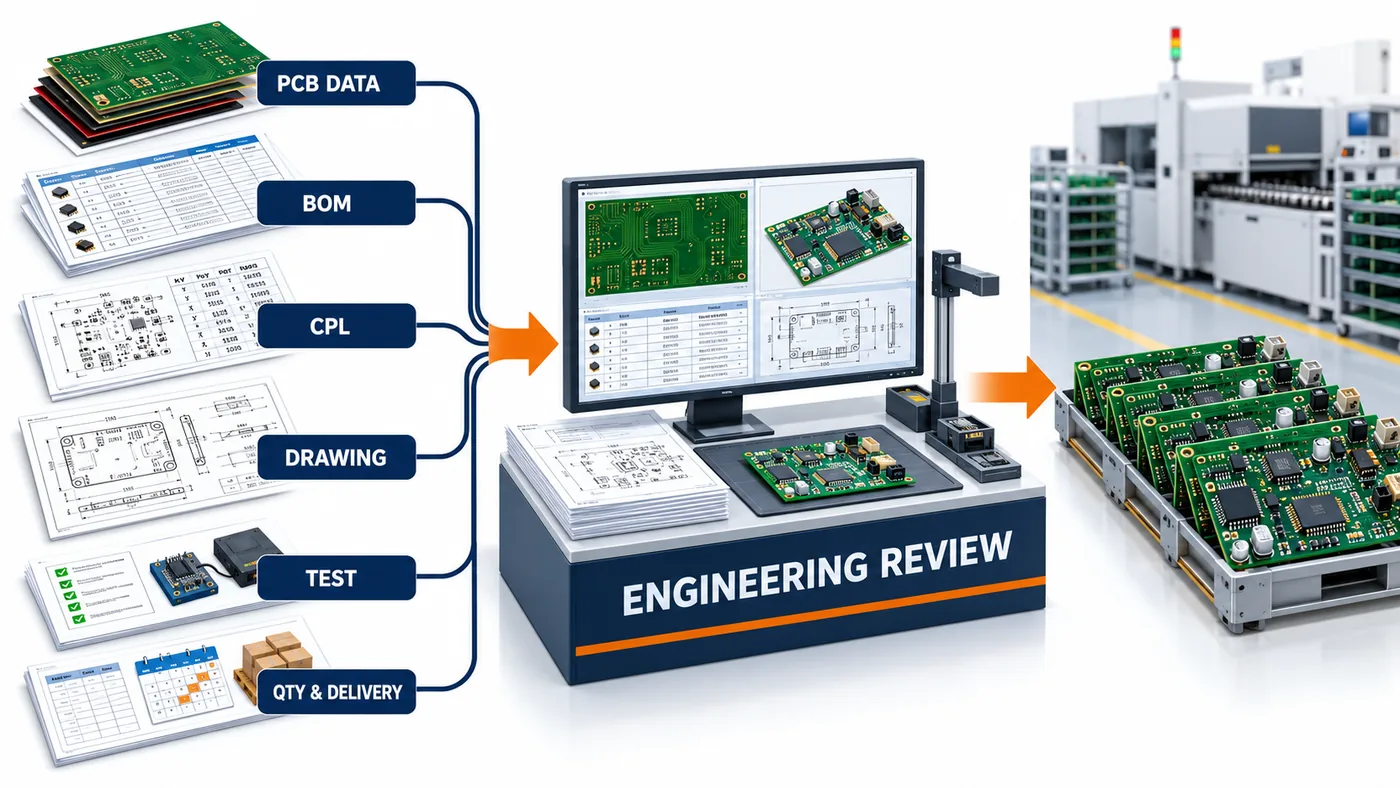
One revision-controlled data package
Fabrication, BOM, placement, drawings and test files must identify the same released revision.
No unapproved part changes
Exact manufacturer part numbers and allowed alternates are defined before procurement.
Testing is scoped, not assumed
The quotation names the inspection and test evidence supported by the design and supplied fixtures.
Choose the sourcing model
Full turnkey, partial turnkey or consigned assembly?
The best model depends on control of critical components, available inventory, engineering-change risk and the amount of procurement coordination your team wants to retain. The responsibility matrix below should be part of the quotation—not an assumption made after the order.
| Scope item | Full turnkey | Partial turnkey | Consigned assembly |
|---|---|---|---|
| Bare PCB fabrication | Supplier manages from released PCB data. | Supplier or customer, as stated in the quote. | Customer usually supplies finished bare boards. |
| Electronic components | Supplier sources the approved BOM. | Customer supplies named critical or special items; supplier sources the balance. | Customer supplies the complete kit and shortage allowance. |
| Assembly processing | Supplier manages the agreed SMT, through-hole and secondary operations. | Same, with incoming controls for customer-supplied material. | Supplier assembles the supplied kit under the released instructions. |
| Material risk | Shared through BOM review and customer approval of unlisted alternates. | Split according to who supplies each line item. | Customer retains sourcing and kit-completeness risk. |
| Best fit | Teams seeking one coordinated fabrication, sourcing and assembly order. | Projects with controlled, programmed, scarce or customer-owned parts. | Teams that already control all material and need assembly capacity. |
Turnkey projects can include both SMT assembly and through-hole assembly. The routing is selected from component packages, board design, volume, soldering constraints and any manual operations identified on the assembly drawing.
Controlled handoff
How the turnkey PCBA workflow is reviewed
-
Package and revision review
Gerber or ODB++, drill data, fabrication drawing, BOM, centroid data, assembly drawings and test files are checked for matching identifiers and obvious conflicts.
-
PCB and assembly DFM
The PCB manufacturing data and assembly data are reviewed together for stackup, panelization, stencil access, component orientation, clearances and process constraints.
-
BOM risk and sourcing review
Each line is checked for an orderable manufacturer part number, lifecycle or availability concern, approved alternates and customer-supplied responsibility.
-
Quote and approval log
The quotation identifies included operations, material assumptions, open questions and requested evidence. Any deviation or proposed substitution is resolved before use.
-
Build, inspection and release
Boards are assembled to the released package. Inspection, programming and test steps are performed only to the agreed plan, with nonconforming results routed for disposition.
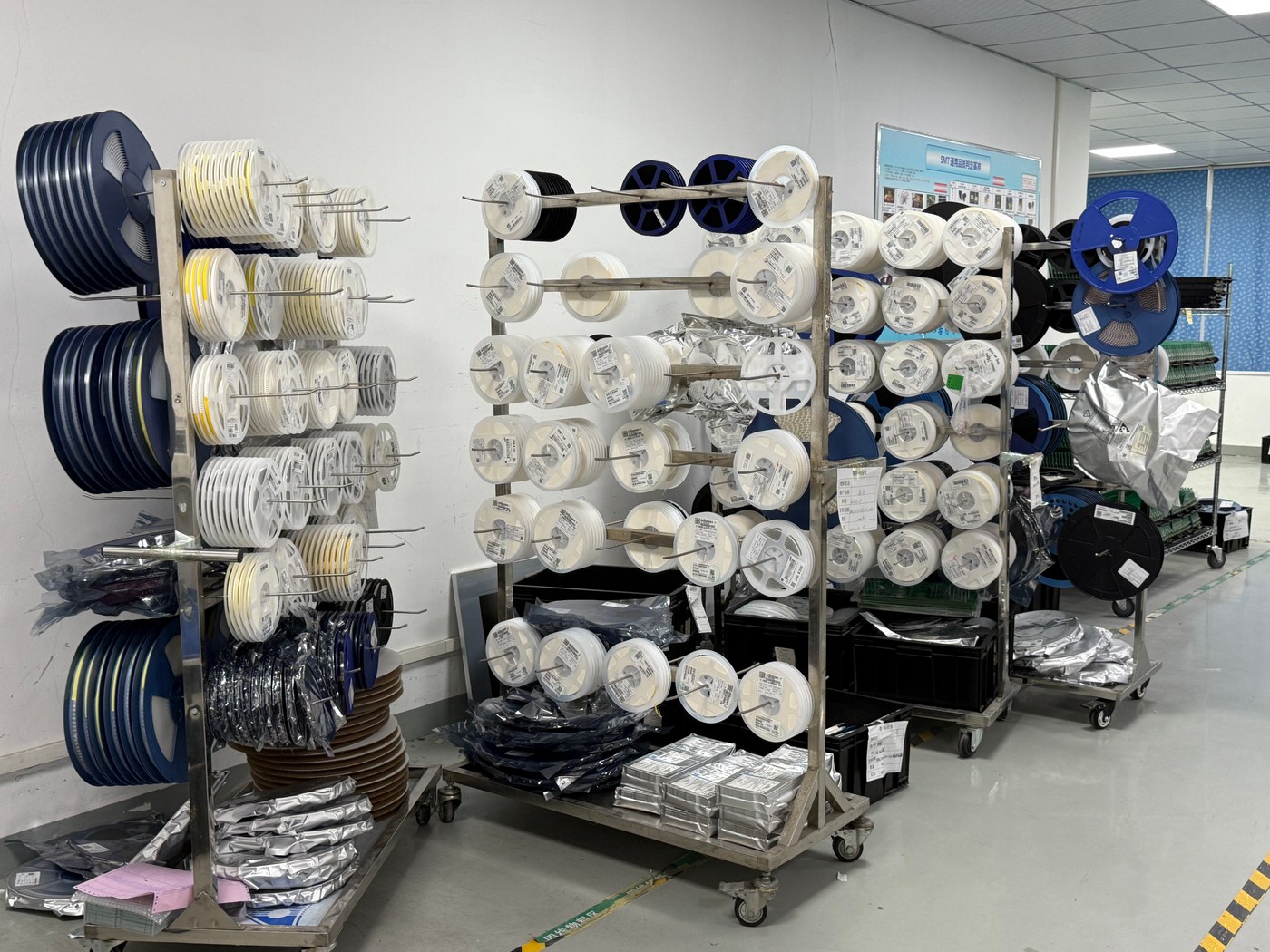
Procurement without silent design changes
BOM sourcing, substitutions and customer approvals
A turnkey supplier can coordinate purchasing, but the customer still owns design intent. The BOM should state the exact manufacturer part number, description, reference designators, quantity per board, approved alternates and any no-substitution rule. Distributor stock codes alone are not a durable design definition.
Exact part identity
Use manufacturer name and complete part number, including package, value, tolerance, voltage, temperature or programming variant where those attributes matter.
Controlled alternates
List pre-approved equivalents when available. A new proposal should show the compared electrical, mechanical, environmental and lifecycle attributes before customer approval.
Customer-supplied items
Identify consigned lines, expected quantity, overage, delivery date, packaging, moisture or ESD handling needs and the action for shortages or damaged material.
Approval rule: a quotation note is not a blanket authorization to change components. Record the approved alternate, affected BOM revision and applicable build quantity before the material is released to production.
| BOM condition | Required decision | Evidence to retain |
|---|---|---|
| Exact MPN available | Confirm package, quantity, date or lot restrictions and source requirements. | Purchase and receiving records defined by the order. |
| Approved alternate listed | Use only within the BOM rule and released revision. | BOM line and build traveler showing the selected part. |
| Unlisted alternate proposed | Hold for engineering comparison and customer approval. | Comparison data, written approval and revision or deviation reference. |
| Customer-supplied shortage | Stop, reduce build quantity or obtain approved replenishment instructions. | Receiving count and customer disposition. |
| Obsolete or high-risk part | Review redesign, lifetime buy or qualified alternate options. | Risk decision tied to the affected product revision. |
Fabrication through release
PCB fabrication, assembly and inspection remain separate controlled steps
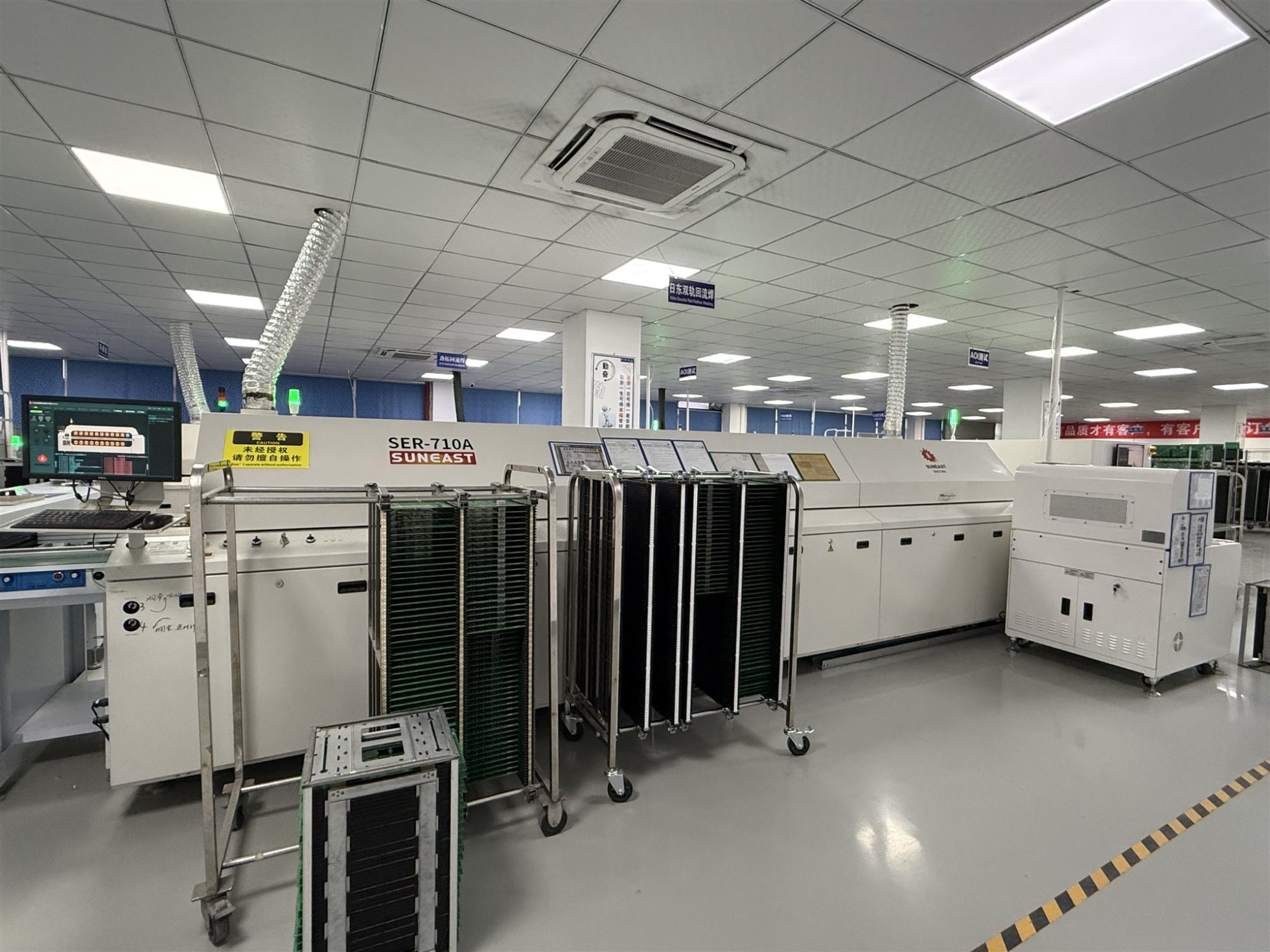
Turnkey does not collapse every technical decision into one generic service. Bare boards must first meet the released fabrication package. Assembly then follows the stencil, placement, soldering and secondary-operation route appropriate to the design. The broader PCB assembly service scope can include mixed-technology builds when confirmed in the quotation.
Inspection and test methods answer different questions. Visual inspection and AOI can examine visible assembly features. X-ray can support evaluation of selected hidden joints. In-circuit or flying-probe methods depend on electrical access and program development. Functional testing depends on customer-defined behavior, fixtures, software, limits and safe operating instructions.
For repeatable machine processing, see the automated PCB assembly workflow. Automation can improve process control, but it does not replace first-article review, engineering change control or the required disposition of abnormal results.
Evidence matched to risk
Define inspection and testing before the quote is approved
“Tested” is not a complete requirement. State what must be checked, at which stage, with which fixture or program, what result is acceptable and what should happen when a unit fails. This prevents a commercial assumption from becoming an engineering gap.
| Method | Typical evidence | Planning dependency |
|---|---|---|
| Incoming and first-article review | Material identity, package condition, orientation and initial build confirmation. | Released BOM, assembly drawing and defined approval authority. |
| Visual inspection or AOI | Visible placement, polarity and solder-feature observations within method capability. | Programming, view access, acceptance criteria and review of false calls. |
| X-ray inspection | Images of selected hidden or bottom-terminated joint regions. | Named components, image criteria, sample plan and disposition rules. |
| Electrical or in-circuit test | Continuity, shorts or accessible node/component checks as programmed. | Test access, netlist, fixtures or probes and validated limits. |
| Functional test | Behavior at defined inputs, outputs and operating conditions. | Fixture, firmware, safe power-up procedure, limits and failure handling. |
A PCB prototype assembly can be used to validate the package and test concept before a larger release. Prototype acceptance does not automatically approve later BOM, PCB or firmware changes; those changes must be recorded and reviewed.
Prototype-to-production handoff
Convert prototype learning into a controlled production release
A prototype build is useful only when its decisions are captured. Before a repeat order or volume increase, reconcile what was quoted, what was actually built and what the engineering team now approves. The next order should not depend on email history or an operator remembering an informal correction.
Close open deviations
Record temporary wire changes, hand modifications, alternate components, polarity corrections, stencil adjustments and special rework. Either incorporate each accepted change into released data or identify it as a controlled exception with a defined expiry.
Freeze the build baseline
Confirm the PCB revision, BOM revision, placement file, assembly drawing, firmware, programming instruction and test limits that together define the approved unit. Remove superseded files from the release package so they cannot be selected accidentally.
Review scale-dependent needs
Higher quantities can change panel utilization, material purchasing, feeder setup, stencil strategy, fixture requirements, sampling and packaging. Requote the controlled package when those conditions change instead of assuming prototype routing and cost will transfer unchanged.
For partial-turnkey programs, also reconcile remaining customer-owned inventory by part number and usable quantity. Define whether it will be returned, held for the next build or consumed under a specific revision. This prevents old material from entering a later engineering change without review.
Quote from complete build data
What to send for a turnkey PCB assembly quote
Send one revision-controlled package and name the commercial model—full turnkey, partial turnkey or consigned. If a file is preliminary, mark it clearly so it is not mistaken for production release data.
- PCB data: Gerber or ODB++, drill files, stackup and fabrication drawing
- BOM: MPNs, references, quantities, approved alternates and DNP lines
- Placement: centroid or pick-and-place file with units and origin
- Assembly drawings: polarity, orientation, side, variant and special-process notes
- Commercial data: quantities, lot splits, delivery destination and packaging needs
- Test data: inspection plan, firmware, fixtures, limits and failure disposition
Cost and schedule drivers
- PCB construction, panelization and fabrication complexity
- Component availability, minimum order quantities and approved sources
- SMT, through-hole, manual and secondary operations
- Stencil, fixture, programming and test-development needs
- Inspection evidence, sample plan and documentation requirements
- Open engineering questions and time needed for customer approvals
The confirmed quotation should state assumptions and exclusions. A fast response to open BOM and DFM questions is often more important than an unsupported generic lead-time claim.
Frequently asked questions
Turnkey PCB assembly FAQ
What is turnkey PCB assembly?
Turnkey PCB assembly places PCB fabrication, component sourcing, assembly and the agreed inspection or test scope under one coordinated order. The exact scope still has to be defined in the quotation and build package.
What is the difference between full and partial turnkey PCB assembly?
In a full-turnkey project, the supplier sources the bare boards and components as well as assembling them. In a partial-turnkey project, the customer supplies selected boards, components or special items while the supplier manages the remaining scope. A responsibility matrix should identify every customer-supplied item.
Which files are needed for a turnkey PCBA quote?
Send fabrication data such as Gerber or ODB++, drill files and the PCB drawing; a revision-controlled BOM; centroid or pick-and-place data; assembly drawings; quantities; and the required inspection, programming and functional-test information. Add approved-vendor or no-substitution rules where applicable.
Will components be substituted automatically?
No substitution should be treated as automatic. The BOM should identify the exact manufacturer part number and any approved alternates. A proposed unlisted alternate should be supported by comparison data and approved by the customer before use.
Does turnkey PCB assembly include functional testing?
Only when functional testing is included in the agreed scope and the customer supplies usable test requirements, fixtures, software, limits and disposition rules. Visual inspection, AOI, X-ray, in-circuit test and functional test provide different evidence and are not interchangeable.
Can a prototype move into production under the same turnkey workflow?
Yes, but the prototype package should be converted into a controlled production release. Record approved BOM changes, PCB revisions, assembly notes, test limits, programming files and open deviations before ordering the next lot.