


What is a High-Tg PCB
Glass transition temperature (Tg) is the temperature at which a substrate transitions from a glassy, rigid state to a rubbery state.High Tg boards are specifically designed to operate at high temperatures.A PCB is considered a high Tg board if its Tg is higher than 180 °C.

Thermal material selection based on the actual fabrication and assembly exposure
High-Tg PCB manufacturing uses a laminate whose glass-transition behavior is selected for the board’s thermal exposure, construction and reliability requirements. A high-Tg PCB is not automatically a high-temperature product, and Tg alone does not describe decomposition behavior, expansion, moisture response or long-term operating suitability. The material designation, stackup, copper distribution, via structure, assembly profile and expected service environment must be reviewed together.
OrinewPCB can review high-Tg PCB fabrication data and coordinate the board with 100% new and original component sourcing, assembly and project-specific testing. This one-stop approach is useful when the laminate choice is driven by repeated reflow, board thickness, copper mass or a demanding assembly process rather than by a standalone material label.
When should you choose High-Tg PCB?
The correct route is the simplest construction that satisfies the released electrical, mechanical, thermal, compliance and assembly requirements. Use the comparison below to define why this board type is necessary before specifying details.
| Route | Use it when | Release decision |
|---|---|---|
| Standard-Tg FR-4 | The approved material meets fabrication, reflow and service requirements | Do not upgrade solely for marketing language |
| Mid/high-Tg FR-4 | Thermal processing or dimensional stability needs more margin | Approve the exact material and relevant properties |
| High-Tg heavy-copper build | Copper mass and thermal cycling increase fabrication and assembly stress | Review resin, copper balance, vias and reflow together |
| Special high-temperature material | The service environment exceeds what Tg-based FR-4 selection can establish | Use a requirement-led material evaluation |
High-Tg PCB design and DFM controls
The most useful DFM review checks the features that control fabrication and assembly risk, rather than comparing the design with a generic capability list.
Do not specify Tg alone
Include the exact material or approved equivalence criteria and the properties that control the application.
Review z-axis expansion and vias
Board thickness, aspect ratio, copper plating and thermal cycling influence interconnect reliability.
Coordinate the reflow profile
High-Tg material does not remove the need to control soldering temperature, time above liquidus and repeated cycles.
Balance copper and resin
Dense copper areas and resin-starved regions can create fabrication risk in thick or thermally demanding builds.

How the manufacturing route is reviewed
A reliable build keeps the requirement, material, fabrication data and acceptance evidence connected through the release process. The exact operations vary with construction, but the following gates should be explicit.
- Thermal requirement review: Define fabrication, assembly and service exposures separately.
- Material approval: Select the laminate using the required properties and evidence.
- Stackup review: Check resin, copper distribution, dielectric and finished thickness.
- Fabrication control: Apply the approved lamination, drilling and plating route.
- Assembly-profile review: Confirm the board and component mix can use the planned soldering process.
- Acceptance evidence: Define the board and PCBA checks needed for release.
Files to send for an engineering review
Every file should identify the same board revision. A complete package shortens clarification time and makes price, material and delivery assumptions visible before production.
| Input | Required detail | Decision supported |
|---|---|---|
| Fabrication data | Gerber, ODB++ or IPC-2581 plus NC drill and board outline | Layer interpretation, holes, profile and DFM review |
| Stackup and materials | Layer order, finished thickness, copper, material and approved-equivalent rules | Construction and material proposal |
| Special requirements | Impedance, mechanical, compliance, finish, marking or documentation needs | Process selection and quotation scope |
| Assembly package | BOM, CPL, assembly drawing, variants and substitution rules when PCBA is required | Original-part sourcing and assembly planning |
| Test and delivery | Acceptance method, required evidence, quantity and target delivery | Inspection, test and schedule basis |
When the release package is ready, share the fabrication files and assembly inputs for a combined engineering review. OrinewPCB can then identify open DFM, material, sourcing and test questions before confirming the quotation scope.
High-Tg PCB in one-stop PCB assembly
High-Tg material can provide thermal-processing margin, but the assembled board still depends on component ratings, solder joints, copper distribution, mechanical support and the real operating environment. The one-stop PCB assembly service lets the laminate, original component BOM, assembly profile and acceptance plan be reviewed together.
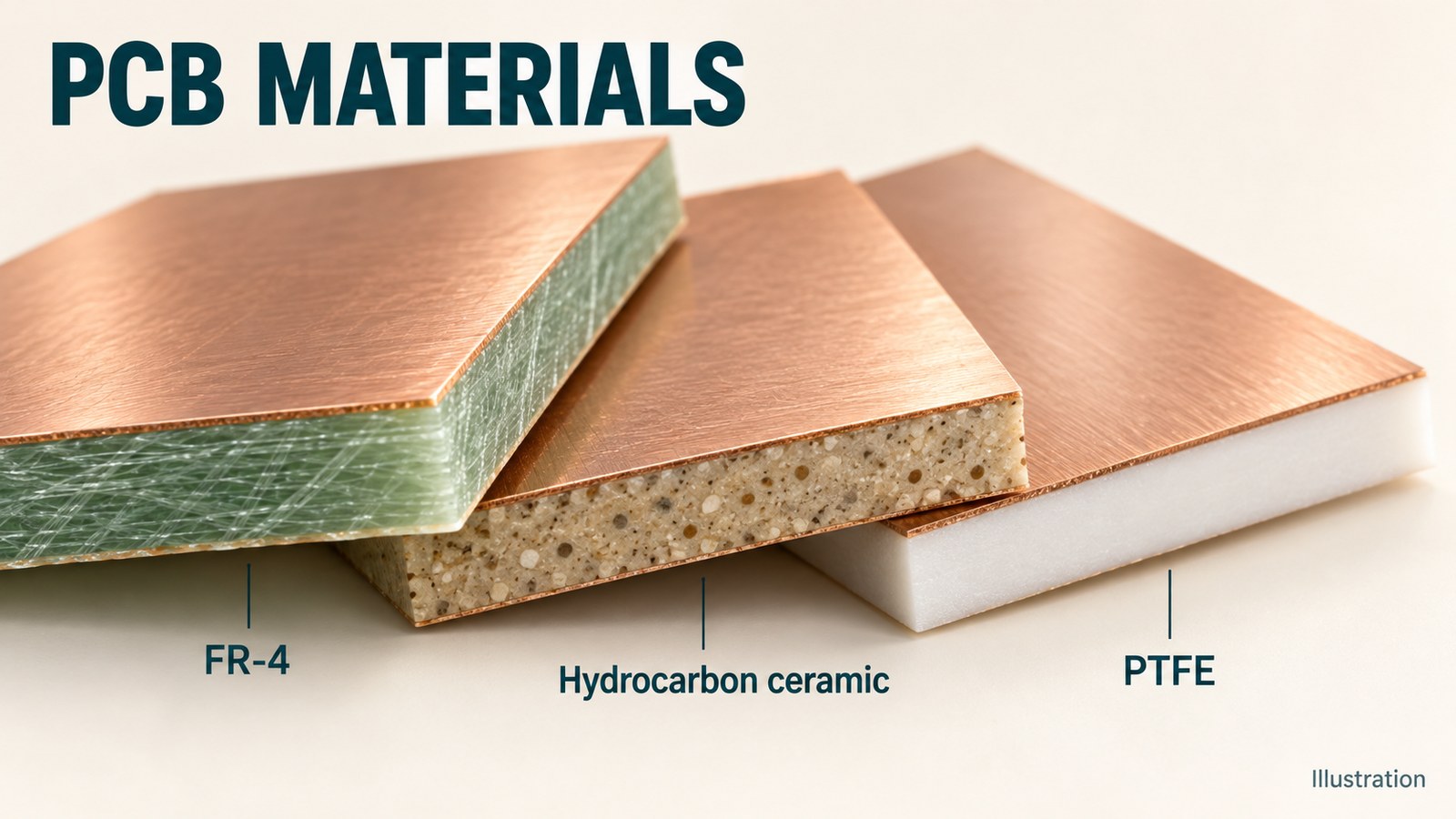
Review the FR-4 PCB material guide, compare halogen-free PCB requirements, and use the PCB manufacturing service to coordinate the wider build.
Quality, cost and lead-time factors
OrinewPCB uses a nine-step quality and test control framework that links release review, materials, fabrication, assembly and final verification. The actual inspection and test methods are selected for the board and customer-defined acceptance scope; not every board needs every method.
High-Tg PCB cost and delivery depend on the approved material, stock availability, layer count, thickness, copper weight, via structure, finish, quantity and required records. An exact material requirement helps sourcing; an unnecessarily narrow brand rule may reduce alternatives and lengthen the schedule.
- Resolve missing or conflicting data before material is committed.
- Keep approved substitutions and evidence requirements in the released order.
- Confirm panel, tooling and assembly constraints together when PCBA is included.
- Plan delivery as early as practical after material, process and test inputs are reviewed.
High-Tg PCB FAQ
What is a high-Tg PCB?
It is a PCB made with a laminate selected for a higher glass-transition requirement than a standard material, within a defined construction and process.
Does higher Tg always mean better reliability?
No. Reliability also depends on decomposition behavior, expansion, moisture, stackup, vias, copper, assembly profile and service conditions.
When should high-Tg FR-4 be considered?
Consider it when repeated reflow, board thickness, copper mass, dimensional stability or the product environment requires additional thermal margin.
Can high-Tg boards be assembled in one order?
Yes. Fabrication, original component sourcing, assembly and the agreed inspection or test scope can be coordinated as one project.
Plan the next build from one controlled data set
The board construction, component BOM, assembly revision and acceptance plan should describe the same product. This reduces supplier handoffs and makes engineering decisions easier to trace across prototypes, small-to-medium batches and high-mix production.
If the project is ready to move forward, provide the released PCB data, BOM, quantities and test requirements for the next-build review. The returned scope can address fabrication, 100% new and original component sourcing, assembly, testing and the earliest practical delivery plan together.