

Aluminum PCB: material and manufacturing decisions
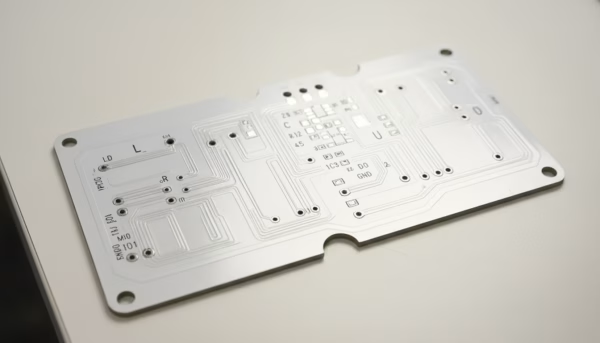
An aluminum PCB is a metal-base circuit board that combines a circuit layer, an electrically insulating dielectric and an aluminum backing in a common construction. Its thermal performance depends on the complete path from the component through the board into the heat sink or chassis. The metal base alone does not establish LED junction temperature, insulation performance or allowable power. Specify the dielectric system, copper, base thickness and mounting interface together.
Specify the construction before comparing suppliers
For an aluminum LED PCB, start from the LED package, operating current, thermal pad and allowable temperature. Review solder-mask openings, polarity, mounting holes, flatness, edge clearances and the interface material used at the heat sink. A dielectric conductivity value does not describe the thermal resistance of the complete board. Thicker dielectric may affect isolation and heat flow differently; use supplier data for the exact construction and verify the finished product under its intended conditions.
| Design route | Decision | What to confirm |
|---|---|---|
| LED lighting board | LED footprint and junction-to-heat-sink path | Confirm pad geometry, polarity and mounting |
| Power electronics | Heat sources and isolation requirements | Review dielectric system, copper and exposed metal edges |
| Enclosure-mounted board | Thermal interface and mechanical datum | Define flatness, screw holes and contact conditions |
| Assembled aluminum board | Paste, reflow and test access | Plan fixtures and controlled power-up before release |
Compare related routes when the design needs a different balance of electrical, thermal and mechanical performance: metal core PCB construction comparisons; LED PCB board design requirements; ceramic substrate alternatives. Material selection should close against an approved drawing, not a generic capability list.
For a construction assessment, share the stackup, fabrication data and application constraints with quantities and the target date. The review can identify open material, geometry and manufacturing questions before a combined quotation is prepared.
Aluminum PCB assembly and original component sourcing
Aluminum PCB assembly combines the electrical layout with a board that can draw heat away during soldering. Thermal mass, LED pads, connectors and large copper regions need a coordinated stencil and reflow plan. State component polarity, LED bins when required, programming needs and the handling requirements for exposed metal surfaces. The aluminum PCB manufacturer should receive the mechanical interface information as well as Gerber data, so fabrication and assembly do not make conflicting assumptions about mounting or cooling.
OrinewPCB focuses on one-stop PCB assembly, particularly small-to-medium batches and high-mix builds. The turnkey PCB assembly workflow connects board fabrication, 100% new and original component sourcing, assembly and the agreed tests. Manufacturer and distributor relationships support BOM pricing and material planning; exact availability, approved alternates and delivery dates are confirmed for each released revision.
Quality evidence and the nine-step workflow
OrinewPCB uses a nine-step quality and test workflow. The project plan must specify the actual inspections, electrical tests, programming and functional checks that apply to the build. Do not treat a generic test count as evidence that every possible test is performed on every product. Record the acceptance criteria, inspection coverage, required documentation and any agreed sampling plan before production begins.
Keep PCB, BOM, placement and assembly drawing revisions consistent. Record approved substitutions against exact manufacturer part numbers, and separate customer-supplied parts from sourced parts. High-mix programs need clear variant quantities, do-not-populate positions and firmware versions so similar boards do not enter the wrong assembly or test route.
Cost, delivery and the complete build package
Material availability, board size, panel utilization, copper, holes, surface finish, assembly tooling and test preparation all contribute to cost and lead time. The earliest practical delivery depends on resolving these inputs together. A bare-board price cannot represent a finished PCBA price unless components, assembly and testing are explicitly included.
For an assembled-board assessment, supply Gerber or ODB++ data, the fabrication drawing, BOM with manufacturer part numbers, pick-and-place data, assembly drawings, quantities, variant details and the required test limits. Identify the intended environment and any special evidence requirements. This allows purchasing and engineering decisions to be reviewed before materials are committed.
Aluminum PCB purchasing question
Is aluminum PCB the same as heavy copper PCB?
No. Aluminum describes the metal base in a thermal construction. Heavy copper describes thicker circuit copper and can be used in a different board structure.
The right construction is the one that meets the released electrical, thermal, mechanical and acceptance requirements. When the project is ready to proceed, provide the coordinated fabrication and assembly files so OrinewPCB can review the complete PCBA scope and material schedule together.