
BOM Alternate Approval: Verify the Part and Control the Release
Table of Conent
Table of Conent
A BOM alternate is not approved simply because a distributor suggests it or an engineer adds it to a spreadsheet. Approval needs an exact device identity, a comparison against the circuit and assembly requirements, appropriate verification, and a clear statement of where the decision applies.
A useful process lets procurement investigate availability without silently changing the production design. Keep candidate selection separate from release authority. This guide explains the review record that hardware, purchasing, quality, and assembly teams can use to resolve a substitution before parts reach the line.
Define which kind of change is proposed
Start by distinguishing a different source for the same approved device from a different manufacturer part number. A changed distributor, delivery carrier, device grade, package, or electrical specification can require different review steps. The proposal should say exactly what changes and what is intended to remain unchanged.
Altium’s ActiveBOM substitute-component guidance distinguishes part-choice solutions from alternate parts with different specifications. That software distinction is useful for organizing data. It does not replace the application’s own engineering and release decision.
Do not use a loose description such as “equivalent resistor” or “same IC.” Record the existing approved manufacturer and complete orderable part number, the candidate identity, the affected references, and the board and BOM revisions. Preserve distributor identifiers separately from manufacturer identities.
Write the requirement before comparing the candidate
Define what the original part must do in the actual product. Include relevant operating conditions, required functions, interfaces, tolerances, mechanical limits, and assembly constraints. Comparing catalog headline values without this context can miss the characteristic that mattered to the design.
Use current manufacturer documentation for both devices. Record document revisions and the specific parameters reviewed. If information is absent or ambiguous, leave that comparison unresolved and request clarification. Do not treat an empty specification field as evidence that the candidate meets the requirement.
Texas Instruments’ logic cross-reference notice warns that cross-reference information does not establish exact interchangeability in every application. The document is historical; its useful lesson here is to check the applicable current data sheets rather than using an old table as a present-day qualification list.
A cross-reference result can start the search. It should not end the review. Keep the reason the candidate was proposed, the source of that suggestion, and the remaining comparisons in the approval record so reviewers can distinguish evidence from an initial recommendation.
Compare function and electrical behavior
Review parameters that affect operation across the specified conditions, not only at one nominal point. Depending on the part, this may include supply range, input and output behavior, tolerance, timing, current capability, startup behavior, or protection characteristics. Select relevant checks rather than copying every data-sheet row.
Keep operating specifications and stress limits distinct. A candidate having a larger advertised maximum does not by itself prove that the product’s normal operating requirements are met. Record why the proposed margin or difference is acceptable in the actual circuit.
For programmable or interface devices, identify firmware, configuration, register, and initialization dependencies where applicable. Similar function names do not establish the same software behavior. Involve the responsible firmware engineer when the change can affect that interface.
A hypothetical example is an alternate logic device that appears to provide the same function but requires review of input compatibility and timing under the product’s supply conditions. The comparison must address those conditions before the purchasing recommendation becomes a release decision.
Need an alternate review? submit the approved BOM, exact candidate part numbers, current data sheets, affected references, operating requirements, and build quantities for engineering and quotation review. Identify which questions still need design-owner approval.
Check pins, footprint, and mechanical fit
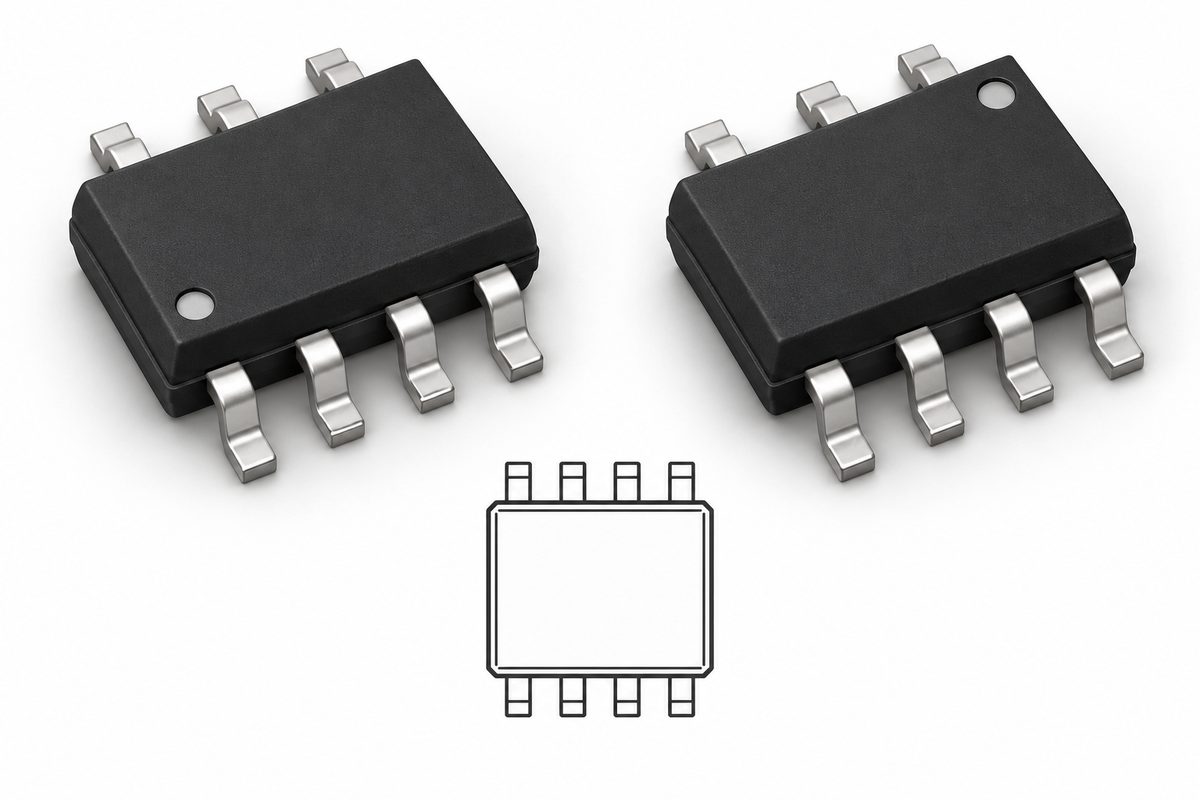
Compare the actual package drawings and pin assignments. Confirm body dimensions, terminal geometry, pin numbering, polarity, orientation, and any exposed-pad requirements relevant to the design. A shared package abbreviation is not enough to establish compatibility with the released footprint.
Review the footprint relationship against the candidate drawing rather than relying on visual similarity. Include relevant enclosure and neighboring-component clearance. If the candidate changes physical fit or land-pattern requirements, identify the design changes instead of calling it a drop-in replacement.
Confirm placement and assembly documentation where orientation matters. A manufacturing team should not have to infer which pin-one mapping was approved from a catalog photograph. Preserve the comparison and any accepted changes with the board revision.
Review the production consequences
A technically acceptable device still needs an agreed production route. Check incoming carrier, feeder presentation, placement setup, soldering requirements, handling controls, and any inspection or programming changes. Keep these questions distinct from the electrical comparison.
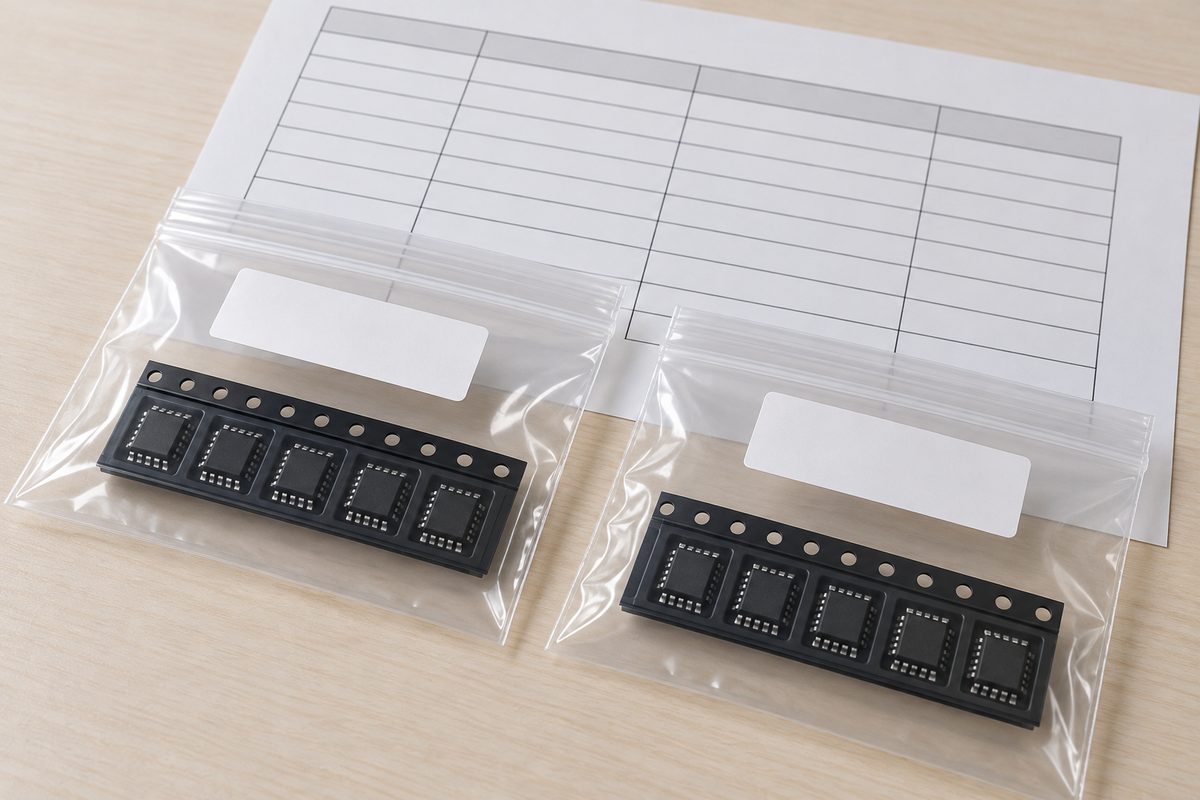
The component-carrier and kit guide explains why reel, cut-tape, tray, and tube choices need coordination. A different delivery format can change preparation even when the manufacturer device is unchanged. Record who will resolve any carrier-transfer or short-strip exception.
Preserve device-specific moisture and ESD handling information with the supplied material. Do not approve a candidate and then discard the incoming labels needed to identify its lot or handling status. Repackaging should maintain that identity trail through receiving and setup.
Check whether supplier, lifecycle, or quality requirements constrain the choice. Product contracts may require approved sources, specific grades, or additional documentation. Identify those obligations with the responsible team; a successful bench test does not waive them.
Select verification that addresses the differences
Turn each meaningful difference into a verification question. A timing difference needs an appropriate timing review or test. A footprint change needs mechanical and assembly evaluation. A firmware dependency needs relevant functional verification. Do not substitute a generic power-on test for every requirement.
The test-access and coverage guide provides context for practical measurement access. Confirm that the planned tests can observe the changed behavior. A fixture with many contact points does not automatically cover every alternate-part risk.
Define the sample, product configuration, operating conditions, acceptance limits, and reporting method before the trial. Keep the original approved configuration available for a controlled comparison where useful. Record any limitation that prevents the trial from supporting the full proposed scope.
A trial may support one variant or production condition without supporting all future products. State what was actually evaluated. Do not turn a small successful sample into a universal compatibility or reliability guarantee.
For a controlled build, send the BOM variant, candidate comparison, prototype quantity, verification plan, test limits, and assembly exceptions for a manufacturing and quotation review. Clarify whether the build is evaluation-only or authorized for production.
Record the decision and its allowed scope
The approval record should identify the exact candidate, affected BOM lines and references, reviewed evidence, verification results, decision authority, date, and limitations. Use an unambiguous status such as candidate, evaluation-only, approved for a defined scope, or rejected.
Define where approval applies: board revision, product variant, location, quantity or lot when restricted, and any required process or firmware condition. If additional conditions remain open, state them. “Approved with conditions” is not actionable unless the conditions and their owners are clear.
Keep primary and alternate choices understandable to purchasing and receiving. Specify whether either approved part may be used, whether one is preferred, and whether mixing them within a build is allowed. Do not leave those rules to an informal email that production personnel cannot locate.
| Record item | Question it resolves |
|---|---|
| Exact candidate identity | Which orderable device was reviewed? |
| Comparison and verification | What evidence supports the decision? |
| Scope and restrictions | Where may it be used, and under what conditions? |
| Authority and effective revision | Who approved it, and which release carries the change? |
Release the change without conflicting files
Update the controlled BOM and affected design, assembly, programming, or inspection documents through the agreed change process. Reconcile the exported package before handing it to production. A new BOM attached to an old placement or test package can leave the approved decision incompletely implemented.
Discuss the complete release with the SMT assembly service team. Confirm material identity, permitted substitutions, revision status, and any project-specific verification deliverables. A general service page is not evidence that every proposed alternate is accepted.
For material already ordered or in production, document the disposition of the original and candidate stock. Keep received quantities and lots associated with the correct release. Avoid mixing evaluated parts into an otherwise approved kit before their scope is resolved.
Repeat orders should reference the current approved record, not a copied candidate list. Reassess the decision when the design requirements, package, supplier documentation, or verification conditions materially change. Preserve the earlier evidence rather than overwriting it with an unexplained new status.
Pre-release checklist
- Identify the original device, exact candidate, references, and revisions.
- Compare requirements using current manufacturer documentation.
- Review electrical, software, mechanical, and assembly differences.
- Verify the relevant differences with a defined test plan.
- Record approval authority, limitations, and allowed use.
- Reconcile the complete production release and incoming material.
BOM alternate approval is a controlled engineering decision with a purchasing consequence. Keep suggestions separate from authorization, verify the actual differences, and make the approved scope clear enough for production to follow.
Preparing a sourcing or repeat-build decision? submit fabrication files, the controlled BOM, approved alternate records, placement data, verification requirements, and quantities for engineering review and quotation. Flag candidates that still lack authorization.
Latest Blog

Contact Info
Phone: +86-755-82882936
Email: [email protected]
WhatsApp: +86-13570802455
Wechat: +86-13570802455
Address: 2nd floor,D Bldg.,Electric Link Technology Bldg.,Gongming,Guangming New Dist.,518106 Shenzhen, China