
PCBA Quote Breakdown: Parts, Assembly, and NRE Costs
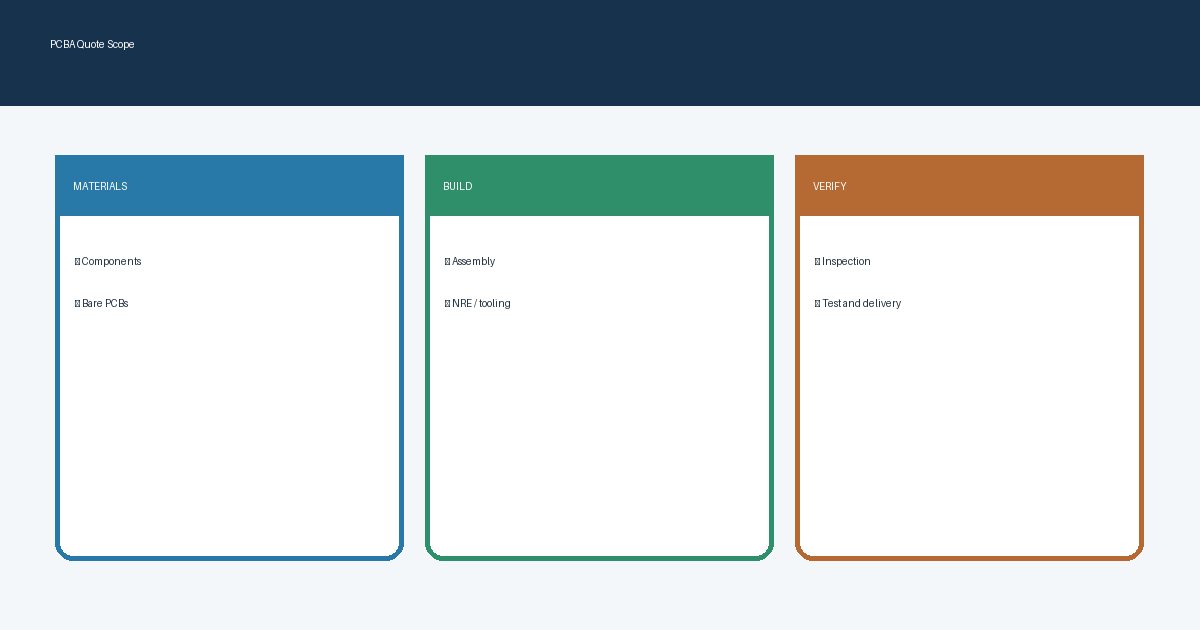
Table of Conent
Table of Conent
A PCBA quote should separate component cost, bare-board fabrication, assembly labor, setup or non-recurring engineering (NRE), testing, and logistics. That separation lets a buyer compare suppliers on the same scope instead of choosing a deceptively low unit price that excludes stencil charges, programming, component attrition, inspection, or freight. The most useful quotation is therefore not the shortest one. It is the one that makes assumptions, exclusions, quantities, and revision-controlled inputs visible.
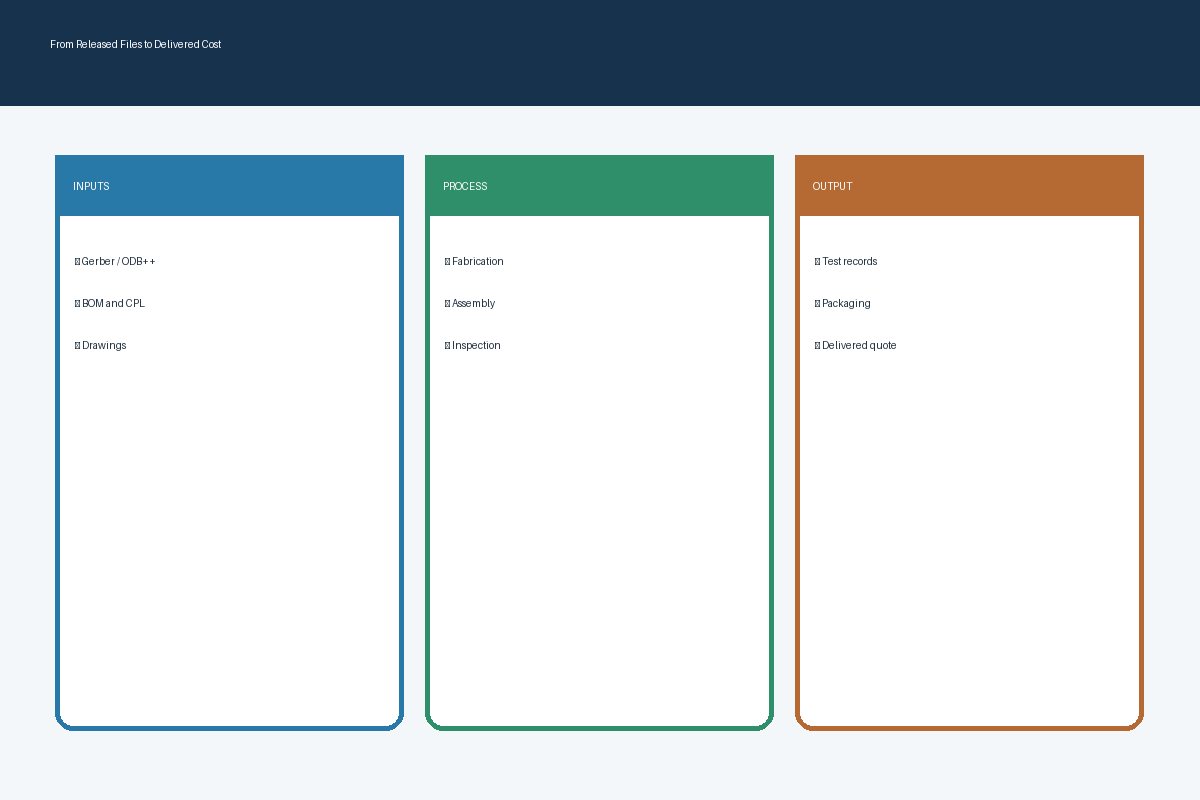
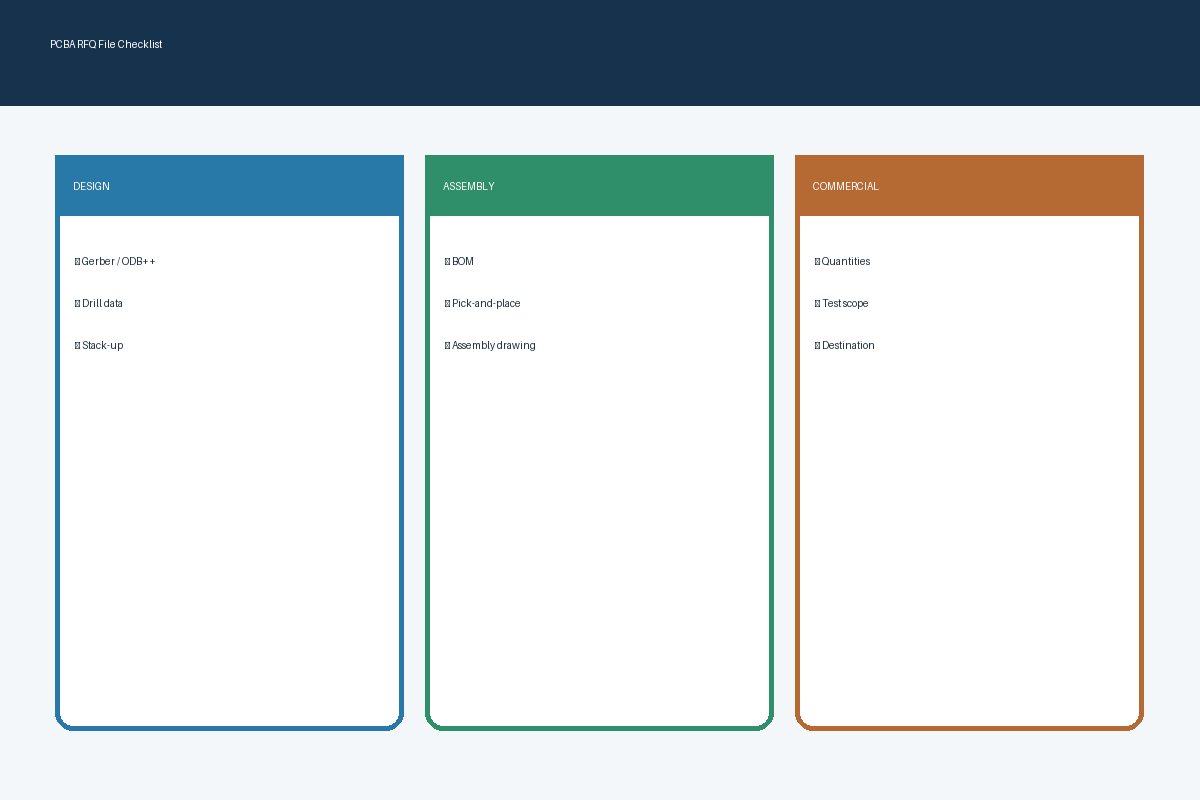
For a turnkey build, send the Gerber or ODB++ package, BOM, pick-and-place file, assembly drawings, quantities, approved alternates, test requirements, quality requirements, and delivery destination together. A contract manufacturer can then review the complete build instead of estimating from a BOM alone.
What should a PCBA quote include?
A complete quotation should identify every cost bucket and the assumptions behind it. The exact labels differ between suppliers, but the commercial scope should be traceable to materials, manufacturing operations, verification, and delivery.
| Cost bucket | Typical contents | Questions to confirm |
|---|---|---|
| Components | Purchased parts, alternates, minimum order quantities, reels, attrition, and supplier charges | Are manufacturer part numbers exact? Who owns excess material? |
| Bare PCBs | Fabrication, surface finish, electrical test, panelization, coupons, and special processes | Does the quote match the released stack-up and drawing? |
| Assembly | SMT placement, reflow, through-hole insertion, selective or hand soldering, cleaning, and handling | Which operations are included per unit? |
| NRE and tooling | Stencil, programming, process setup, fixtures, tooling, and engineering review | Which charges recur on later orders or revisions? |
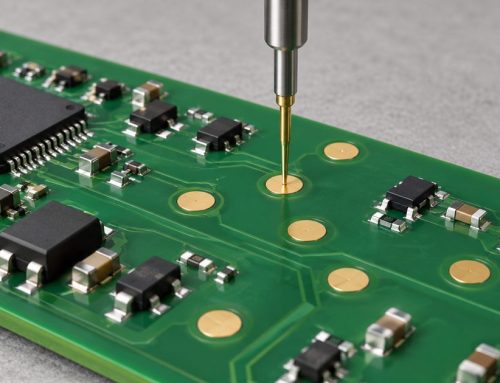
| Inspection and test | AOI, X-ray, ICT, flying probe, programming, functional test, and reports | What coverage and acceptance criteria apply? |
| Logistics | Packaging, export handling, freight, duties, insurance, and delivery terms | Which Incoterm and destination define the price? |
Why component charges often dominate the total
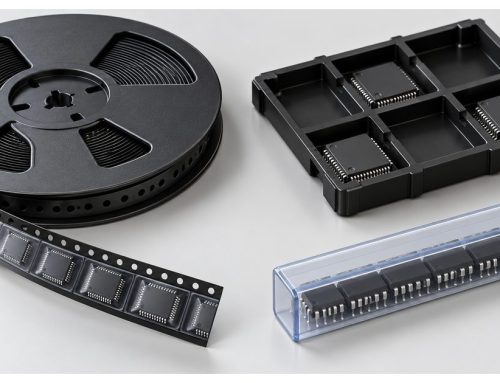
Components frequently represent the largest share of a turnkey PCBA quote, but the BOM extension alone does not explain the final material charge. The supplier may need to purchase full reels, trays, tubes, or minimum order quantities even when the build consumes fewer pieces. Distributor minimums, cut-tape fees, moisture-sensitive packaging, traceability documents, and date-code constraints can all affect the amount purchased.
Attrition is also real. Small passives, fine-pitch devices, and parts used for setup or first-article verification may require additional quantity. A sensible quote states the attrition assumption rather than hiding it in a blended unit price. It should also explain whether unused material is returned, stored for the next order, or transferred to the customer.
Approved alternates can reduce supply risk, but an unreviewed substitute can change package dimensions, thermal behavior, polarity marking, moisture sensitivity, programming, or test results. Keep exact manufacturer part numbers and alternate rules under revision control. If your project uses multiple product configurations, keep DNP rules, approved alternates, and option-specific quantities under revision control so they cannot enter the quotation ambiguously.
If you want a material and assembly review, send the BOM, approved-alternate policy, annual and lot quantities, and target delivery date. The review should identify supply assumptions, excess-material exposure, and the manufacturing scope before pricing is finalized.
How assembly cost is calculated
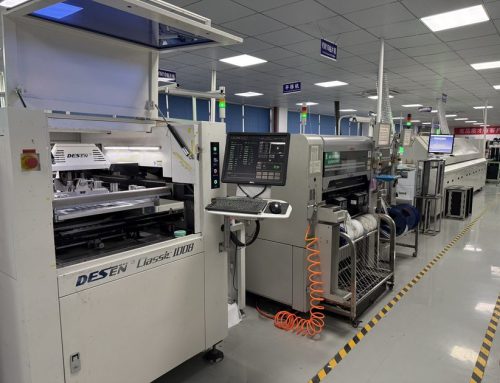
Assembly cost reflects the operations and process risk required to convert bare boards and components into acceptable assemblies. Placement count matters, but it is not the only driver. Package mix, board size, panel efficiency, feeder changes, bottom-side processing, fine-pitch devices, BGAs, through-hole parts, hand operations, cleaning, coating, depaneling, and handling requirements can change labor and machine time.
A quote for a simple, single-sided SMT board with common packages is not directly comparable with a mixed-technology assembly that needs two reflow cycles, selective soldering, press-fit insertion, manual wiring, or controlled coating. The PCB assembly process overview shows why the manufacturing route must be defined before the assembly charge can be judged.
Panelization also affects throughput. A panel that supports stable printing, placement, inspection, and depaneling may reduce handling compared with loose individual boards. Conversely, difficult edge clearances, fragile outlines, or mixed orientations can require added tooling and manual work. Ask whether the supplier priced the customer panel, created a manufacturing panel, or assumed single-board processing.
What belongs in NRE and tooling?
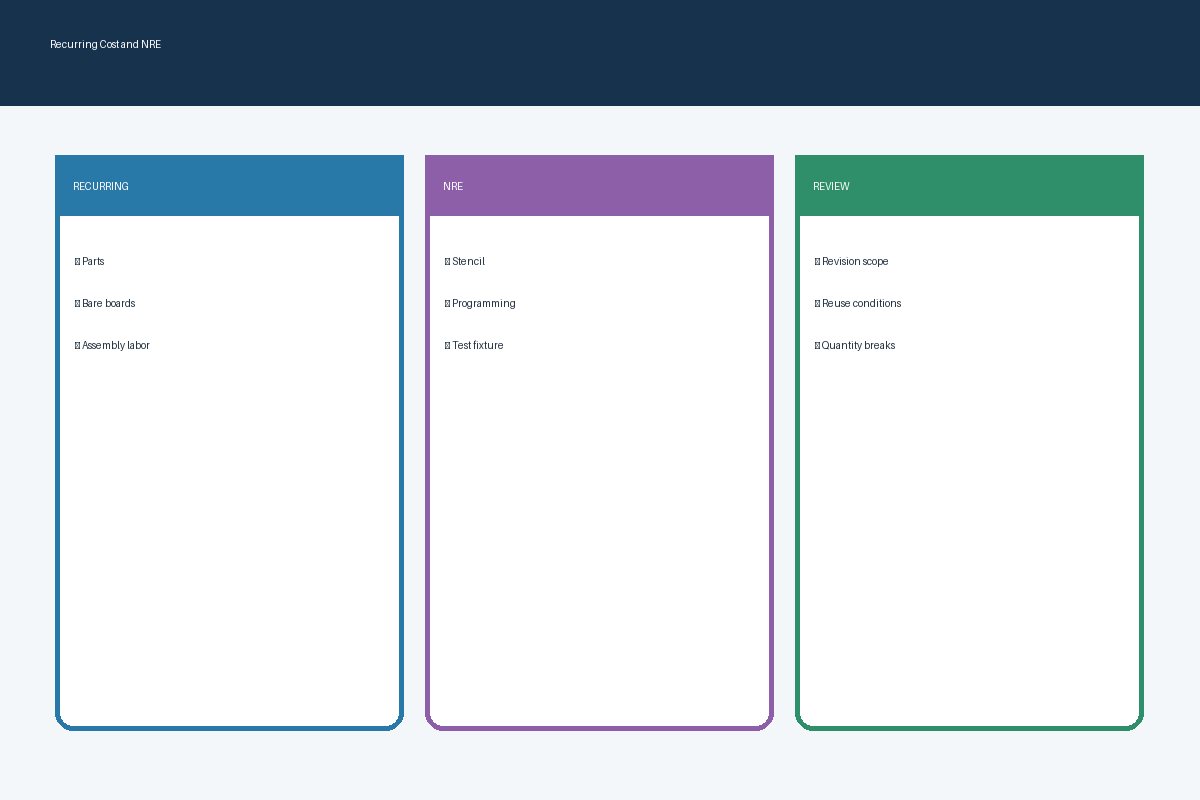
NRE covers work that supports a build but is not consumed as one unit per assembly. Common examples include stencil manufacture, machine programming, manufacturing-engineering review, work instructions, fixture design, test development, and first-article setup. Tooling may include pallets, press-fit supports, depaneling fixtures, programming adapters, or functional-test fixtures.
Separate these charges from recurring unit cost. That makes quantity comparisons more meaningful and shows what may be reused on a repeat order. Reuse is not automatic: a PCB revision, package change, panel change, firmware change, or test-limit change may require new tooling or engineering work. A quotation should state which revision the NRE supports and what triggers requalification.
How test scope changes the quotation
Inspection and test are not interchangeable checkboxes. AOI can evaluate visible placement and solder features, while X-ray can provide evidence for hidden joints. ICT, flying probe, boundary scan, programming, and functional test address different electrical risks. The quote should identify the method, coverage, fixtures, software, limits, reports, and responsibilities for failed units.
A request that says only “100% tested” is incomplete. One supplier may interpret it as AOI; another may include functional testing with customer-provided procedures. Define acceptance criteria and the required records. If test software or fixtures are supplied by the customer, state their revision and validation status. If the manufacturer must develop them, that development usually belongs in NRE.
For a complete manufacturing review, submit test requirements with the Gerbers, BOM, pick-and-place data, assembly drawings, and quantities. This allows inspection, programming, and functional-test costs to be included before purchase-order release.
How to compare two PCB assembly quotes fairly
Normalize the scope before comparing totals. Start with the same quantity, revision, BOM population, sourcing model, test plan, quality level, packaging requirement, and delivery destination. Then separate recurring from non-recurring charges and calculate the delivered cost for the quantity you expect to buy.
- Confirm that both suppliers priced the same released files and revision.
- Check which BOM lines are included, excluded, customer supplied, or substituted.
- Compare purchased quantity, attrition, excess material, and material ownership.
- Match the fabrication construction, finish, electrical test, and panel assumptions.
- List every assembly operation, inspection step, test method, and report.
- Separate reusable NRE from charges that recur with every order.
- Add packaging, freight, duties, and other delivered-cost items.
- Record open exceptions instead of treating them as zero cost.
Do not force every quote into a single per-board number too early. At low volume, stencil and setup charges can dominate the unit calculation. At higher volume, component pricing, panel utilization, cycle time, and yield risk become more important. Compare the planned order quantity and also review how the price changes at realistic future quantities.
Which files reduce quotation uncertainty?
The best way to reduce quote contingencies is to provide a coherent, revision-controlled manufacturing package. Fabrication data defines the bare board. The BOM defines the exact population and sourcing constraints. The centroid file defines component locations and rotations; review the guidance for preparing pick-and-place files when origins or rotation conventions are uncertain. Assembly drawings clarify polarity, DNP locations, hardware, and special instructions.
Include quantities for prototypes, pilot builds, and expected production lots. State whether the quote should be turnkey, consigned, or hybrid. Add programming files, test procedures, acceptance limits, coating or cleaning requirements, traceability needs, packaging instructions, and the ship-to location. For multilayer or controlled-impedance boards, a stack-up or performance requirement is more useful than an unsupported material name; the multilayer PCB guide explains the construction information a fabricator needs.
Common quote traps to resolve before ordering
- Unpriced BOM lines: An excluded or unavailable part can stop the build even when the quoted total looks complete.
- Undefined alternates: A low material price may depend on substitutions that engineering has not approved.
- Ambiguous testing: “Test included” does not define method, coverage, limits, or records.
- Excess inventory: Minimum purchases may create material the customer must own or finance.
- Delivery exclusions: Freight, duties, and insurance can change the landed comparison.
- Revision mismatch: A quote based on an old BOM or panel cannot support the released build without review.
- Unclear rework terms: Responsibility for design defects, supplied-part defects, and manufacturing defects should be distinguished.
Questions to ask before accepting a PCBA quote
Ask which files and revisions were priced, which component sources are assumed, who owns excess material, what attrition was included, and which operations are excluded. Confirm the stencil, tooling, programming, inspection, and test scope. Request clarification for every open exception and make sure the purchase order references the final quotation and manufacturing package.
A well-structured quote is a manufacturing plan expressed commercially. It should let engineering, procurement, and the supplier see the same scope. If the price cannot be traced to files, materials, operations, verification, and delivery, the comparison is not finished.
To obtain a one-stop fabrication and assembly quotation, upload the Gerber or ODB++ data, BOM, pick-and-place file, assembly drawings, quantities, test requirements, and delivery destination. The next step should be an engineering review of manufacturability, sourcing assumptions, test scope, and open questions before the final quote is released.
Latest Blog
Contact Info
Phone: +86-755-82882936
Email: [email protected]
WhatsApp: +86-13570802455
Wechat: +86-13570802455
Address: 2nd floor,D Bldg.,Electric Link Technology Bldg.,Gongming,Guangming New Dist.,518106 Shenzhen, China