
Ionic Cleanliness Testing for PCB Assemblies: ROSE, IC, and Report Review
Table of Conent
Table of Conent
Ionic cleanliness testing for PCB assemblies is useful only when the result answers a defined manufacturing question. A number from a solvent extract can help monitor a process or investigate residues, but it does not automatically prove long-term reliability. The test method, sampled condition, extraction, units, and decision rule must travel with the result.
For engineering and procurement teams, the practical objective is to obtain comparable evidence without confusing bulk conductivity with identification of individual ions. This guide explains where resistivity of solvent extract (ROSE) and ion chromatography (IC) fit, what to ask a laboratory, and how to write an inspection requirement that does not rely on an unexplained “cleanliness passed” statement.
Separate process monitoring from product qualification
Start by identifying the decision. Routine monitoring asks whether a controlled manufacturing process remains consistent. A qualification program asks whether the chosen materials and process are suitable for the product’s requirements. A failure investigation asks which evidence can explain a specific observation. One test report should not silently claim to answer all three.
IPC-TM-650 Method 2.3.25D describes ROSE methods as process-control tools and explicitly states that the method does not predict reliability. It measures ionizable material extracted into solution, does not identify individual ionic species, and does not measure nonionic residue.
This distinction prevents a common purchasing error: accepting a single bulk result as proof that every area of an assembly is suitable for its operating environment. Establish the product’s evidence requirements through the applicable specification and qualification plan, then define the role of routine ionic monitoring within that plan.
Do not import a familiar cleanliness limit from an unrelated product or an old contract. State the controlling document and revision, the approved process, the monitoring or acceptance rule, and how deviations will be reviewed. A test method and a product acceptance requirement are separate parts of the order.
Understand what ROSE and IC results mean
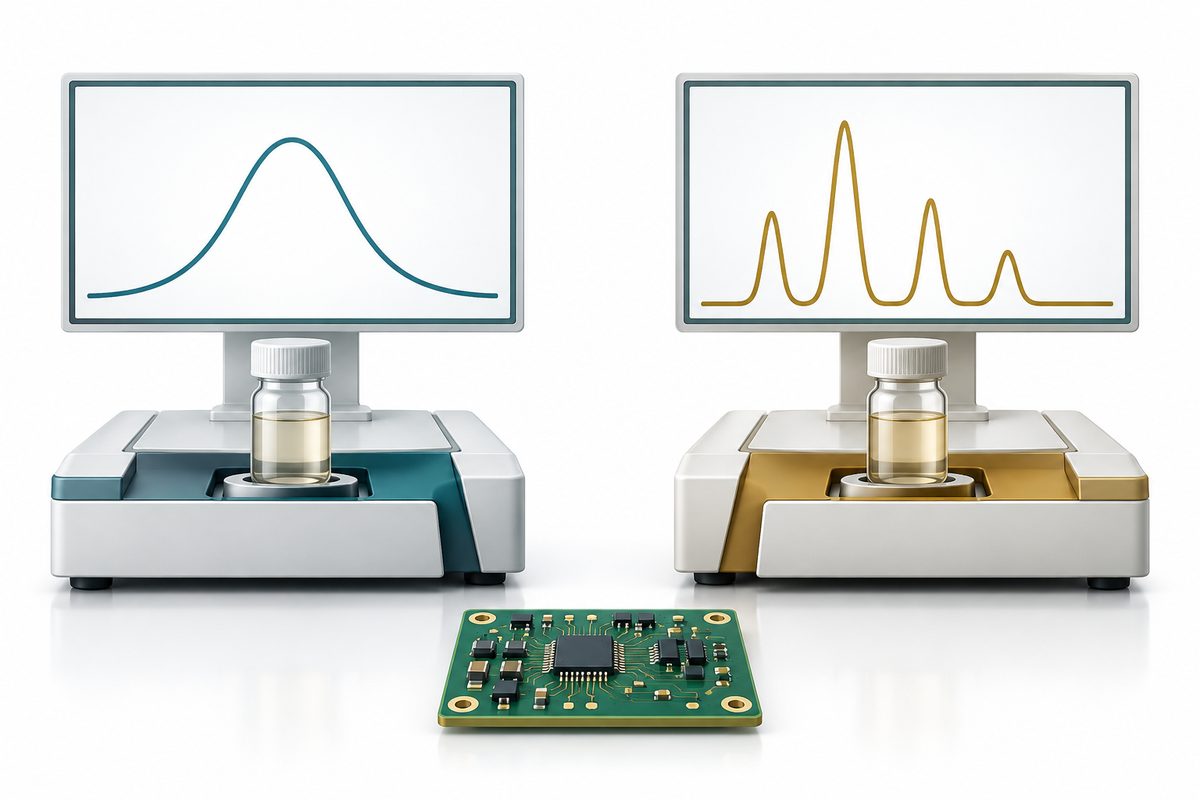
ROSE relates extract conductivity to a calibration reference, commonly reported as sodium-chloride-equivalent material per unit area. “NaCl equivalent” is not a chemical identification of all residue as salt. Extraction accessibility also limits what enters the measurement. A low result should not be interpreted as proof that inaccessible material is absent.
IC evaluates extractable ionic contamination using species-resolved analysis. IPC-TM-650 Method 2.3.28B applies to printed boards and assemblies and calls for an analytical setup capable of separating the ions of interest. Ask which ions were included in the requested analysis; an unrequested species is not automatically covered by the report.
Use ROSE evidence for its agreed monitoring purpose and IC evidence when the question requires the reported species information. Do not convert an IC total into a ROSE equivalent result or compare unlike units as if they were the same measurement. The laboratory should explain exactly what quantity each reported value represents.
For a supplier comparison, request the method, specimen condition, and reporting basis before comparing numerical results. The lower-looking number is not necessarily the cleaner assembly when the extraction or normalization differs.
Identify the assembly condition being tested
Specify whether the sample is a bare board, a populated assembly before cleaning, an assembly after cleaning, or a product after additional processing. Record the stage clearly. A report for a bare PCB cannot silently replace evidence for a populated assembly with added components and process materials.
For a process review, record board revision, BOM revision, relevant soldering materials, assembly route, and the evaluated cleaning condition. Include known rework and handling history. If the history is unavailable, label the gap rather than reconstructing it from an assumed production sequence.
The PCB board assembly and quality-control guide provides context for identifying where the sample was taken in production. Link the sample to that stage so engineering can distinguish a process change from a difference in sample selection.
Ask how samples will be protected and transferred to the laboratory. Preserve original records and avoid touching the areas under investigation. Any handling, packaging, cleaning, or treatment applied after selection should remain traceable.
Send your PCB files, BOM, assembly route, and cleanliness evidence requirements for an engineering and quotation review. Identify whether the request concerns routine monitoring, a qualification scope, or a specific residue investigation so the proposed work can be discussed accurately.
Make extraction conditions part of the report
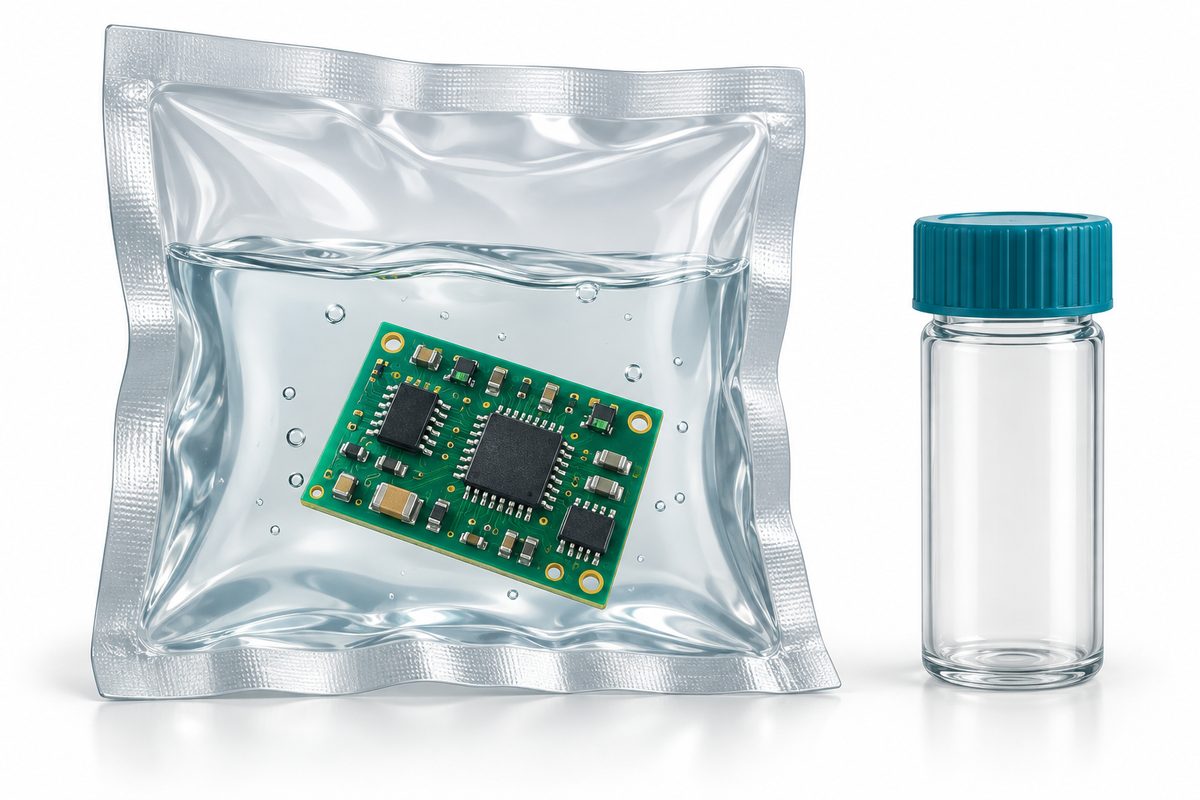
An extraction report should describe the selected method, solution, volume or flow arrangement, time, temperature, sample area, and equipment. These are evidence fields to agree with the laboratory, not parameters to improvise from a blog. Test execution must follow the applicable procedure and laboratory safety controls.
The equipment manufacturer’s GEN3 CM Series guidance describes ionic testing in a process-control context and provides equipment-specific operating considerations. Such guidance reinforces the need to identify the actual instrument and procedure; it is not a universal setup for every tester.
Retain the extraction identity when samples move from collection to analysis. The vial identifier should connect to the assembly identifier and any dilution or processing record. Ask how the laboratory checks background contribution from the extraction system and how that information is reflected in the result.
If an exploratory trial deliberately changes extraction conditions, label it separately from the approved monitoring method. Do not combine the trial results into an established trend chart without documenting the change. Keep enough unchanged reference work to evaluate whether an observed difference comes from the product or the measurement approach.
Review units, area, and analytical limits
Request the units exactly as reported, together with the area calculation and any normalization. A concentration in an extract is different from extracted mass per assembly or mass per unit area. The report should explain how solution volume and sample area relate to the final quantity.
For assemblies, document the area basis consistently. If two parties use different area estimates, resolve that difference before comparing their normalized values. A result without its denominator is difficult to reproduce and may encourage a false comparison between different board styles.
For IC, request the reported ions, their individual results, units, and relevant detection or quantitation information. Distinguish a result below a laboratory’s reporting limit from a demonstrated zero. Do not fill a blank report cell with zero or treat an unreported ion as absent.
Review calibration and laboratory quality information appropriate to the requested work. A graph or instrument screenshot should not stand alone: retain the sample identity, calculation basis, and interpretation with it. Where the laboratory cannot reliably answer the requested question, record the limitation and agree the next step.
Do not let a bulk value hide the investigation scope
A whole-assembly extract and a localized investigation answer different sampling questions. Decide whether the test should represent the overall assembly, a selected area, or a particular process concern. Any targeted extraction needs a defined laboratory approach and a reporting basis appropriate to that sampled area.
Annotate the location of a reported symptom on a board image, but do not label visible material as ionic contamination without supporting analysis. Appearance can help locate an observation; it does not identify its chemistry or establish a quantitative cleanliness result.
Keep cleaning effectiveness, ionic monitoring, solderability, and electrical performance as distinct evidence categories. Our PCB solderability testing guide addresses wetting evidence, not ionic-residue measurement. A satisfactory result in one category does not replace an agreed requirement in another.
When a result raises concern, ask whether additional chemical or product-specific reliability evaluation is needed through the project’s qualification plan. Avoid drawing a lifetime conclusion from a single extract or declaring the assembly defective against a requirement that was never agreed.
Build a decision-ready supplier report
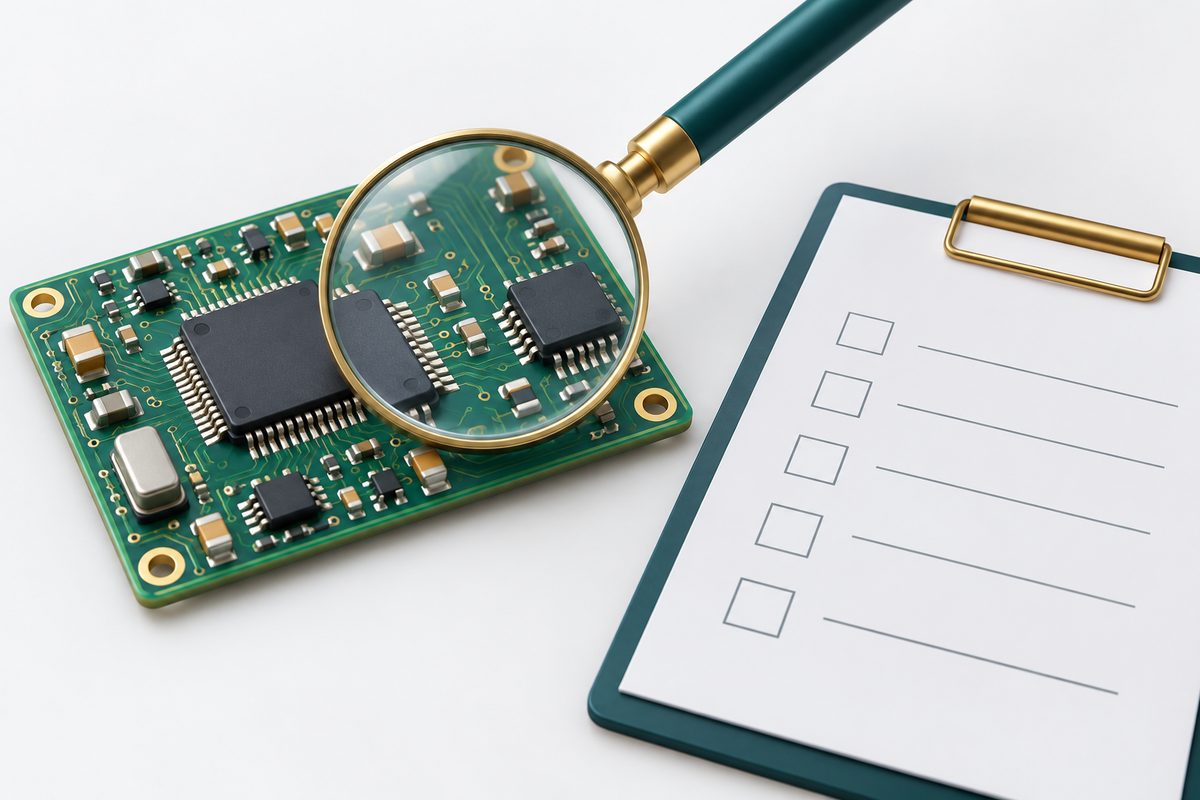
Request assembly and revision identifiers, lot, sample selection, production stage, method and revision, extraction conditions, instrument, background checks, calculation basis, individual results, and the agreed decision rule. Identify deviations and who approved them.
For a monitoring report, keep individual values and their sequence available instead of retaining only an average or a shipment-level pass label. The sampling plan should explain how inspected units relate to production. A favorable selected sample is not evidence that every unit was tested.
For a comparison, use a controlled plan: identify what changed, preserve the same sample basis where appropriate, and document any unavoidable measurement differences. Treat conflicting results as an evidence-coordination problem before assuming that either party is wrong.
Request a project review with your controlled drawings and required cleanliness report fields. Include any customer-specific test method, retained-sample requirement, or external laboratory scope so reporting and quotation assumptions can be confirmed.
A hypothetical report disagreement
Consider a buyer who receives a low routine bulk-monitoring result but obtains a concerning IC result from a targeted investigation. This is a hypothetical example, not an AssyPCB customer case. The reports should not be forced into one common pass/fail comparison.
The teams first identify the sampled area, assembly history, extraction conditions, reported species, and units. They determine whether the results represent the same question, then agree additional evidence and disposition authority. The report records both original results and their limitations rather than discarding whichever result is inconvenient.
Example: check the calculation chain
For illustration only, suppose a laboratory reports one measured ion at 2 micrograms per liter in a 0.1-liter extract from a 100-square-centimeter sampled area. With no dilution or background correction in this simplified example, the extracted mass is 0.2 microgram and the normalized quantity is 0.002 microgram per square centimeter. These invented numbers are not AssyPCB test data or acceptance limits.
The important point is the calculation chain: concentration multiplied by solution volume gives extracted mass; dividing by the declared area gives an area-normalized result. If the area were changed while the extracted mass stayed the same, the normalized value would change. Ask the laboratory to resolve the correct area basis rather than choosing whichever denominator produces a favorable number. Real reports must also account for applicable dilution, background handling, and method-specific calculations. This species result must not be relabeled as NaCl equivalent.
Turn cleanliness expectations into an RFQ
Supply the PCB files, BOM, assembly route, applicable cleanliness requirements, sampling and reporting expectations, and any qualification evidence requested by the customer. Specify which process changes require approval and how deviations are handled. Ask whether additional testing or laboratory coordination needs a separate scope and schedule.
The SMT assembly service page is a starting point for discussing the project, not confirmation that every custom cleanliness test is included. Confirm the actual process and evidence arrangement before ordering.
Submit your board files, BOM, and cleanliness monitoring or qualification requirements for a project-specific quote. A defined sampling plan and traceable report give engineering and purchasing teams a sounder basis for decisions than an unexplained cleanliness number.
Latest Blog
Contact Info
Phone: +86-755-82882936
Email: [email protected]
WhatsApp: +86-13570802455
Wechat: +86-13570802455
Address: 2nd floor,D Bldg.,Electric Link Technology Bldg.,Gongming,Guangming New Dist.,518106 Shenzhen, China