
PCB Peel Strength Testing: Conditions, Units, and Report Review
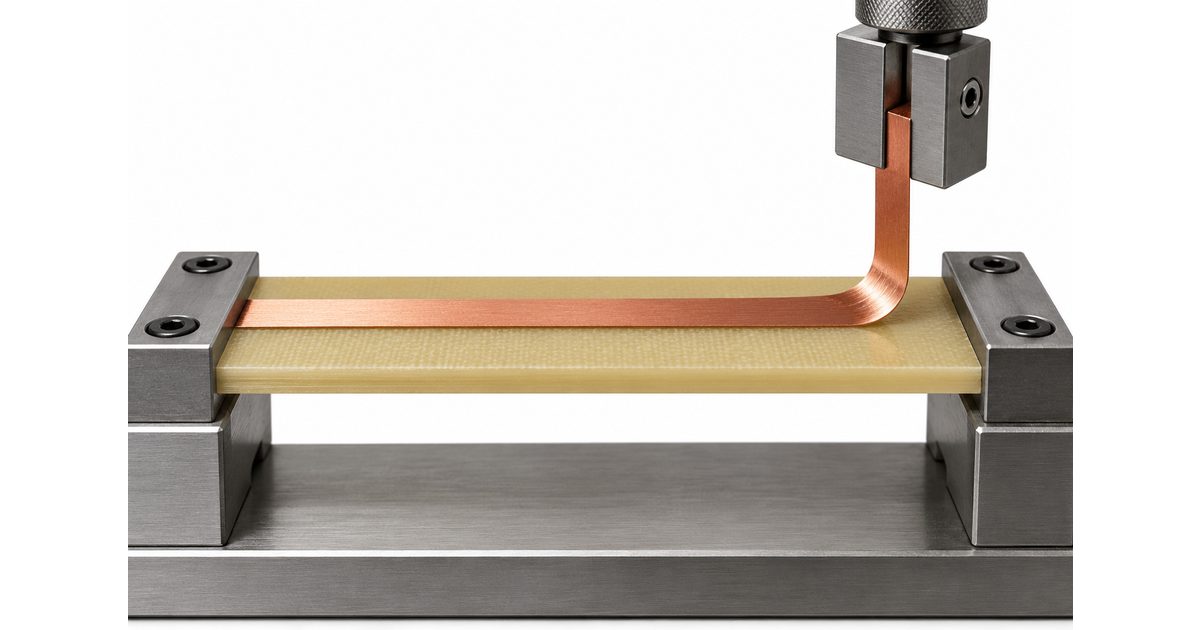
Table of Conent
Table of Conent
PCB peel strength testing evaluates the resistance of metallic cladding to separation from its laminate under a defined test method. For a copper-clad material, the result helps characterize the copper-to-laminate interface. It is meaningful only when the specimen, conditioning, measurement basis, and reporting units are known.
A number copied from a datasheet is not automatically an acceptance limit for a finished PCB. Engineers and buyers need to distinguish material information, qualification evidence, and order-specific requirements. This guide explains how to review a peel-strength report and request useful supplier evidence without inventing a universal pass value.
Identify what the test result actually represents
Start with the material and specimen identity. Is the result from a laminate supplier’s characterization, an incoming-material evaluation, or a coupon associated with a particular manufacturing lot? These sources answer different questions. A report should make its relationship to the ordered board explicit.
The public IPC-TM-650 method 2.4.8C addresses metallic-clad laminates under defined conditioning and reporting requirements. Use the agreed method and revision for the actual laboratory procedure. This article is a report-review guide, not a substitute test instruction.
Do not assume that one interface measurement proves the entire PCB construction is acceptable. Peel evidence does not replace checks for other requirements such as electrical connectivity, dimensions, or the integrity of unrelated features. Define the requirement that the test is intended to address.
Separate a material datasheet from an order acceptance specification
Material suppliers publish properties for identified laminate systems and test conditions. Isola’s P96/P26 material information, for example, lists peel-strength entries with units and a test-method reference. Those entries belong to that material information; they are not an assypcb.com capability claim or a universal requirement for every board.
Check whether a published value is described as typical, a specified minimum, or another form of characterization. The distinction affects how it can be used in purchasing. A typical value is not automatically a guaranteed lower bound for each delivered specimen.
If the project requires an acceptance limit, identify its authority: the agreed material specification, product requirement, drawing, or purchase contract. Make that requirement accessible to the supplier before the order. Do not create a new pass criterion after seeing the laboratory results.
Keep test conditions attached to the reported number
A report needs the condition under which the specimen was evaluated. Unconditioned material information should not be compared directly with a result obtained after a specified exposure. The question is not simply which number is larger, but whether the evidence answers the same defined requirement.
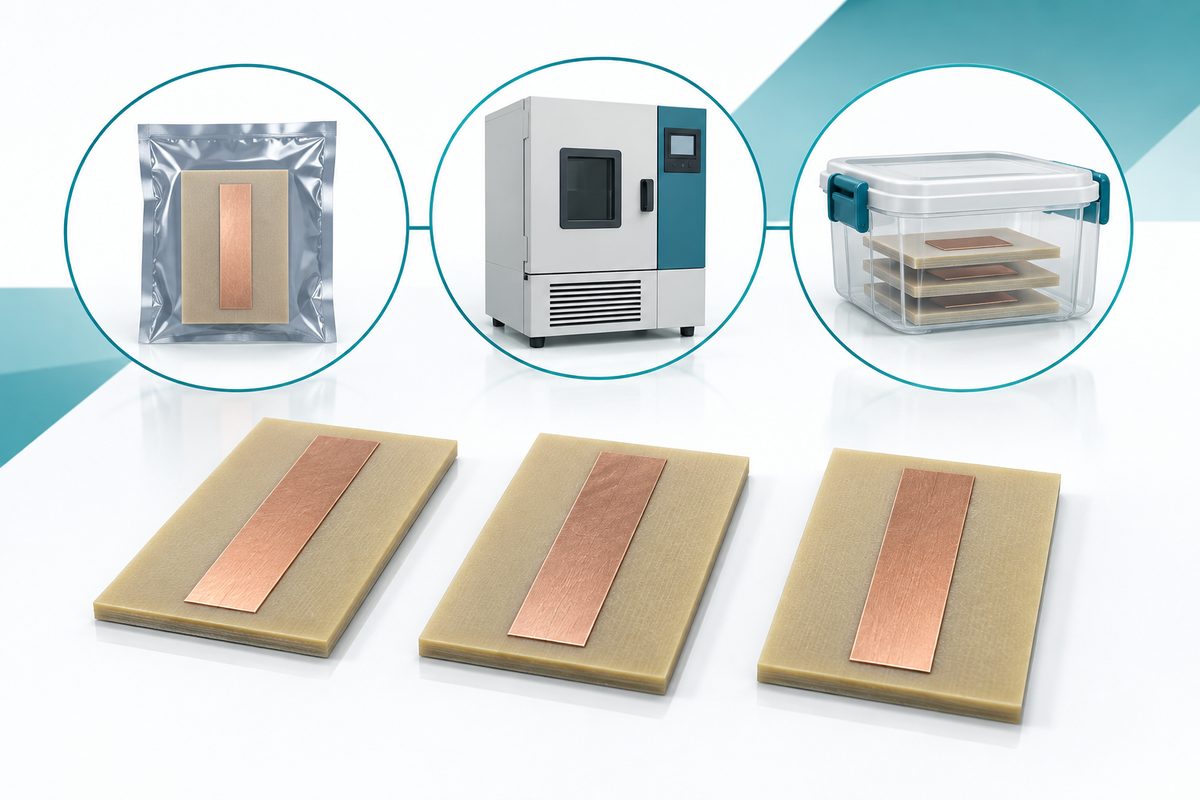
Confirm the relevant method, revision, conditioning route, and any approved deviations. If two reports use different preparation or exposure conditions, ask the laboratory to explain the comparison basis. Do not hide those differences in a spreadsheet heading that says only “peel strength.”
Review the material side and specimen orientation where required by the method or specification. Preserve the labels in the report instead of collapsing distinct sample groups into one unexplained average. This makes a later review more useful and prevents a result from being assigned to the wrong condition.
Read force-per-width units correctly
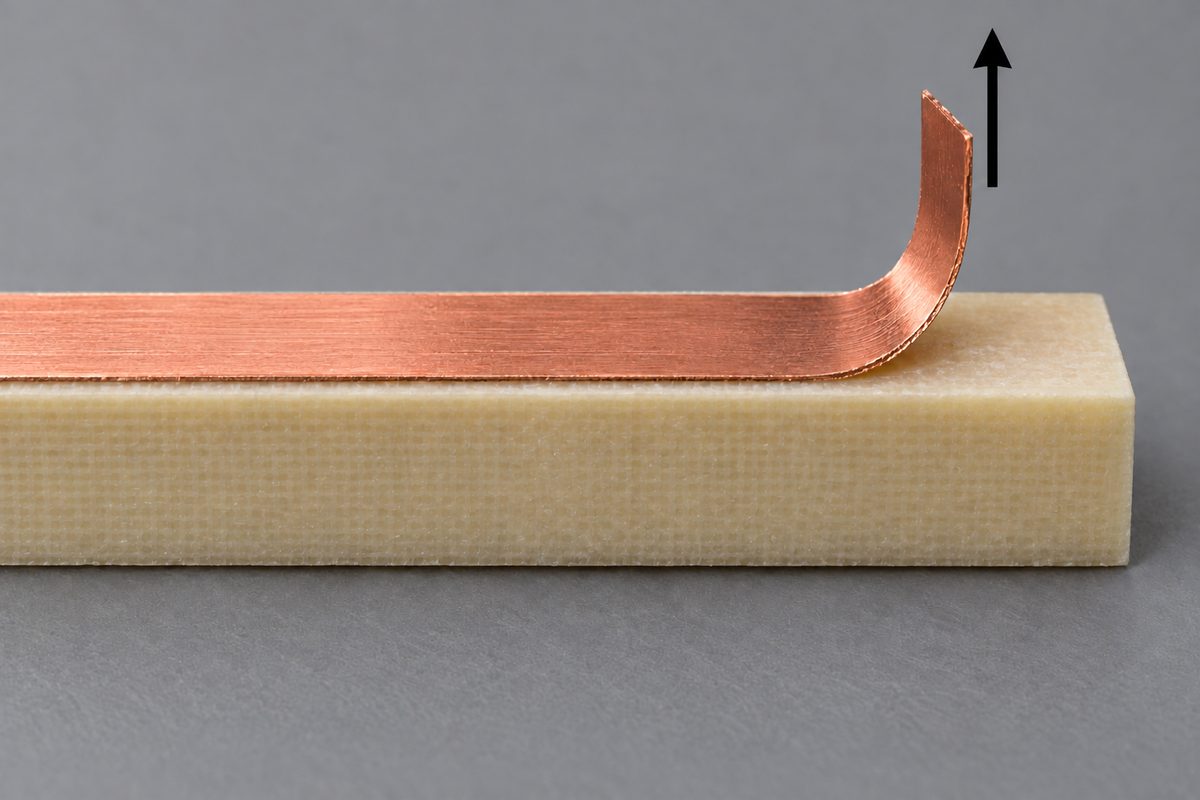
Peel strength is commonly reported as force per unit strip width, such as N/mm or lb/in. A raw force value is not directly interchangeable with that normalized result. Confirm both the unit and the calculation basis before comparing laboratory values or material tables.
As a hypothetical arithmetic example, a stated force of 2 N divided by a stated width of 2 mm gives 1 N/mm. This example illustrates the unit relationship only. It does not specify a valid specimen, an appropriate force statistic, a test procedure, or a pass threshold.
Use the calculation and force-selection rules required by the agreed method. Do not substitute a peak, minimum, or mean simply because it is the most convenient value displayed by the instrument. Ask the laboratory to identify the reported statistic and retain enough information to audit its interpretation.
Review specimen preparation and traceability
The evidence should identify the specimen’s relationship to the material or manufacturing lot. Record the material designation, relevant copper construction, sample identity, and the process stage represented. A coupon with no traceable source cannot confidently support an order-specific conclusion.
Ask whether the specimen construction matches the requirement being evaluated. A change in material or copper system can make an older characterization report less relevant to a new build. The same nominal board thickness does not establish that the interface under test is unchanged.
The PCB lamination guide explains the broader construction and production handoff. When peel evidence is requested, connect it to that controlled material and build definition rather than attaching an unrelated report to the shipping paperwork.
Define the evidence package before requesting a test
Specify the method and revision, specimen and lot coverage, conditioning, acceptance authority, and reporting scope. Clarify which laboratory or supplier is responsible and whether the requested work is part of material qualification, an investigation, or order acceptance. These distinctions affect both the evidence and the quotation.
Ask for clearly labeled individual results and any required summaries, together with specimen observations and deviations. Retain the underlying units and grouping. A certificate that contains only “pass” may not give an engineer enough information to review a questioned condition.
Preparing a PCB build with adhesion requirements? Submit the board files, material specification, quantity, and proposed evidence requirements through the PCB engineering and quotation request. Ask for confirmation of the applicable acceptance and reporting scope before the order is finalized.
Compare reports without mixing unlike data
Build a comparison around matching material identities, specimen conditions, methods, units, and acceptance bases. Keep incompatible results separated until their differences have been resolved. Ranking suppliers by a single unlabeled number can reward a different test condition rather than a better matched construction.
Document conversions when units differ, and retain the original reported values. Do not round a result so aggressively that the acceptance interpretation changes. Resolve any uncertainty about the unit or statistic with the report issuer instead of guessing from the magnitude.
For repeated evaluations, preserve the sampling basis and grouping used in earlier reports. A different sample population can change what the summary represents. Explain those changes when discussing trends rather than attributing every movement to the material or process.
Investigate a questioned result through controlled evidence
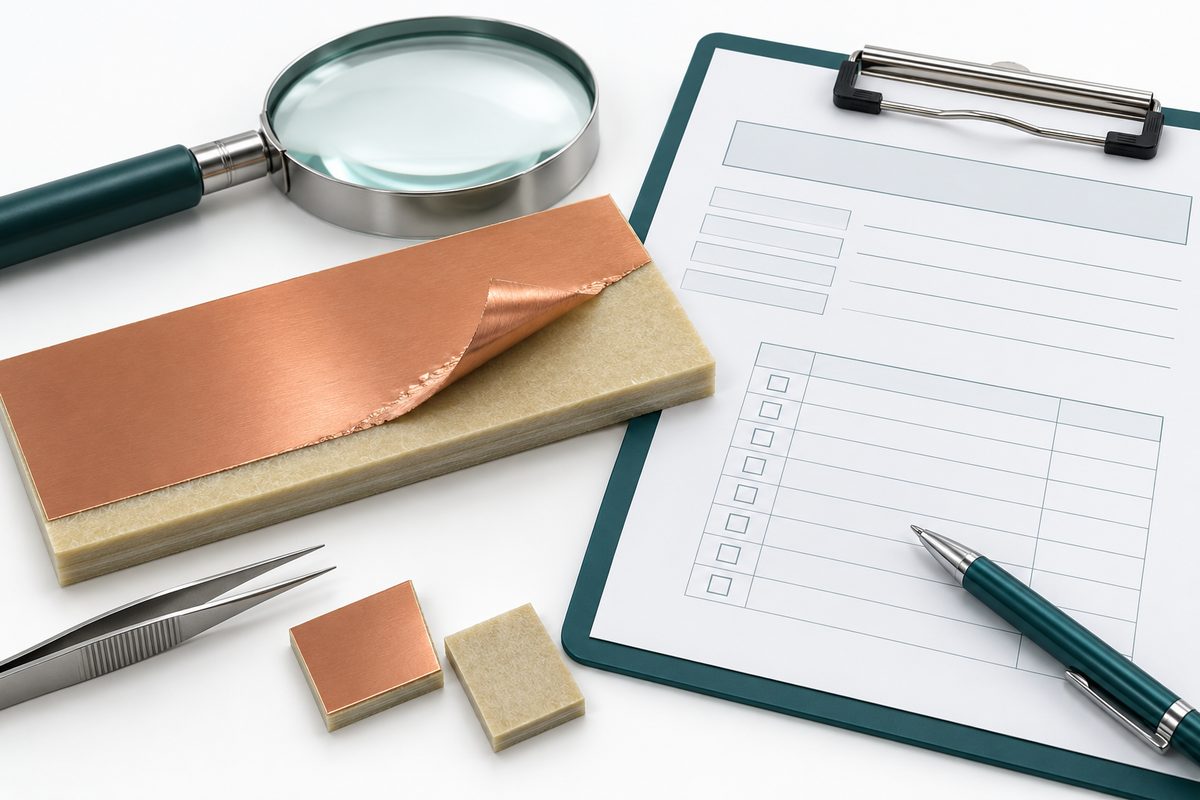
Preserve the original report, sample identity, photographs or observations where available, and relevant material and process records. State what was observed before assigning a cause. A low reported value, a damaged specimen, and a missing conditioning label are different issues to investigate.
The PCB fabrication troubleshooting guide explains how to organize a supplier investigation. For peel-related questions, verify that the test evidence and the production evidence refer to the same controlled construction and lot scope.
Agree on any retest or additional evaluation with a defined purpose. Do not repeatedly test until a favorable number appears while discarding the earlier evidence. If a result is excluded for an approved technical reason, record that reason and keep the replacement result traceable.
Clarify supplier scope and cost before purchase approval
Review the broader design against the PCB manufacturing capabilities, then request explicit confirmation of any special material or adhesion-evidence requirement. A general capability page does not establish that a particular peel-test method or acceptance limit is included in an order.
Separate the cost and responsibility for board fabrication, sample preparation, laboratory evaluation, and required reporting. Ask whether the requested evidence already exists for the specified material or must be generated for the project. Do not treat the two situations as equivalent when comparing quotations.
If the test or reporting scope remains open, include the current material and board specifications in the PCB adhesion-evidence quotation request. List the unresolved conditions so the engineering review can distinguish agreed deliverables from assumptions.
Recheck the requirement when the construction changes
As a hypothetical example, a material substitution can retain the same outline and nominal thickness while changing the copper-to-laminate system represented by earlier test data. Review the substitution against the acceptance requirement rather than assuming that the previous report still applies.
Apply the same review to changes in the requested evidence, specimen condition, or laboratory method. Preserve the approved basis across repeat orders so the purchasing and engineering teams do not compare a new result with an unrelated historical number.
Conclusion
PCB peel strength testing produces useful evidence when the material, specimen, condition, units, and acceptance basis are clear. Separate datasheet characterization from order requirements, compare like-for-like reports, and preserve traceability during an investigation. A single unlabeled number cannot establish the complete quality of a finished PCB.
Ready to review the next build? Send the released PCB files, material designation, quantity, schedule, acceptance requirements, and requested evidence scope through the online PCB RFQ form for engineering and quotation review. Highlight any peel-strength requirement so its applicability and reporting expectations can be confirmed before production.
Latest Blog
Contact Info
Phone: +86-755-82882936
Email: [email protected]
WhatsApp: +86-13570802455
Wechat: +86-13570802455
Address: 2nd floor,D Bldg.,Electric Link Technology Bldg.,Gongming,Guangming New Dist.,518106 Shenzhen, China