
Electronics Component Shortages: Qualify Alternates Before Supply Disruptions
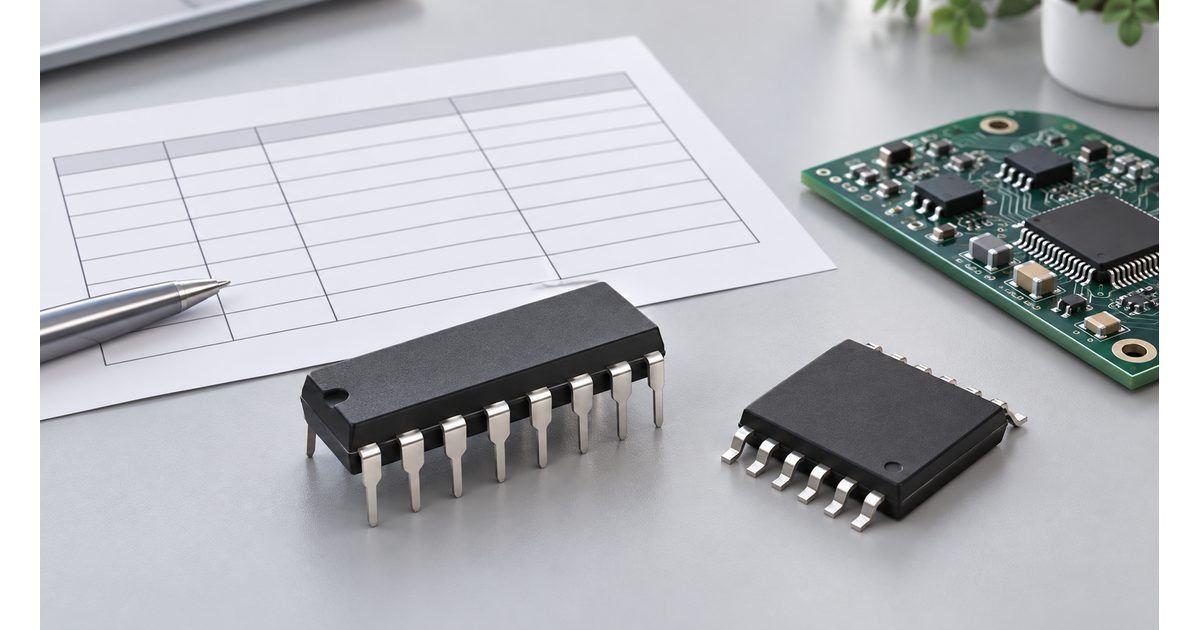
Table of Conent
Table of Conent
The safest time to qualify an alternate electronic component is before the approved part becomes unavailable. A practical shortage plan separates sourcing evidence from engineering approval: monitor lifecycle notices and supplier risk, define what each BOM item must do, identify exact candidate part numbers, compare electrical and mechanical differences, verify assembly implications, and release only the alternates that the design owner has approved for a stated scope.
This approach does not predict every disruption, and it does not turn a distributor cross-reference into an engineering decision. It creates options that purchasing can use without silently changing the product. For a turnkey PCB assembly program, the same controlled record can connect component sourcing, DFM review, incoming inspection, prototype validation, production release, and quotation assumptions.
Why should alternates be qualified before a shortage?
When material is already constraining a build, the team has less time to review ambiguous specifications, obtain samples, update firmware, or run a controlled assembly trial. That pressure can cause three different actions to be treated as if they were equivalent: buying the same manufacturer part number from another source, accepting a different orderable variant, or changing to a different manufacturer part number. Each action carries a different identity, traceability, and qualification burden.
Prequalification converts an emergency search into a controlled choice. The purchasing team knows which alternates are approved, engineering knows which differences were evaluated, and manufacturing knows whether the alternate changes carrier format, footprint, polarity, programming, moisture handling, stencil requirements, inspection, or test. The record should also show when an alternate is evaluation-only rather than released for production.
| Proposed action | Main question | Typical owner |
|---|---|---|
| New source, same exact part | Is the source authorized or otherwise approved, with acceptable traceability? | Supply chain and quality |
| Different orderable variant | Do grade, package, finish, packing, or programmed state change? | Engineering, quality, and manufacturing |
| Different manufacturer part | Does it satisfy the application and production requirements? | Design authority with cross-functional review |
Build a BOM risk register from evidence, not rumors
Start with the released BOM and exact manufacturer part numbers. Classify items by product impact, number of approved sources, lifecycle status, practical replacement difficulty, required programming, and the time needed for meaningful validation. A low-cost device can be schedule-critical if it is single-source or has a unique pinout. An expensive device is not automatically the first qualification priority if several released options already exist.
Use current manufacturer product pages, product-change notices, product-discontinuance notices, and authorized-channel information. Texas Instruments explains that its product-change notifications identify affected products, fit-form-function or quality impacts, qualification information, and projected shipment dates. Analog Devices likewise publishes lifecycle status plus product-change and discontinuance notices. These are useful evidence sources, but the current status of the exact orderable model still needs to be checked when a decision is made.
Record the evidence date. Lifecycle labels, availability, packing options, and manufacturer recommendations can change. Do not copy a one-time availability result into the BOM as if it were a permanent approval. The risk register should trigger review; it should not become an uncontrolled substitute list.
Keep authorized sourcing and alternate qualification separate
An approved alternate can still be unacceptable if its source and material history are unknown. Conversely, authentic material from an authorized distributor does not prove that a different part number works in the product. Treat source approval and part approval as two related gates.
Authorized distribution generally offers a clearer chain back to the manufacturer and access to current documentation. ECIA’s quality resources emphasize authorized-channel controls, traceability, record retention, returns, inventory control, and counterfeit mitigation. If a constrained purchase must use another channel, define the additional supplier assessment, traceability review, inspection, testing, and disposition process before placing the order. Do not promise that incoming inspection can prove authenticity in every case.
The electronic components IQC guide explains how receiving can verify identity, quantity, packaging, visible condition, documentation, and handling status. IQC should confirm the released sourcing plan; it should not decide whether an unapproved substitute is electrically interchangeable.
Write the application requirement before comparing parts
A comparison is only as good as the requirement behind it. For each critical BOM line, identify the function, operating voltage and current, tolerances, timing, bandwidth, interfaces, environmental range, thermal limits, protection behavior, reliability or quality grade, safety constraints, and applicable regulatory obligations. Separate normal operating specifications from absolute maximum ratings.
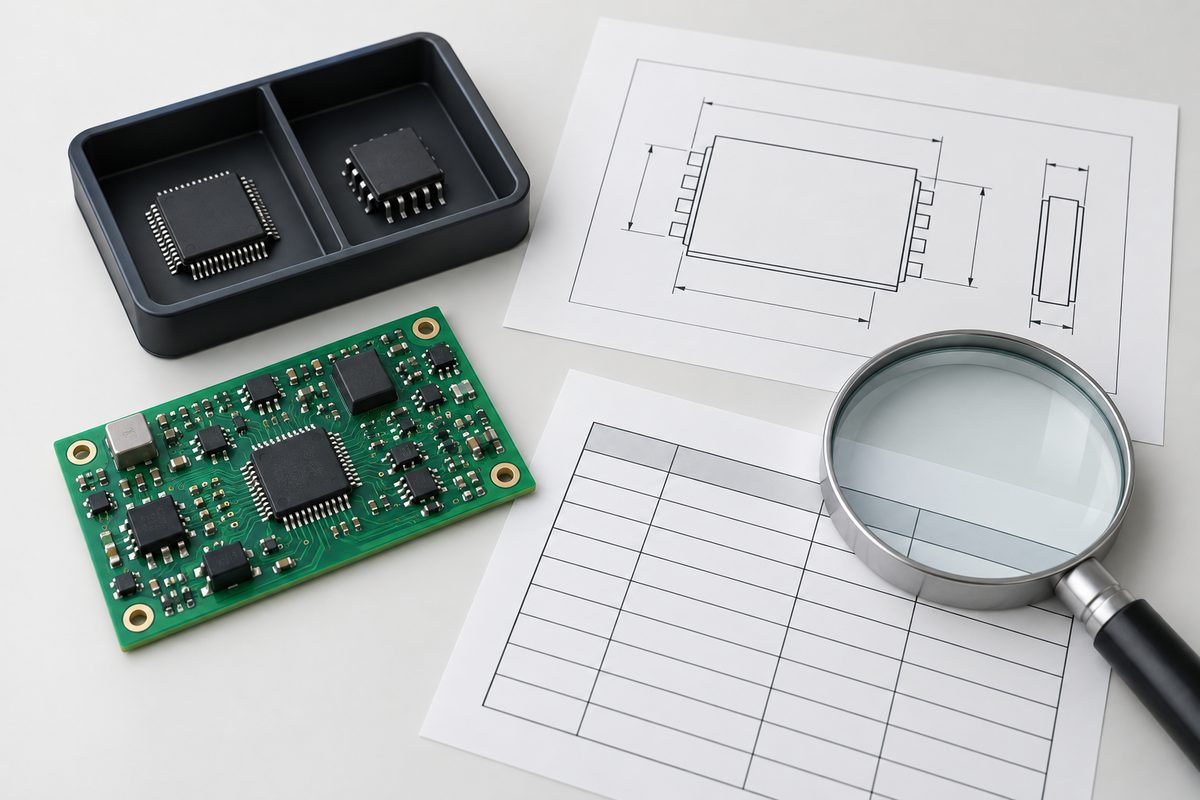
Then compare current data sheets and package drawings for the original and candidate parts. Record document revisions and every unresolved difference. Similar marketing descriptions, family names, package codes, or distributor suggestions do not establish interchangeability. A candidate with a higher headline rating may still differ in startup behavior, leakage, quiescent current, pin state, compensation, switching frequency, fault response, or software interface.
For programmable devices, confirm ordering state, memory content, boot behavior, register compatibility, firmware dependencies, security provisioning, and programming equipment. For passives, review tolerance, temperature coefficient, voltage or power derating, construction, size, termination, and any pulse or high-frequency behavior relevant to the circuit.
Check package, pinout, and assembly consequences
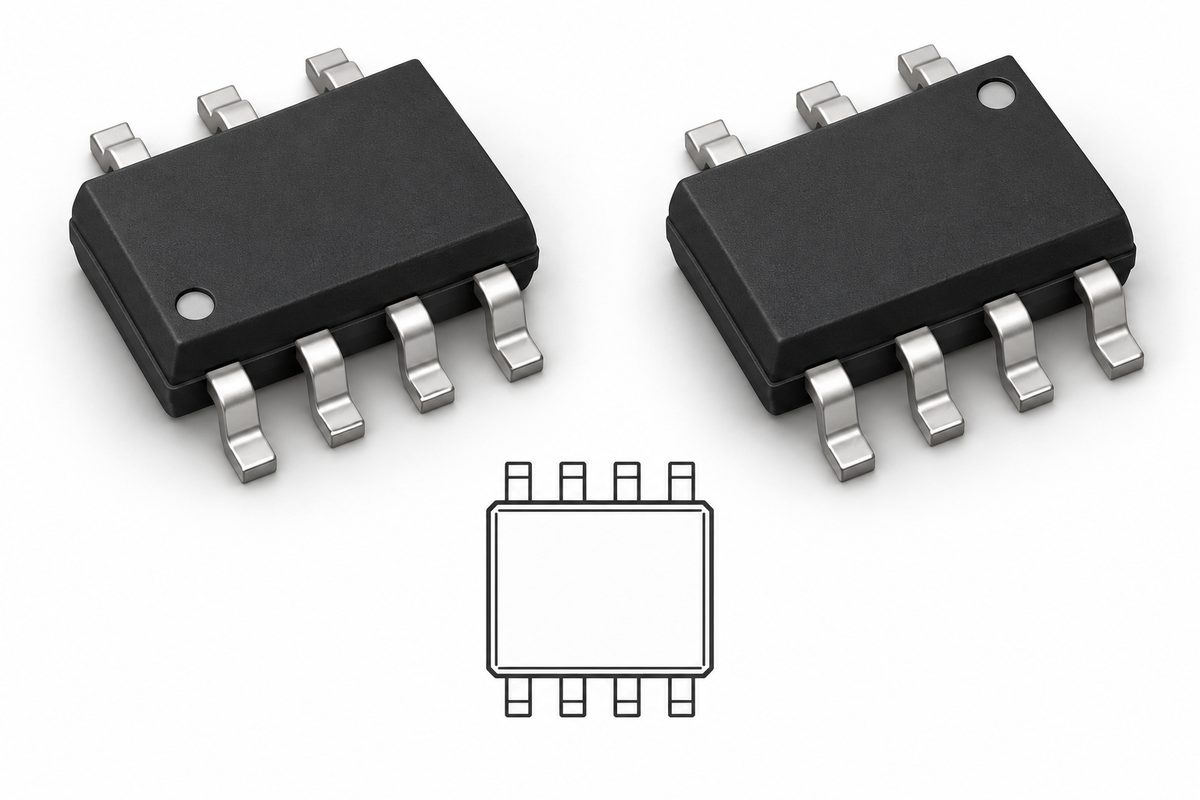
Compare manufacturer drawings rather than relying on a shared package label. Verify pin numbering, function, polarity, body dimensions, terminal geometry, pitch, coplanarity, exposed-pad requirements, component height, and land-pattern compatibility. A nominally similar package may require a different footprint or stencil aperture. If the fit is not truly drop-in, identify the board revision needed instead of approving it as a purchasing substitute.
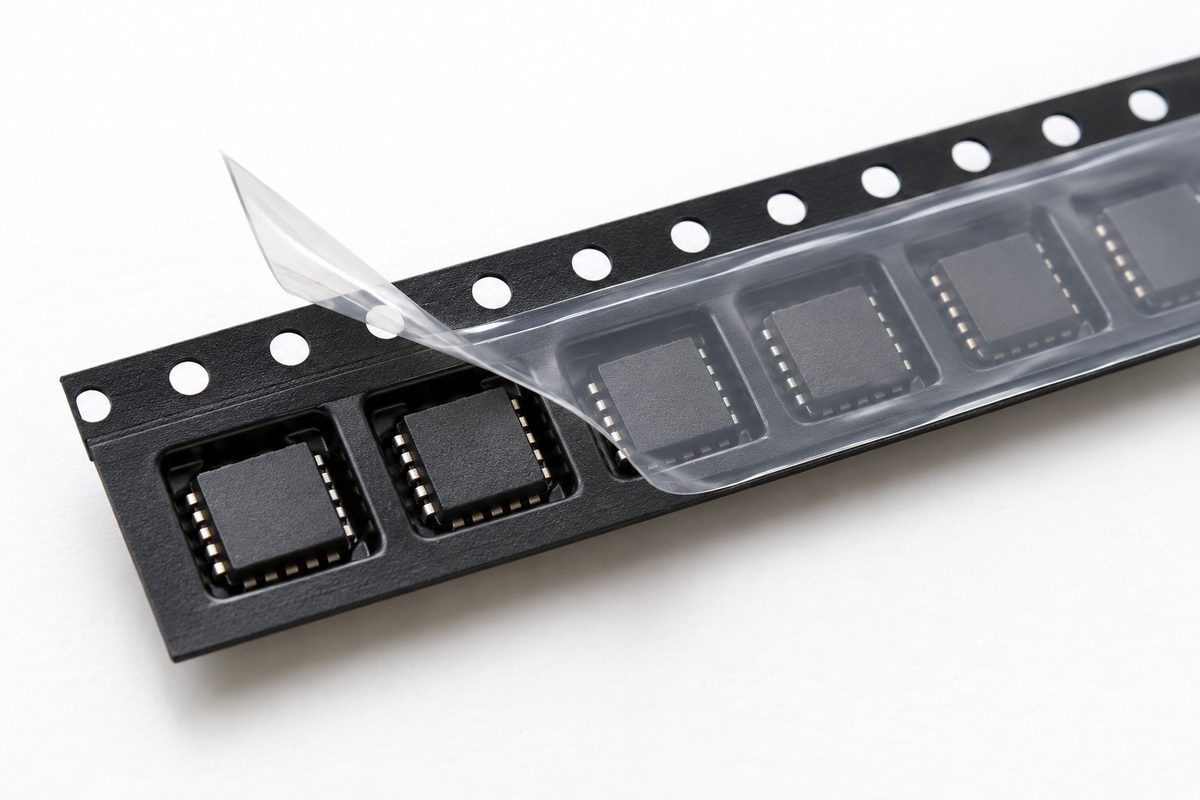
Review carrier and manufacturing details too: reel diameter, tape width and pitch, tray or tube format, orientation, feeder availability, minimum leader length, moisture-sensitivity labeling, bake restrictions, ESD controls, placement nozzle, soldering profile, bottom termination, cleaning compatibility, and inspection access. These items may not change circuit function, but they can affect setup, yield, handling, and schedule.
The BOM alternate approval workflow gives a detailed framework for exact identity, application comparison, verification, decision scope, and controlled release.
Turn each difference into a verification question
Do not apply one generic test to every alternate. Link verification to the identified differences and the risk of the product. A changed regulator may need startup, load-step, thermal, efficiency, protection, and electromagnetic compatibility checks. A memory device may need timing, firmware, endurance, and temperature testing. A connector may need fit, retention, mating-cycle, current, and environmental review. A passive value or dielectric change may require circuit performance and derating analysis.
Define the sample quantity, product configuration, operating corners, fixtures, measurement method, acceptance limits, and responsible approver before the trial. Where useful, test the released part and candidate under the same conditions. Preserve raw results and limitations. A successful bench test on a few boards can support the defined decision, but it is not a universal guarantee for every product, lot, environment, or lifetime.
Assembly validation may include first-article inspection, AOI, X-ray for hidden joints, solder-joint review, programming, in-circuit test, and functional test. The verification plan should distinguish device performance from soldering or placement issues so that a process defect is not mistaken for an electrical incompatibility.
Use an approval matrix that production can follow
For each candidate, record one clear status: proposed, under review, evaluation-only, approved with explicit conditions, approved for a defined scope, or rejected. Identify the exact part number, affected BOM item and references, board and BOM revisions, evidence reviewed, tests performed, decision authority, effective date, restrictions, and requalification triggers.
Scope matters. Approval may apply only to one product revision, factory, temperature grade, firmware version, quantity, or customer program. State whether primary and alternate parts may be mixed within a build and whether purchasing has a preference order. Conditions such as “use only after firmware version X” or “requires revised stencil” need owners and release documents.
Update the controlled BOM and any affected assembly, programming, inspection, test, or service documentation through the normal change process. Do not leave the decision in an email while the production package still lists only the original component. Receiving and kitting need the same released identity rules that engineering approved.
Plan commercial responses without creating new risk
A shortage response can include reallocating existing stock, changing build sequence, approving alternates, redesigning a circuit, or making a controlled last-time buy. Each option has commercial consequences. Large purchases can create excess or obsolete inventory if demand, design, or schedule changes. Non-cancelable and non-returnable terms, minimum order quantities, reel quantities, date-code requirements, storage life, taxes, freight, and ownership of unused material should be visible in the quotation.
Before a buy-ahead decision, reconcile demand, approved configurations, forecast uncertainty, storage and handling capability, and the date when a design change could make the stock unusable. Use scenario quantities rather than a single unexplained forecast. If an alternate requires a new stencil, fixture, program, or validation build, separate those nonrecurring costs from recurring unit pricing.
The PCBA quote breakdown shows how component purchases, bare boards, assembly, tooling, inspection, testing, and logistics should be separated so buyers can compare the same production scope.
What should be included in a shortage-ready RFQ?
Send the released BOM with exact manufacturer part numbers, approved-alternate rules, DNP options, annual and lot quantities, target dates, board data, placement file, assembly drawings, test requirements, firmware or programming instructions, quality requirements, traceability expectations, acceptable sourcing channels, excess-material policy, and delivery destination. Highlight critical or single-source items rather than asking the assembler to infer risk from descriptions.
If alternates are not yet approved, label candidates separately and request an engineering comparison. Through the turnkey PCB assembly RFQ, submit the current BOM, candidate part numbers, data sheets, required quantities, target schedule, operating conditions, and validation expectations. This lets sourcing and engineering review the same controlled inputs.
For a prototype or pilot build, use the PCB assembly quotation path to define whether candidate parts are evaluation-only, how boards will be identified, which tests apply, and what evidence is required before production approval.
Pre-shortage qualification checklist
- Start from the current released BOM and exact orderable part numbers.
- Rank risk by product impact, approved-source count, lifecycle evidence, and validation lead time.
- Separate a source change from an orderable-variant or manufacturer-part change.
- Use current manufacturer documentation and record the evidence date.
- Prefer approved sources and define extra controls for exceptional sourcing.
- Write application requirements before comparing candidate specifications.
- Review electrical, thermal, mechanical, firmware, safety, and regulatory differences.
- Check packaging, handling, placement, soldering, inspection, programming, and test effects.
- Turn every meaningful difference into a documented verification question.
- Release approval status, scope, conditions, and revision through change control.
- Make excess material, NCNR terms, validation costs, and ownership visible in the quote.
- Recheck lifecycle, availability, and evidence when a purchase decision is made.
Component shortage resilience comes from qualified choices, controlled sourcing, and production-ready records—not from a long spreadsheet of suggested substitutes. For a coordinated fabrication, component-sourcing, assembly, inspection, programming, testing, and delivery review, send the full controlled package through the AssyPCB RFQ page. The goal is a buildable plan with clearly approved material, not an unsupported promise that every shortage can be avoided.
Technical references: Texas Instruments product change notification policy, Analog Devices PCN and PDN policy, and ECIA quality and authorized-channel resources.
Latest Blog


Contact Info
Phone: +86-755-82882936
Email: [email protected]
WhatsApp: +86-13570802455
Wechat: +86-13570802455
Address: 2nd floor,D Bldg.,Electric Link Technology Bldg.,Gongming,Guangming New Dist.,518106 Shenzhen, China