
FR-2 vs CEM-1 PCBs: Choose a Single-Sided Laminate by Evidence
Table of Conent
Table of Conent
Choose FR-2 or CEM-1 for a single-sided PCB only after the exact laminate grade, assembly heat exposure, board geometry, and end-product requirements are known. FR-2 is a paper-based phenolic laminate; CEM-1 combines paper and glass reinforcement with an epoxy resin system. Both can support a cost-focused one-copper-layer design, but neither material name alone proves a flame rating, a soldering limit, a punch yield, or an approved substitution. An actual FR-2 grade may even carry a V-0 rating, so a blanket “FR-2 is HB” rule can reject a viable material for the wrong reason.
For an OEM, the practical choice is a controlled material and process decision. Start with the required copper-side count and hole construction, compare supplier data taken under the same test conditions, then qualify the proposed fabrication and assembly route on representative boards. This avoids a nominal laminate saving that disappears in tooling, scrap, thermal damage, or a late compliance change.
What changes when the laminate changes?
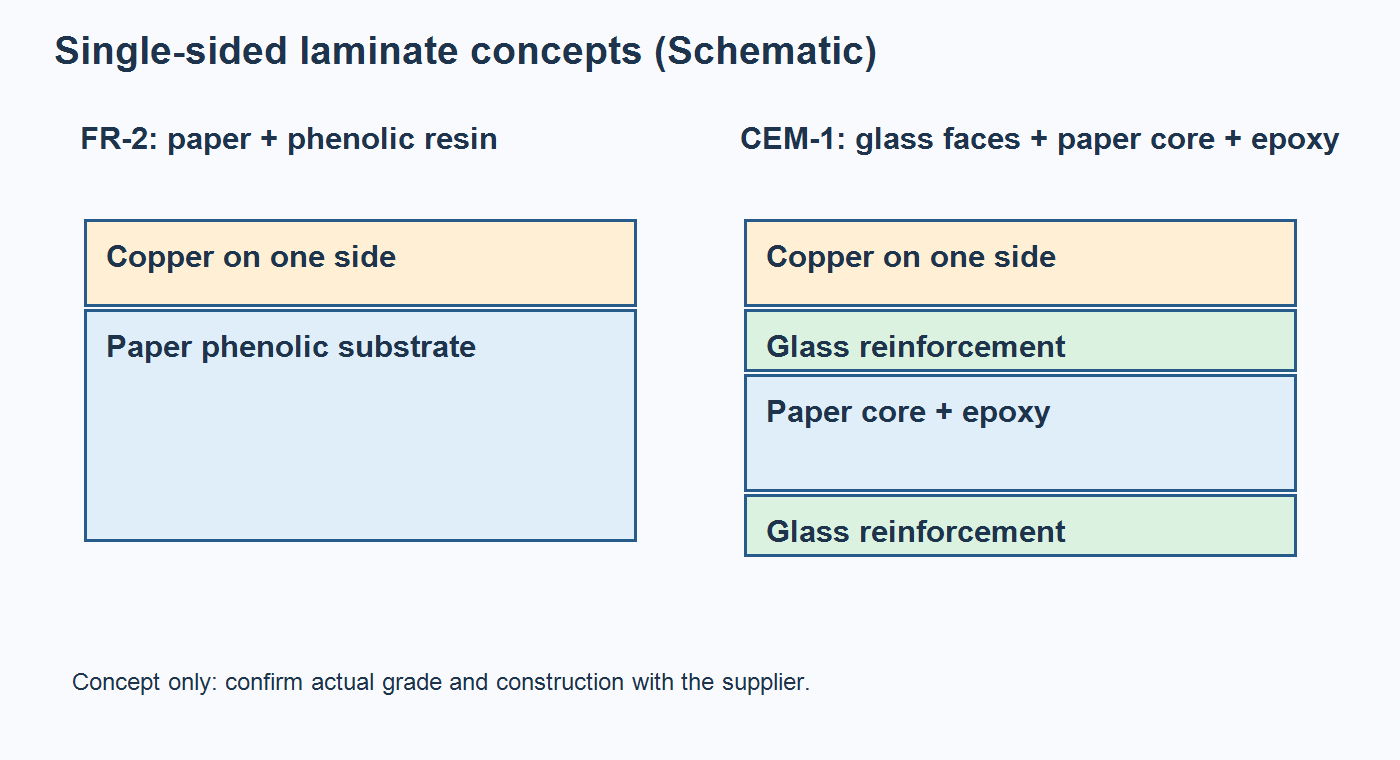
FR-2 and CEM-1 differ in reinforcement and resin construction, but a purchasing decision needs a specific grade and data sheet. Kingboard describes its FR-2 family as paper-based copper-clad laminate that is generally supplied for single-sided construction. Its CEM-1 family uses glass fiber and paper in a composite and is also generally supplied as single-sided copper-clad laminate. Those family descriptions explain the material architecture; they do not specify the performance of every supplier’s product.
The KB-2150 FR-2 technical sheet identifies a paper phenolic grade, while the KB-5150 CEM-1 technical sheet identifies a glass-and-paper composite grade. They are useful examples of how to review grades, not a promise that either grade is available for a particular factory or product. If the design needs two copper sides or plated interconnections, ask for a separately qualified construction instead of treating a material substitution as a simple line item. The existing single-layer PCB guide gives the broader routing tradeoff; this article addresses the laminate and process decision within that architecture.
Which data can actually decide FR-2 versus CEM-1?
Compare the particular grades against a requirement sheet, not a generic internet property table. For example, the cited Kingboard FR-2 KB-2150 and CEM-1 KB-5150 sheets both report UL 94 V-0. That directly disproves the assumption that every FR-2 product is only HB. UL explains that UL 94 classifications describe small-scale material flame tests; the rating is not a complete end-product safety approval. Confirm the recognized material, thickness, color, copper construction, and applicable end-product standard with the compliance owner.
Some headline property numbers cannot be compared fairly without checking methods. KB-2150 lists moisture absorption under one conditioning sequence; KB-5150 lists a value under another. The lower published number for one grade may be encouraging, but it is not a controlled, same-method comparison. Request comparable test reports or qualify both grades under the product’s storage, soldering, and service conditions. IPC-4101 defines a base-material specification framework; a grade callout, supplier evidence, and agreed acceptance criteria still matter in the purchase order.
| Decision gate | FR-2 evidence to request | CEM-1 evidence to request | Release decision |
|---|---|---|---|
| Copper and holes | Exact single-sided construction and hole-making method | Exact single-sided construction; supplier position on plated holes | If plated interconnections are required, redesign or qualify another construction. |
| Flammability | Grade-specific recognition and rating at ordered thickness | Grade-specific recognition and rating at ordered thickness | Do not infer HB or V-0 from the family name. |
| Humidity and insulation | Conditioning method, absorption, insulation after exposure | Same-method results for the candidate grade | Run a comparable product-level exposure test when the published methods differ. |
| Assembly heat | Solder-resistance method and approved profile | Solder-resistance method and approved profile | Qualify the actual wave, selective, or reflow sequence on populated samples. |
| Mechanical process | Punch window, hole/pad quality, dimensional control | Punch window, hole/pad quality, dimensional control | Release the die and inspection limits only after a representative panel trial. |
The table is a hold-point checklist, not a declaration that either family always wins. It converts material marketing labels into files and samples an OEM can approve. In the Kingboard examples, KB-2150 specifies a 40–70 °C punching range and KB-5150 gives 45–70 °C; those are grade-specific supplier conditions, not universal setup temperatures. Die geometry, panel thickness, hole size, copper adhesion, and equipment also affect the process window.
When does punching change the total cost?
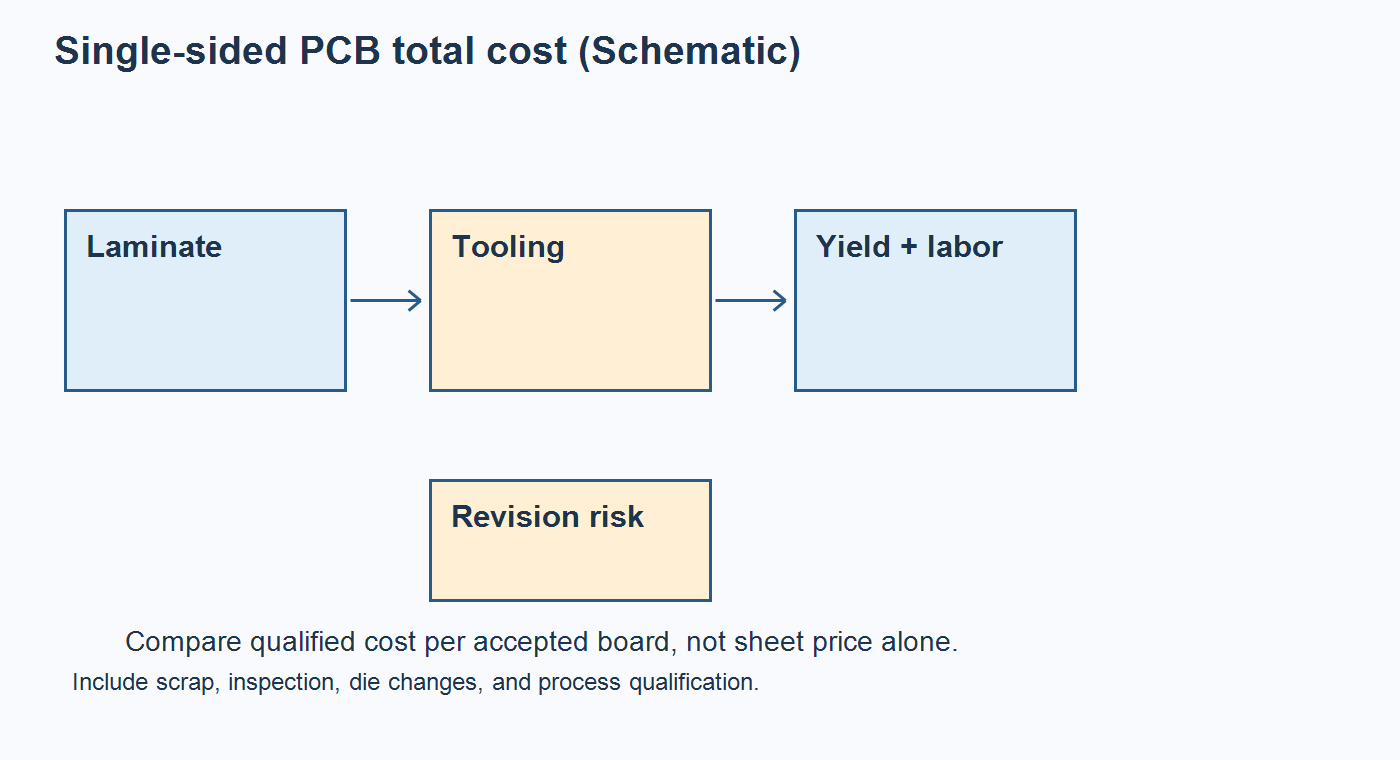
Punching can make a simple, stable single-sided outline economical at volume, but the break-even point depends on tooling and yield. Compare a die-based process with drilling and routing using the actual board outline, hole pattern, panel utilization, annual quantity, revision risk, tool maintenance, scrap, and inspection labor. Do not use a universal “boards per month” cutoff. A new board revision can make a nominally cheap laminate expensive if the die must be remade.
Review copper-to-hole and copper-to-edge geometry against the fabricator’s punch rules. Check for haloing, cracks, pad lifting, burrs, warpage, and registration on pilot panels. Verify that the chosen material and thickness can support the intended connectors and assembly handling. The panelization discussion helps frame utilization and handling; for this laminate choice, the die and defect evidence must also be included.
Example: a low-density appliance control board is stable electrically but its outline is likely to change after enclosure testing. The tooling decision should then include at least one plausible revision cycle rather than assuming the first die will remain useful for the full program. A routed pilot may be the better evidence-gathering step even if the eventual production board is punched. Record that process change in the drawing and quotation assumptions so prototype results are not mistaken for production yield.
If the released drawing has settled and the production forecast is credible, share the outline, hole map, quantity forecast, and candidate laminate grades for a fabrication review. The review can define which punch or routed process should be quoted and what trial evidence is needed before the material is approved.
Can the same assembly process run on both materials?
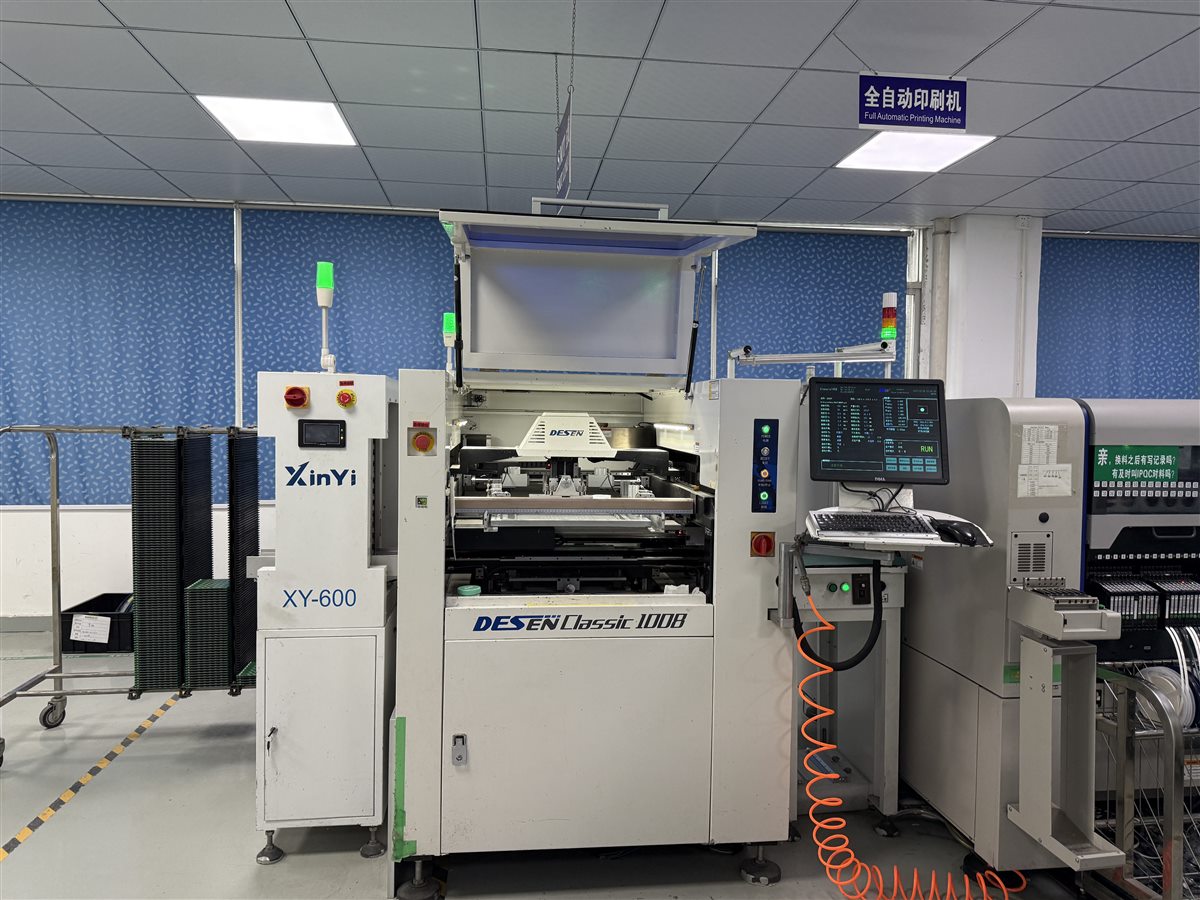
Not automatically. A laminate’s coupon-level solder resistance is one input, while the populated board sees a complete thermal history. Include paste deposition, reflow exposure where used, through-hole insertion, wave or selective soldering, rework, cleaning, and storage in the qualification plan. Connector mass and copper distribution can produce local heating that a simple substrate comparison misses. The mixed SMT and through-hole sequence guide explains why the sequence itself needs approval, although its machine example should not be treated as evidence for FR-2 or CEM-1 capability.
Run representative samples through the proposed process, then inspect solder joints, pad adhesion, warpage, discoloration, dimensional fit, and electrical function. If a repair is permitted, specify the number and method of thermal cycles that the qualified material can tolerate. A grade with a favorable bare-laminate data sheet may still be unsuitable for a dense placement, large terminal block, or repeated rework. Conversely, a one-sided low-density assembly may not need the full capability of a woven-glass FR-4 board.
What must be in the procurement and fabrication package?
Freeze the precise laminate grade or a controlled equivalent specification, nominal thickness and tolerance, copper side and weight, required flame-rating evidence, approved finish, outline, holes, panel and tooling approach, and inspection limits. A material family name in a BOM is too broad if different grades have different ratings or conditioning results. Identify which alternates require engineering, safety, or process requalification.
Separate bare-board acceptance from assembly acceptance. The fabricator should document material traceability, dimensional and hole quality, copper/pad condition, and any controlled punch setup. The assembler should document its thermal sequence, handling, solder-joint acceptance, test access, and functional limits. A material change after assembly qualification can affect both contracts. The base-material and lamination review gives further context on resin and dimensional controls; apply the specific single-sided grade requirements here.
For a complete PCBA evaluation, supply the Gerber or ODB++ data, fabrication drawing, approved material grades, BOM, placement file, assembly drawing, quantity bands, soldering constraints, and test requirements. A full-turnkey assembly scope can then connect fabrication, parts sourcing, assembly, and test responsibilities to one controlled revision rather than comparing bare-board prices alone.
Final selection rule
FR-2 and CEM-1 are credible candidates when the circuit truly fits one copper side and the exact grade survives the required fabrication, assembly, environmental, and safety checks. Select by verified grade and qualified process, not by broad claims that one family is always cheaper, more flame resistant, or more solder tolerant. If the design needs plated interconnections, higher thermal exposure, or a different routing architecture, change the construction and re-evaluate the quote rather than stretching a material label.
Once the grade and trial criteria are set, provide the controlled build files and material acceptance requirements for a combined PCB assembly assessment. The resulting scope should state the candidate laminate, tooling assumptions, component supply, soldering sequence, inspection, functional test, and any qualification still required before production release.
Latest Blog
Contact Info
Phone: +86-755-82882936
Email: [email protected]
WhatsApp: +86-13570802455
Wechat: +86-13570802455
Address: 2nd floor,D Bldg.,Electric Link Technology Bldg.,Gongming,Guangming New Dist.,518106 Shenzhen, China