
Carton Sealer Controller PCBA: One Supplier or Split Build?
Table of Conent
Table of Conent
Use one accountable PCBA supplier for a carton sealer controller when the OEM wants one party to coordinate bare-board fabrication, approved components, assembly and agreed board-level tests. Split those stages when a qualified specialist, approved component channel or existing contract offers a clear technical advantage and the OEM can control each transfer. The decision is less about whether the purchase order names one company or three than whether a failed board can be traced to the correct design revision, material lot, assembly step and test record without reconstructing the story afterward.
“One supplier” describes contractual ownership; it does not prove that every step happens in one building. A lead supplier may use approved external fabricators or component distributors. Conversely, three specialist suppliers can form a sound build if their deliverables, exception authority and lot identifiers are agreed before release. For a carton sealer, the final acceptance boundary also matters: a PCBA bench test cannot establish how a photoeye, conveyor drive, tape mechanism or other machine interface behaves after installation. Those interfaces are examples, and the released machine design determines which actually apply.
Choose the model by control burden, not supplier count
A single accountable supplier reduces the number of intercompany handoffs that the OEM must administer. It can consolidate schedule, material substitutions, incoming PCB questions and assembly defects under one escalation path. That does not remove the OEM’s obligation to approve the design, critical alternates or machine-level acceptance criteria. Ask the lead supplier to identify the actual process owners, including any subcontractors, and show how exceptions return to the OEM for approval.
A split build is often reasonable when the OEM already has a qualified bare-board fabricator, a customer-nominated part source, or an assembly specialist with a required fixture or process. In that case, the OEM or a named integrator becomes the release authority at the boundaries. If nobody owns a mismatch between the fabricated board, the AVL and the assembly drawing, the apparent unit-price advantage can be consumed by schedule and rework. The table below turns the comparison into a procurement decision.
| Decision question | One accountable supplier | Split fabrication, sourcing and assembly | Evidence to request |
|---|---|---|---|
| Who resolves a PCB or BOM discrepancy? | Lead supplier coordinates an approved answer. | OEM or named integrator routes and approves the answer. | Written deviation path and revision authority. |
| Who holds material and WIP risk? | Contract defines ownership and treatment of approved inventory. | Each transfer defines title, count and damage responsibility. | Purchase terms, lot receipt and discrepancy log. |
| Who can substitute a part? | Only within the OEM-approved AVL and change process. | Same rule, enforced across buyer and assembler. | Approved manufacturer part numbers and ECO record. |
| Who performs board-level testing? | Lead supplier arranges the agreed fixture, firmware and record. | Named assembly or test provider performs and reports it. | Test specification, fixture revision and serial-level result. |
| Who accepts the installed carton sealer? | OEM or designated machine integrator. | OEM or designated machine integrator. | Machine test plan and disposition authority. |
The full turnkey assembly service is one possible procurement scope; it is not evidence that a particular carton sealer board has passed testing. Request a process map and quote exclusions for the actual design. The related carton sealer controller production-release guide covers prototype changes and acceptance gates. Use it alongside this supplier-model decision, rather than assuming that release discipline follows automatically from a single purchase order.
Model the handoff before comparing quotes
Send every bidder the same controlled data package: fabrication outputs, stackup and drawing, assembly drawing, BOM with approved manufacturer parts, polarity notes, programmed firmware or programming instructions, test specification and the required delivery records. If fabrication and assembly are separate, identify who validates the incoming board against the released revision and who can stop the build on a mismatch. The manufacturing-data format guide explains why a complete, consistent package matters even when a CAM-readable format is used.
Compare quoted boundaries, not just unit prices. A board price that omits electrical test, controlled impedance evidence or incoming inspection is not directly comparable with one that includes them. An assembly quote can differ on material ownership, programming, conformal coating, test fixtures or spare boards. Ask for those inclusions and exclusions in the same line-item structure. For a full fabrication, component-sourcing, assembly and board-test evaluation, an OEM can send the released fabrication, BOM and test files for an assembly scope review; the response should make the ownership and test assumptions explicit.
Make each transfer traceable to a released revision
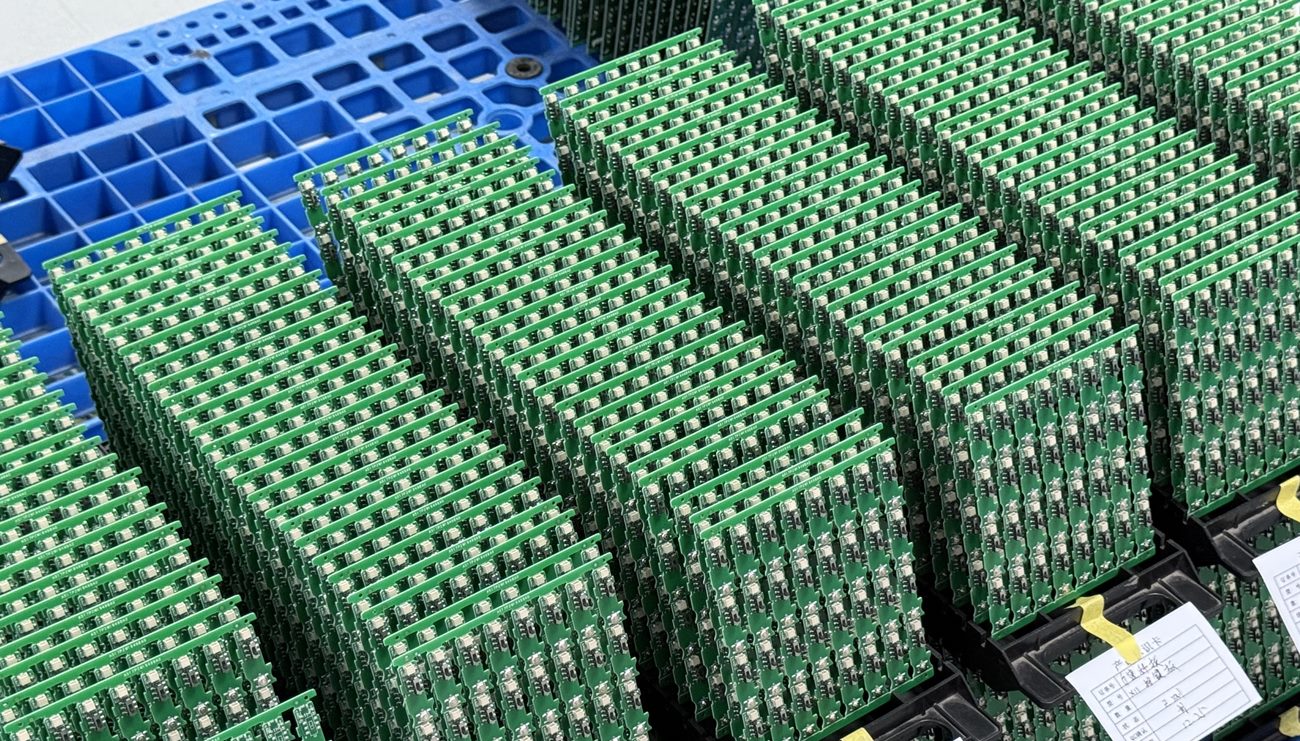
A split chain needs an evidence packet at each physical transfer. The real factory photo below shows assembled boards grouped in racks with paper batch tags. It illustrates a physical-lot handling point; it does not show a carton sealer design, establish a traceability system or prove any particular inspection result. The useful question is whether a receiver can connect that lot to the approved board revision and the subsequent assembly record.
The IPC-1782 traceability framework addresses the exchange of material and process traceability information across the electronics manufacturing chain. It does not prescribe one universal record depth for every controller. The OEM and suppliers should agree what must be captured for this product, how long it is retained, and how records are retrieved when a field fault occurs. IPC also discusses digital manufacturing data exchange across suppliers in its digital manufacturing program. Treat the following packet as a practical contract checklist, not a claim of mandatory IPC certification.
| Transfer boundary | Minimum question for the sender | Receiver’s release check | Named owner |
|---|---|---|---|
| Design to fabricator | Which drawing, fabrication file set and ECO revision were built? | Match board markings, quantity and agreed fabrication evidence. | OEM release authority; fabricator for build records. |
| Fabricator to assembler | Which PCB lot and inspection disposition are shipped? | Quarantine wrong revision, damage or undocumented deviation. | Assembler incoming quality; OEM for design exceptions. |
| Parts to assembler | Which approved part numbers, alternates and lots were issued? | Reconcile kit against BOM/AVL and shortage approvals. | Component buyer and assembler, as contracted. |
| Assembly to board test | Which traveler, process deviations and serials are present? | Use released fixture, firmware and limits; preserve failures. | Assembly/test supplier. |
| PCBA to machine integrator | Which board serial, firmware and test disposition are delivered? | Verify connector pinout and run the installed-machine plan. | OEM or named integrator. |
Do not use a carton sealer’s acceptable operation as a substitute for missing board-build records. Equally, a complete traveler cannot prove installed-machine performance. These are different questions with different owners. Where the OEM offers multiple conveyor, sensor or regional variants, tie the shipped board serial to a configured BOM and firmware baseline; the assembly-variant guide gives a broader view of that control problem.
Assign inspection and functional tests to the right owner
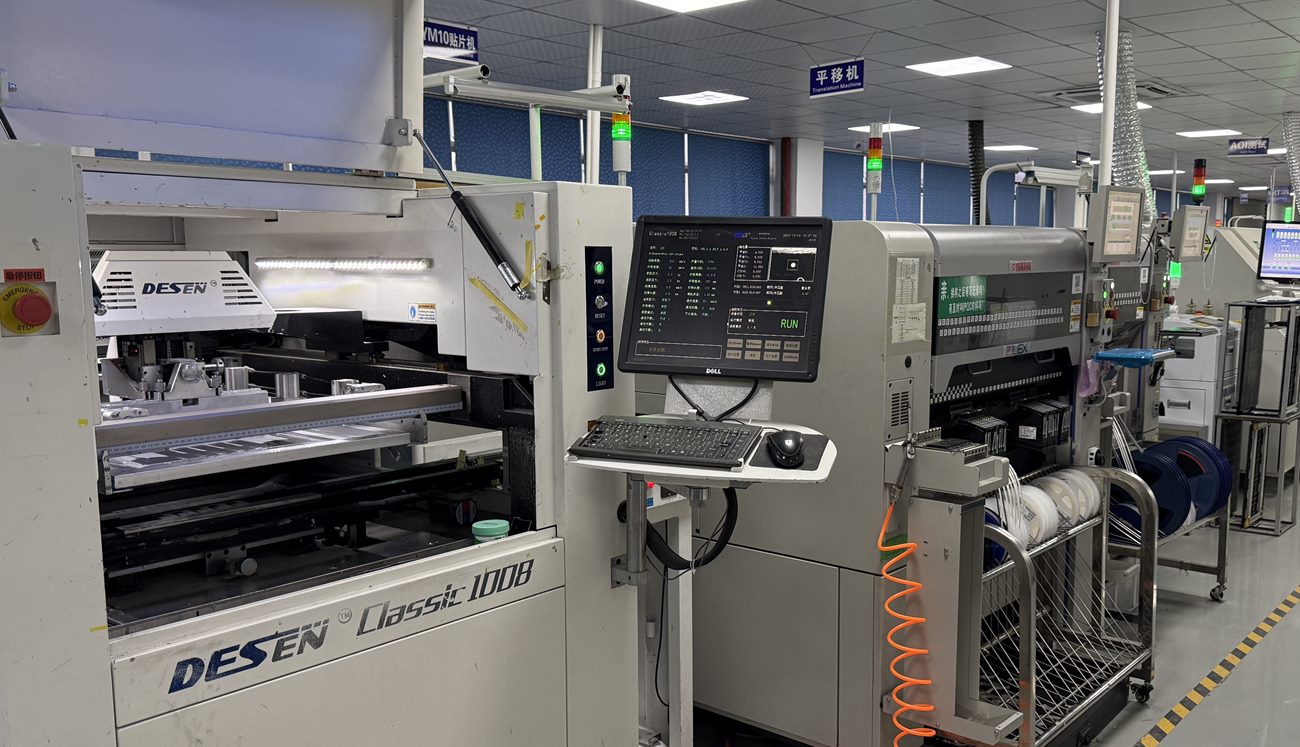
The assembler can check placement, soldering, polarity, programming and agreed board-level electrical behavior. The real SMT-line photo below shows the assembly equipment context, not an identified carton sealer run or proof of a pass. The supplier’s production test should state the fixture and firmware version, connection points, inputs and outputs stimulated, acceptance limits, serial or lot linkage, and what happens to a failure. A visual or AOI pass alone cannot establish that the controller will recognize a photoeye or command a motor correctly.
For the installed carton sealer, the OEM should test the actual input sensors, interlocks, drive and actuator interfaces, wiring harnesses and fault responses that its design uses. A board-level fixture may simulate some signals, but it cannot by itself validate belt tracking, sensor alignment, machine timing or the safety architecture. Put those system tests in the machine acceptance plan. The PCB test-planning guide can help separate inspection, electrical checks and functional evidence before any supplier signs a purchase order.
When a fault appears, preserve the failing board’s serial, firmware, fixture result, machine configuration and event conditions before swapping parts. Under a single-supplier model, the lead supplier can coordinate the board investigation but still needs the OEM’s machine evidence. Under a split model, the integrator routes the same evidence to the fabricator, buyer or assembler without losing revision context. Neither model justifies assigning a root cause from an AOI image or a machine alarm alone.
Release the same controlled package under either model
Choose the lead-supplier route when coordination capacity is scarce and the proposed supplier can name process owners, exception rules and deliverable records. Choose specialists when the OEM has a proven technical reason to retain a qualified fabricator, material channel or test provider and can actively manage transfers. If the organization cannot identify who approves an alternate part, who holds a quarantined board lot or who owns an inconclusive functional test, define those answers before splitting the order.
The quote package should include one revision-controlled fabrication and assembly baseline, the approved AVL, a build quantity and delivery cadence, test fixture and firmware responsibilities, expected traceability records, and a written process for deviations. Compare supplier responses against those same fields. Once the release and exception owners are clear, the OEM can request a production review with the controlled build package. A useful review returns explicit scope and unanswered engineering questions rather than a unit price detached from the build.
Source note: The traceability approach is informed by IPC-1782’s traceability framework. The carton-sealer interface examples and decision tables are engineering guidance for supplier discussions, not a substitute for the OEM’s released design, contract or machine acceptance criteria.
Latest Blog



Contact Info
Phone: +86-755-82882936
Email: [email protected]
WhatsApp: +86-13570802455
Wechat: +86-13570802455
Address: 2nd floor,D Bldg.,Electric Link Technology Bldg.,Gongming,Guangming New Dist.,518106 Shenzhen, China