
IPC Classes 1, 2, and 3: Define the Assembly Acceptance Basis
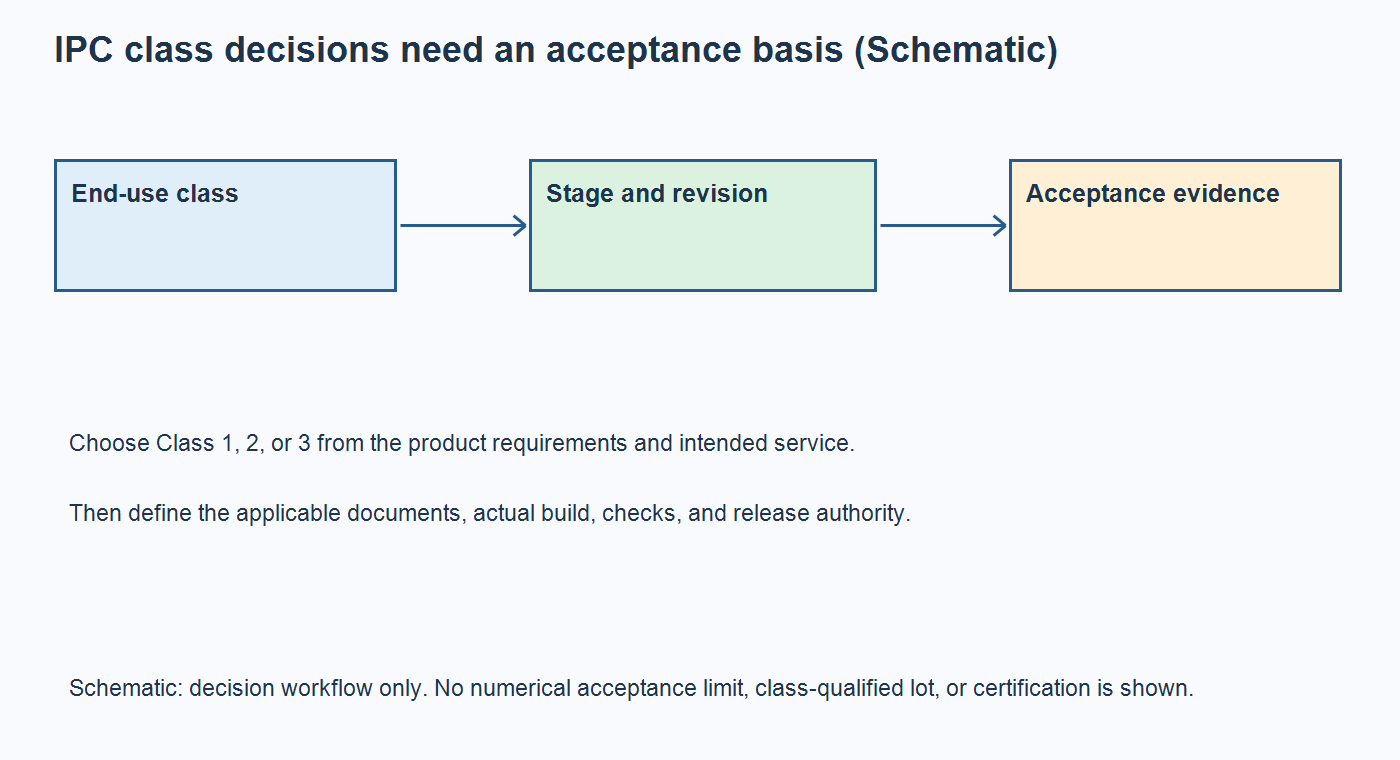
Table of Conent
Table of Conent
IPC Classes 1, 2, and 3 describe different end-use expectations that must be translated into the applicable manufacturing and acceptance requirements. Choose the class from the product’s intended service, failure consequences, environment, and customer obligations. Then identify the governing standard, revision, and any agreed exceptions for each purchased stage. A note saying only “IPC Class 3” does not specify a complete PCB assembly order.
For an original equipment manufacturer (OEM), the practical distinction is between choosing an acceptance basis and proving that a particular build meets it. Bare-board fabrication, soldering processes, visual workmanship, electrical testing, and product qualification answer different questions. This guide compares the three classes and develops a purchasing and change-review framework from official public samples checked on October 23, 2026. It does not reproduce the licensed acceptance tables, certify a supplier, or determine whether an individual solder joint passes.
Choose the class from the end-use requirement
Choose the class for the actual product rather than assigning it from an industry label or purchase price. The public J-STD-001J classification section distinguishes three end-use categories and assigns class identification to the user. It also permits the manufacturer to identify the class when the user has not documented it. Settle that decision explicitly.
| Class | End-use emphasis, paraphrased | Question for the product owner |
|---|---|---|
| 1 | The completed assembly’s ability to function is the principal need. | Have the actual service and customer requirements been defined beyond initial operation? |
| 2 | Sustained operation and longer service are needed; continuous availability is desirable but not essential. | Does that service expectation fit the consequences of downtime? |
| 3 | Critical sustained or on-demand operation, potentially severe conditions, and unacceptable downtime. | Which product requirements and evidence support this selection? |
These descriptions identify the selection problem; they are not lifetime predictions or a ranking of every finished product. An industrial controller’s monitoring display and a critical protection function may have very different requirements. The responsible product team must resolve the classification of the delivered assembly and any additional requirements.
Record the decision owner and rationale. A sourcing team should be able to explain why the selected class belongs in the order without relying on “medical,” “automotive,” or “premium” as a substitute for the product specification.
Name the standard for each manufacturing stage
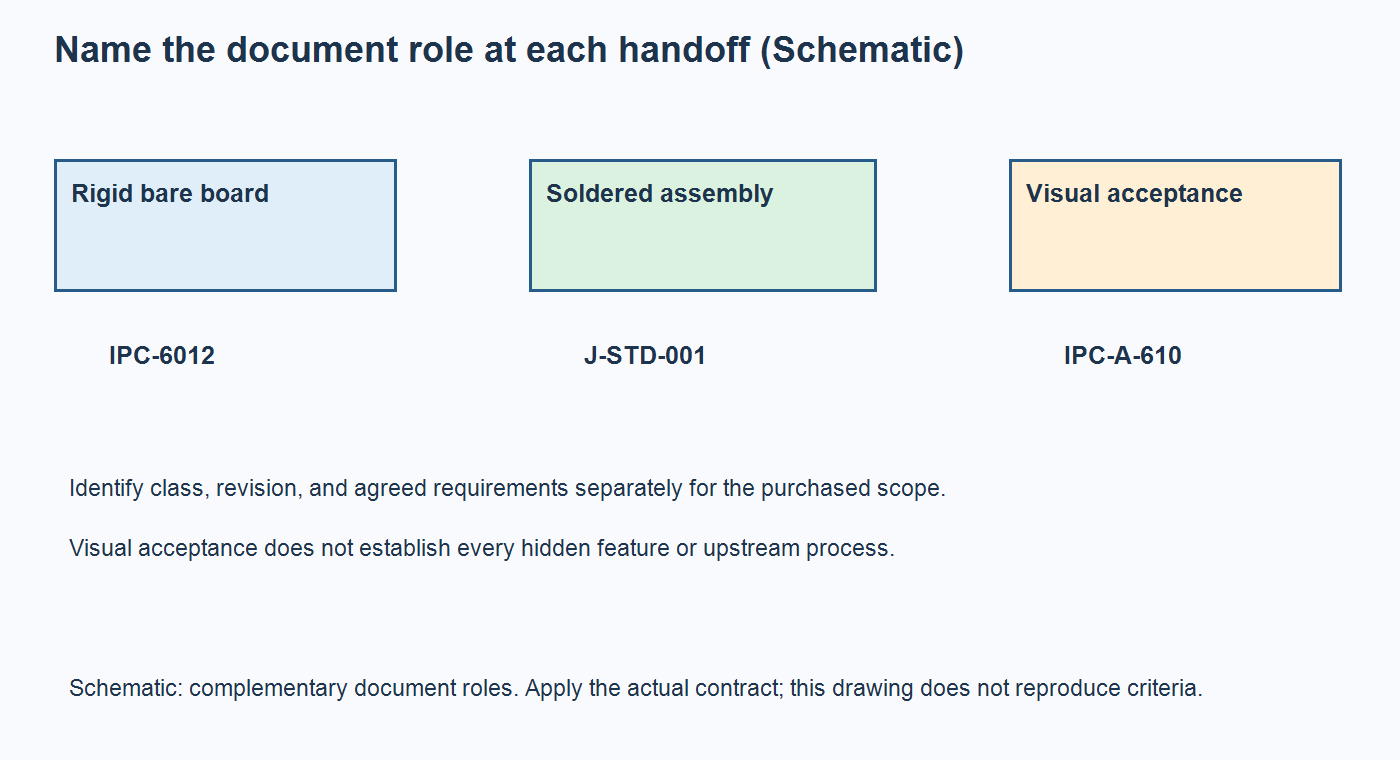
State the required document and class for each stage instead of assuming that one class label covers the whole supply chain. A rigid bare board and a soldered assembly are different purchased products.
IPC-6012F’s public scope, dated September 2023, addresses rigid-board fabrication qualification and performance. Its public introduction also identifies application-specific addenda that apply when specified in procurement documentation. A base class callout does not replace the need to identify applicable additional requirements.
IPC’s release notice for the J revisions, dated April 8, 2024, distinguishes J-STD-001’s soldering process and material requirements from IPC-A-610’s post-assembly acceptance role. They work together but are not interchangeable document names.
The rigid-board Class 2 release example develops the fabrication side in more detail. For an assembled project, add the assembly criteria and the customer’s test requirements as distinct entries. Reconcile them with the actual stackup, BOM, drawings, and manufacturing route rather than copying an unrelated note block.
Freeze revision, class, and exceptions before quotation
Make quotations comparable by giving each supplier the same acceptance baseline. A difference in price may reflect different document revisions, inspection scope, or unresolved assumptions rather than a more efficient process.
J-STD-001J’s public introduction states that a newer revision or amendment is not automatically required. Identify the contractual revision and applicable amendments explicitly. Do not replace a released requirement with “latest IPC” without reviewing what changes and who can authorize them.
Create a short acceptance index linking each purchased item to its standard, revision, class, customer drawing, and any additional specification. Include a controlled way to resolve conflicting notes. The index should identify the responsible approver, not invent a universal precedence rule for every contract.
Ask suppliers to list departures and open questions before production release. Separate a commercial assumption used to prepare a quotation from an approved technical deviation. For example, a hypothetical quotation based on a different inspection report package should return that difference for review rather than silently narrowing the customer’s requirement.
If the baseline remains ambiguous, share the class decision and open acceptance questions with the drawing revision, BOM, proposed document revisions, quantities, and special requirements. The review can identify manufacturing and inspection assumptions and quotation exclusions before the order commits to a particular scope.
Turn workmanship criteria into an inspection plan
Specify what will be inspected, how the applicable criterion will be evaluated, and which record will support acceptance. The class number alone is insufficient instruction for an inspection program.
IPC-A-610J’s public scope describes visual assembly acceptance requirements and explicitly excludes cross-section and X-ray inspection criteria. It points to X-ray guidance in J-STD-001. Its acceptance illustrations also do not authorize product repair or modification. Those boundaries matter when a hidden connection or proposed correction cannot be resolved by a visible-workmanship check.
Identify the applicable package or feature, controlled criterion, inspection method, access limitations, sampling or coverage requirement, and disposition authority. Where X-ray or another method is specified, agree the relevant acceptance basis rather than asserting that a general Class 3 label supplies every numerical limit. Use the actual licensed documents and customer requirements for the detailed judgment.
The requirements-to-method test planning framework keeps inspection and electrical coverage distinct. A visually acceptable joint does not establish that firmware, protection behavior, communications, or a complete signal path meets the product requirements. Define the production tests and retain their configuration and limits.
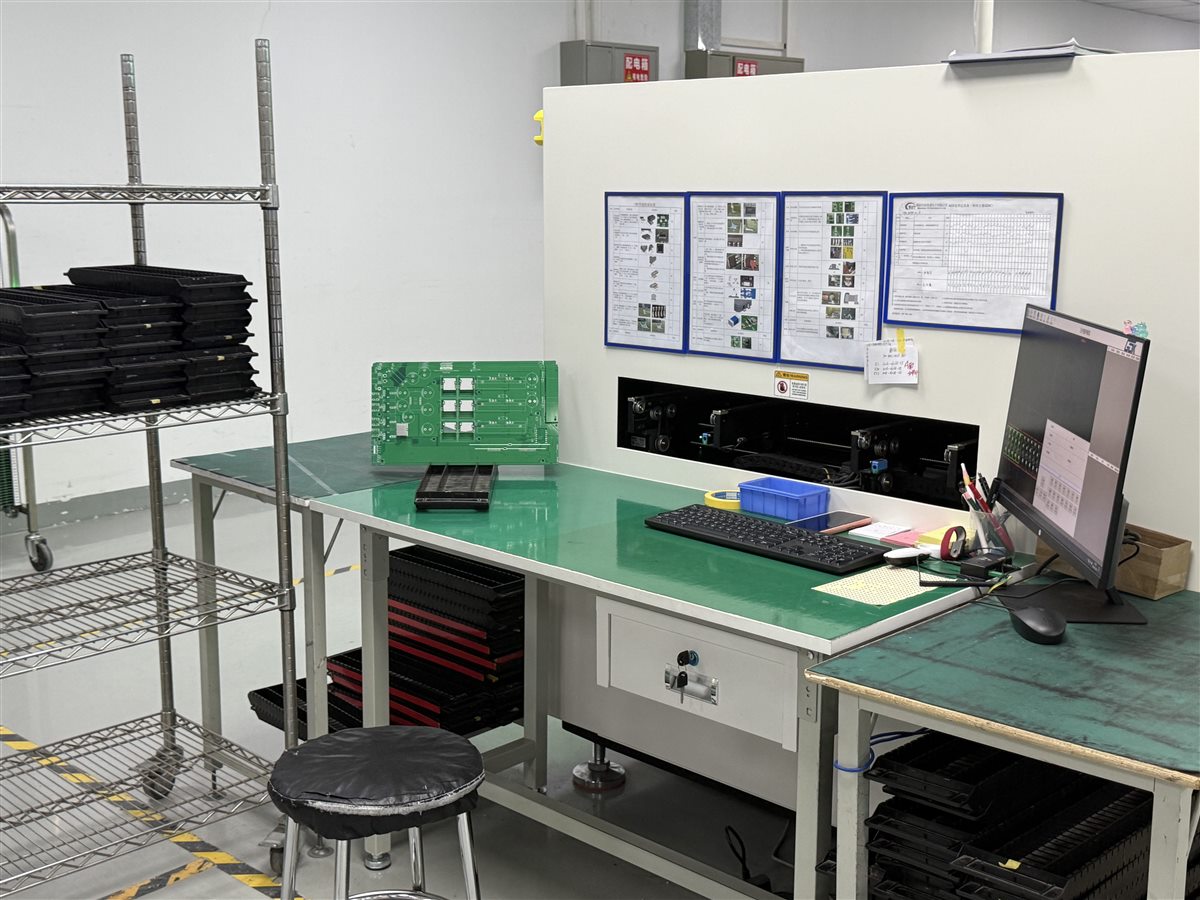
Before a trial build, ask the quality team to walk through a representative feature with the proposed instructions. Confirm that the inspector can locate the feature, obtain the required view or measurement, and select the correct criterion. Record questions discovered during that exercise before programming an inspection routine around an uncertain interpretation. This is a planning recommendation, not a substitute for the contracted standard.
Keep the observation, criterion, and disposition linked. An image without a board revision or feature identifier is difficult to reuse during a disagreement. Record any inspection limitation and route it to the authorized reviewer; do not convert an unobservable condition into a pass because another test succeeded.
Review a class change against the as-built evidence
Treat a proposed class change after manufacturing as an evidence review, not a label change. Additional inspection may answer some questions while leaving earlier material, construction, or process requirements unresolved.
The practical inference follows from the separate document roles: final visual evidence cannot reconstruct every upstream condition. Assemble the original requirements, as-built revision, material and process records, inspection results, and approved deviations, then compare them with the proposed acceptance basis. The result may require further checks, a controlled disposition, or a different build; do not assume an automatic upgrade or automatic rejection.
| Evidence category | Review question | Unresolved condition |
|---|---|---|
| Observable workmanship | Can the actual feature be evaluated against the proposed criterion? | Arrange an appropriate check or record the inspection limitation. |
| Bare-board construction | Do fabrication records represent the required board revision and scope? | Seek the missing evidence and engineering disposition. |
| Materials and process history | Were relevant requirements satisfied during the build? | Do not substitute a final photograph for absent process evidence. |
| Exceptions and release authority | Who may accept a departure and which units or lots are affected? | Keep the changed acceptance claim on hold until authorized. |
State whether the request changes the next production lot or an already manufactured lot. Preserve the original build claim and evaluation history. An authorization for one bounded deviation should not silently become a general relaxation for repeat orders.
Release one acceptance package for the assembly order
Release the chosen class together with the documents and evidence that make it executable. The useful purchasing outcome is a consistent build and acceptance basis, not an isolated number on a quotation.
Include fabrication data, BOM, placement files, assembly and fabrication drawings, quantities, applicable standards and revisions, classes, approved alternatives, test coverage, reporting, traceability, packaging, and delivery requirements. Identify who can approve changes and which questions must be closed before manufacturing or shipment.
The turnkey PCB assembly scope connects fabrication, component sourcing, assembly, and testing. Confirm project-specific workmanship, inspection, documentation, and any special qualification requirements with OrinewPCB. A general service page does not establish conformance of a particular lot to a particular class.
Class selection should remain tied to intended use while the acceptance plan remains tied to the delivered configuration. For a complete project assessment, provide the released build and acceptance package with the controlled files, quantities, class and revision index, deviations, and required test records. Those inputs allow manufacturing feasibility and quotation scope to be reviewed on the same basis.
Latest Blog

Contact Info
Phone: +86-755-82882936
Email: [email protected]
WhatsApp: +86-13570802455
Wechat: +86-13570802455
Address: 2nd floor,D Bldg.,Electric Link Technology Bldg.,Gongming,Guangming New Dist.,518106 Shenzhen, China