
Intrinsically Safe Telemetry PCBA: Define the EMS Handoff
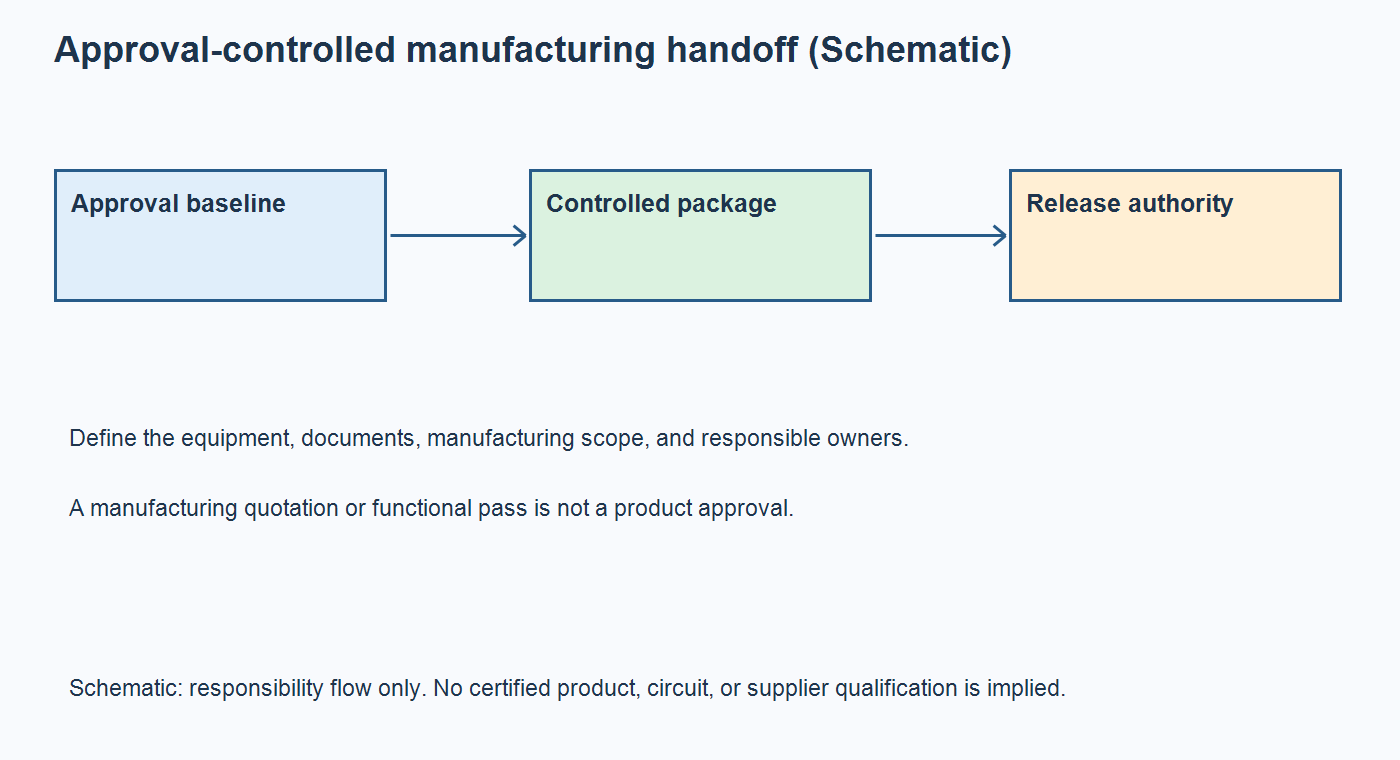
Table of Conent
Table of Conent
An intrinsically safe telemetry PCBA needs an EMS handoff that preserves the assessed configuration and assigns responsibility for every proposed change. Define the equipment boundary, approval route, controlled drawings, cable and enclosure configuration, manufacturing location, and release authority before placing a production order. A working data link, an isolated component, or a low supply voltage does not establish that the finished equipment is suitable for an explosive atmosphere.
For OEM engineers and buyers, the practical task is to separate three deliverables: a reproducible assembly, verified telemetry performance, and the applicable explosion-protection evidence. They interact, but none substitutes for the others. This guide addresses that manufacturing handoff for a cabled telemetry design; the actual application and installation must be specified by its owner. It does not provide a circuit approval, universal cable limit, or an assertion that OrinewPCB holds certification for the proposed product or manufacturing scope.
Define the approval boundary before assigning EMS work
Identify exactly what is being manufactured and which parts of the surrounding system affect its protection assessment. A bare PCBA, a populated enclosure, and an installed telemetry loop are different delivery boundaries.
The IEC 60079-11:2023 public scope covers intrinsically safe apparatus and associated apparatus connected to circuits entering explosive atmospheres. The catalog also includes equipment outside that atmosphere when the protected circuit depends on its construction. Its listing showed a corrected version dated July 2026 when checked. This public scope is not the full standard or a project-specific compliance assessment.
Have the design owner identify the intended atmosphere, installation conditions, applicable protection concept, target market, relevant approval documents, and responsible assessment organization. Do not infer these from “wireline,” “industrial,” or the board’s operating voltage. Record whether the OEM is developing a new design, transferring an existing assessed design, or proposing a change.
State who controls the approval documentation and who may authorize production release. Purchasing and the EMS need a named decision path when a drawing, material, process, or manufacturing arrangement cannot be followed as issued.
Freeze one configuration across board, harness, and enclosure
Release a coherent configuration package rather than a collection of individually current files. The board revision must match its BOM, wiring, enclosure, firmware, test instructions, and any protection-related restrictions supplied by the responsible owner.
| Controlled item | Information needed from the responsible owner | Hold manufacturing release when |
|---|---|---|
| Approval baseline | Applicable certificate or assessment references, drawing index, conditions, and approval contact | The priced configuration cannot be linked to an authorized baseline |
| PCBA construction and parts | Fabrication data, stackup, exact BOM, assembly drawings, and identified restricted features | A proposed material or part differs without a documented disposition |
| Harness and interfaces | Cable identity and length definition, connector pin map, shielding, routing, and applicable interconnection constraints | The installed connection differs from the released description |
| Enclosure and hardware | Mechanical BOM, mounting and entry details, assembly instructions, and identified critical characteristics | The supplier must invent a clearance, attachment, entry, or workmanship requirement |
| Production verification | Approved checks, limits, sampling rules, fixture requirements, and required records | A generic test label replaces an executable procedure |
The general controller box-build handoff explains ordinary mechanical, harness, and acceptance interfaces. Those controls remain useful, but its example is not an intrinsic-safety specification. Add the restrictions and approval references belonging to this telemetry product.
Use an index that states document revision, applicability, responsible owner, and release status. Conflicting files should become an explicit open item rather than an undocumented shop-floor interpretation. Keep a commercial assumption separate from an engineering or approval authorization.
Treat cable and interface changes as controlled changes
Review a cable or interface proposal against both communication requirements and the assessed safety configuration. Passing a link test answers a performance question; it does not authorize a different interconnection.
The Pepperl+Fuchs intrinsic-safety explanation describes why low voltage alone is insufficient and why cable capacitance and inductance matter to interconnection assessment. Use the applicable apparatus documentation and its conditions. A few generic parameter comparisons are not a substitute for reviewing the complete arrangement.
If the proposed build contains unresolved interface assumptions, send the controlled configuration and open manufacturing questions to OrinewPCB with the BOM, quantities, and approval responsibilities so the manufacturing review can identify scope, eligibility questions, and quotation exclusions before commitments are made.
| Proposal | Communication review | Protection-configuration review |
|---|---|---|
| Different cable or length | Check the specified channel behavior, losses, timing, and operating conditions | Review the actual cable parameters and connection against applicable approved documentation |
| Additional filter or protection part | Check loading, edge behavior, noise response, and required link margin | Identify changed energy storage, fault behavior, and assessment assumptions for the responsible reviewer |
| Different connector or harness route | Check pin assignment, shielding arrangement, strain, and repeatable assembly | Review the changed physical configuration and any specified separation or installation restrictions |
| Different interface device | Check functional compatibility, timing, power, and configuration | Check the exact device and application conditions against the controlled assessment |
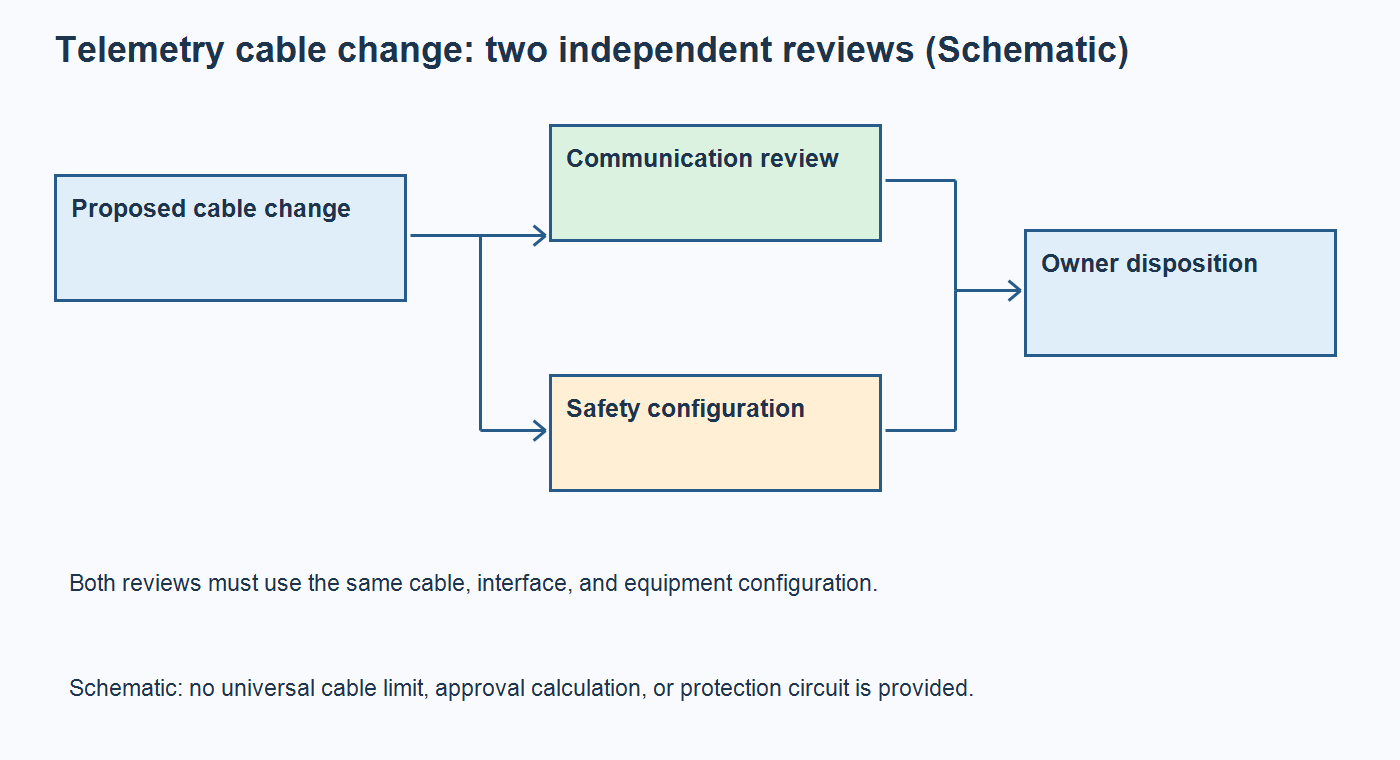
As a hypothetical example, a replacement harness may pass a short bench communication test while its specified cable construction differs from the released configuration. Preserve that distinction in the change request. Neither the bench pass nor a matching connector shape closes the protection review.
Separate communication tests from protection evidence
Give each test a defined purpose and an authorized procedure. Workmanship inspection, continuity checks, programming verification, and telemetry functional tests cannot be relabeled as explosion-protection certification.
For the communication test, specify the actual interface, firmware, data pattern or protocol, representative channel, supply conditions, loads, operating states, and acceptance limits. Record the configuration used and which installation conditions the fixture represents. Avoid a generic “signal integrity passed” note without identifying the measured behavior and its requirement.
TI’s digital-isolator application report, revised August 2021, illustrates a component qualified for particular IS-to-IS applications and conditions. Component-specific evidence needs to be interpreted within the complete design. Do not extend an older application example into a universal statement about all isolators or a finished telemetry product.
Define how the results will be delivered and reviewed. Link each unit or agreed production lot to the test procedure revision, fixture identity, firmware artifact, harness configuration, result, and disposition. If a fixture uses a simulator instead of the released cable assembly, record that difference and the scope it covers. A readable pass report without the tested configuration leaves the OEM unable to tell whether it describes the delivered assembly. Retain failed results and authorized retests rather than replacing the history with the latest pass.
The responsible product owner should supply the protection-related production checks, authorized test equipment connections, acceptance criteria, and escalation rules. The assembler should not invent energized fault tests or connect arbitrary bench equipment to an installation intended for a hazardous atmosphere. Define an approved manufacturing test setup and its boundary.
Control substitutions and manufacturing transfers
Route a deviation through the designated technical and approval authorities before treating it as a production option. A commercial substitute can affect assumptions that are invisible in an ordinary footprint comparison.
IECEx guidance on equipment changes says design changes to IECEx-certified equipment must be referred to its issuing certification body, which determines whether a certificate update is needed. Its guidance also addresses manufacturing-location assessment. These are IECEx scheme considerations; the buyer must establish the applicable route for the actual project.
Use controlled BOM alternate approval to document exact part identities and verification, then add the product’s approval disposition. Keep purchasing permission, design permission, and any required certification decision separately identifiable. The same discipline applies to proposed PCB construction, coating, enclosure, harness, and manufacturing-site changes.
For a transfer, identify the legal manufacturer, assembly location, outsourced stages, process responsibilities, and evidence the product owner needs before release. Do not infer eligibility from an ISO certificate, a general EMS capability statement, or a certificate associated with a different product or location.
Close pilot records before production release
Release production against an accepted configuration and completed responsibilities, not merely a functional pilot. The pilot record should connect what was built, what was checked, which deviations occurred, and who accepted the resulting scope.
Review the full turnkey PCB assembly scope for coordinated fabrication, component sourcing, and assembly. Specialized protection-related manufacturing arrangements, certification support, and product eligibility require explicit confirmation; this service description establishes none of them by itself.
Ask the pilot review to return the as-built revision index, sourcing and deviation records, inspection and test results, unresolved items, and the responsible owner’s release decision. A quotation may price preparation work while an approval hold remains open. State that milestone clearly so a priced activity is not mistaken for permission to ship approved equipment.
A useful EMS handoff preserves configuration, makes dual-purpose interface decisions visible, and keeps production evidence separate from approval authority. For a complete manufacturing assessment, provide the approved build package and release responsibilities to OrinewPCB with Gerbers, BOM, placement data, harness/enclosure drawings, quantities, and authorized test requirements so the team can review manufacturing feasibility, required qualifications, and quotation boundaries.
Latest Blog
Contact Info
Phone: +86-755-82882936
Email: [email protected]
WhatsApp: +86-13570802455
Wechat: +86-13570802455
Address: 2nd floor,D Bldg.,Electric Link Technology Bldg.,Gongming,Guangming New Dist.,518106 Shenzhen, China