
Small-Batch vs. Mass-Production PCB Builds: Cost and Release Risk
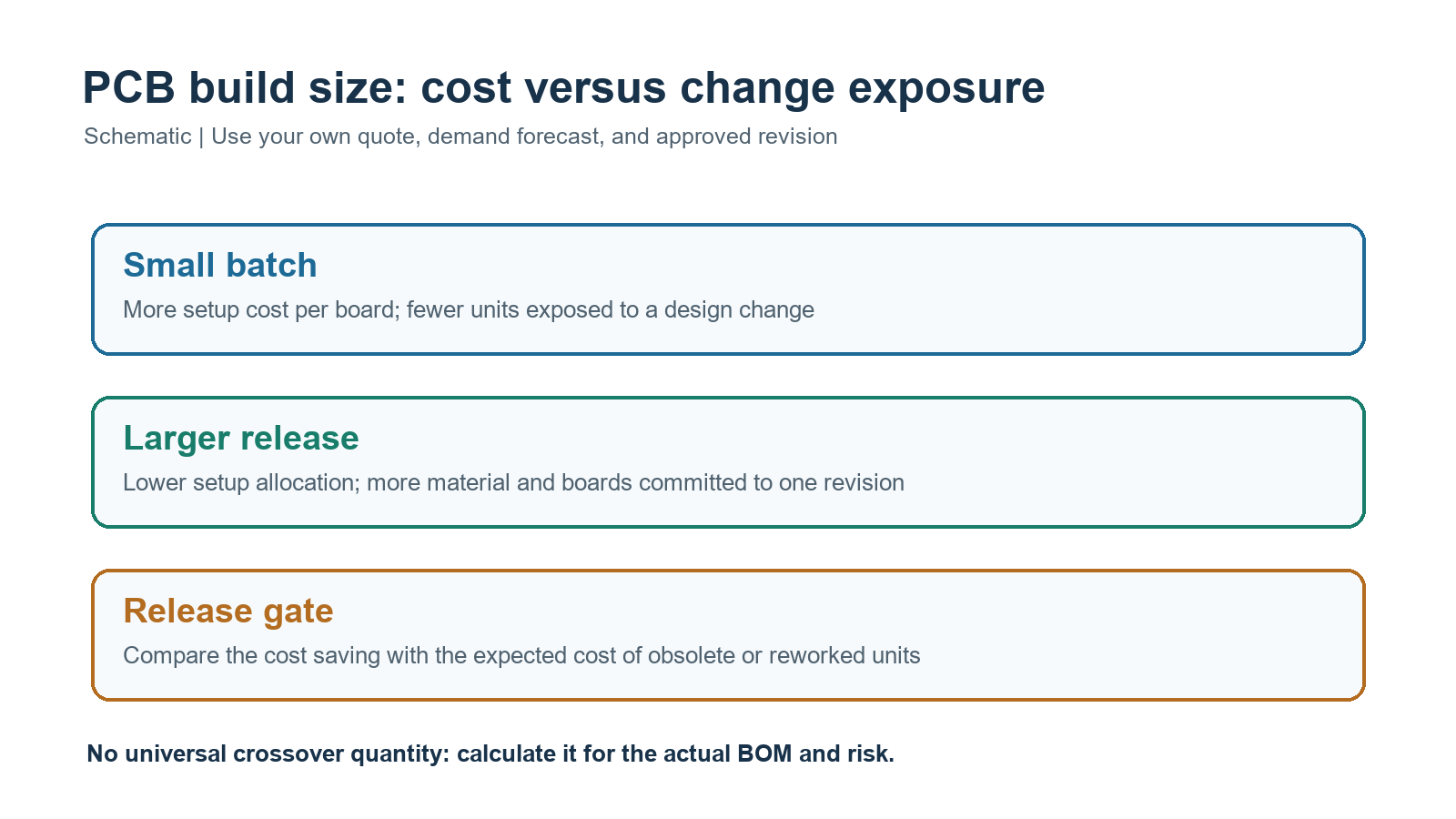
Table of Conent
Table of Conent
Choose a small PCB assembly batch when the design, component list, test limits, or demand forecast may still change. Choose a larger production release when those inputs are controlled and the saving from fewer setups and better material purchasing outweighs the cost of holding or reworking units if a change occurs. Quantity alone does not define the crossover. Compare two real quotes for the same released files, inspection scope, and delivery schedule, then add the cost of inventory and plausible revision exposure. A pilot lot should answer a specific technical or process question before a large purchase order is approved.
This guide is for hardware engineers and buyers deciding how many assemblies to release at once. It treats batch size as a combined engineering, sourcing, and cash commitment. It does not assign a universal “small batch” quantity, a guaranteed unit price, or a supplier capability that has not been quoted for the actual board.
Compare total committed cost, not only the quoted unit price
The lower unit price is not necessarily the lower-cost decision. Setup, fabrication tooling, component price breaks, test fixtures, carrying cost, and revision exposure move differently as quantity grows. Ask each supplier to separate one-time charges from per-unit charges and identify which charges recur on the next release. A quote that combines them into one unit price hides the break-even calculation.
For an illustrative calculation only, assume two quotes for the same approved PCBA: a 100-unit release has a $600 setup charge and $48 variable cost per assembly, while a 500-unit release has a $900 setup charge and $39 variable cost per assembly. The first order commits $5,400; the second commits $20,400. The 500-unit quote has a lower allocated cost per board, but the buyer has committed $15,000 more before demand or design stability is proven. These are invented example inputs, not OrinewPCB prices or market benchmarks. Replace them with actual quotes and include freight, material ownership, test charges, and payment terms.
| Decision input | Small release question | Larger release question | What to compare |
|---|---|---|---|
| Setup and tooling | Will programming, stencil, first article, or fixture charges recur? | Which tools are reusable and who owns them? | Total fixed cost over the expected number of releases, not one quoted lot. |
| Materials | Can the exact approved parts and required attrition be bought for this lot? | Are price breaks worth inventory, shelf-life, and substitution exposure? | Approved BOM cost, purchased quantity, unused material ownership, and shortage risk. |
| Quality and test | Does the lot fund enough first-article and functional evidence? | Can the same test limits, fixture, and traceability work at throughput? | Cost per accepted assembly at the required coverage, not simply placement cost. |
| Change exposure | How many units can be affected before the next review? | What is the disposition cost if a revision or component changes? | Expected rework, scrap, retest, and inventory exposure under an approved scenario. |
The table is a quote-comparison worksheet, not a claim that one model is always cheaper. If the design is still changing, price the next release as an option to learn. If a product is stable and demand is credible, quantify whether repeated setup cost and small material buys exceed the carrying and change risks of a larger lot. Public price bands for unrelated boards cannot answer that question because the BOM, placement mix, panel, test time, and supply terms differ.
Use a pilot lot to retire named risks before increasing the order
A pilot lot earns its cost when it closes specific release questions. List the risks before building: for example, a BGA voiding concern, an unqualified alternate part, a fixture contact problem, or a firmware programming step. Assign each risk an observation, pass rule, owner, and required action if it fails. A pilot that only produces working samples but leaves the production files and acceptance limits unsettled does not justify a larger commitment.
Keep the PCB fabrication output, assembly drawing, centroid or placement file, approved BOM, firmware image, and test revision in one controlled baseline. The prototype-to-production control-board example explains why a working bench unit and a repeatable production release are different forms of evidence. The carton-sealer PCBA pilot example shows how one equipment family can tie revision, fixture, and acceptance limits to a ramp decision. Use those as process examples, not as proof that every product needs the same lot size.
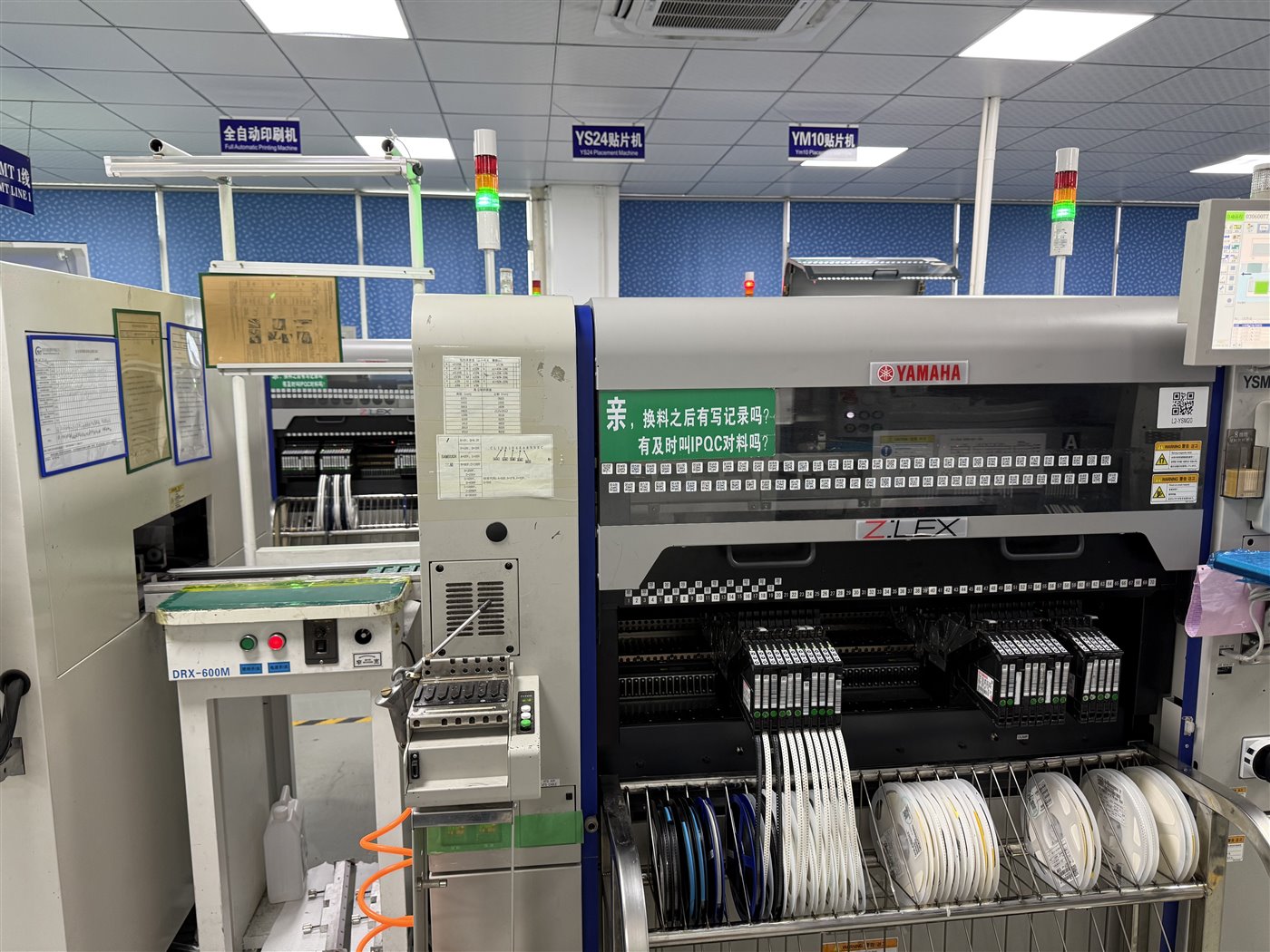
Small releases often give engineering more opportunities to stop and revise, but they still require controlled setup. Confirm what gets preserved between lots: machine program, stencil, fixture, approved substitution list, inspection recipe, and test software. If these items are not controlled, the apparent flexibility of many small orders may create repeated setup work and inconsistent acceptance. If the first pilot identifies a corrective action, record the affected serial or lot range and update the release package before ordering the next batch.
If the pilot scope is ready for manufacturing review, share the controlled fabrication files, BOM, pilot quantity, and proposed test boundary so fabrication, sourcing, assembly setup, and fixture assumptions can be checked together before a larger commitment. The result should identify unresolved release items and a quote scope, not promise an optimal batch size.
Freeze the BOM and material responsibility at the release boundary
A larger lot magnifies a weak component decision. Confirm manufacturer part numbers, approved alternates, package and reel format, sourcing lead time, material ownership, and attrition before committing the quantity. Altium’s procurement checklist identifies incomplete BOM data, component overage, backorders, and price breaks as procurement checkpoints; its advice supports a structured handoff, not any fixed overage percentage for this board.
The assembly partner’s low-volume, high-mix assembly scope is relevant when revisions or variants change often. A buyer should ask whether components will be bought for one lot, reserved for a forecast, or held as customer-owned inventory. Those are commercial terms to confirm in the project quote. If a part has a manufacturer change notice, review the exact affected part and qualification evidence; TI’s product change notification process illustrates the information a component manufacturer can provide for a notifiable change. A distributor suggestion alone is not approval to replace a controlled part.
Scale inspection and test with the failure mode
Increasing quantity should change the evidence plan only when the failure modes and acceptance rules support the change. Visual or automated optical inspection can find specified visible assembly defects; it does not prove firmware behavior or full functional performance. A functional test that worked on a bench may need a repeatable fixture, controlled stimulus, recorded limits, and handling instructions before it can screen a larger release. Keep engineering validation of the product distinct from routine production screening of every assembly.
IPC describes J-STD-001J and IPC-A-610J as standards for soldered assembly processes/materials and post-assembly acceptance, respectively. Specify the applicable revision, class, and contractual requirements rather than citing “IPC compliant” without scope. A test-point design guide helps engineers decide whether critical nets and power rails remain accessible when a fixture replaces manual probing. Test access, fixture time, and fail diagnostics can alter the cost crossover between a few pilot boards and a sustained build.
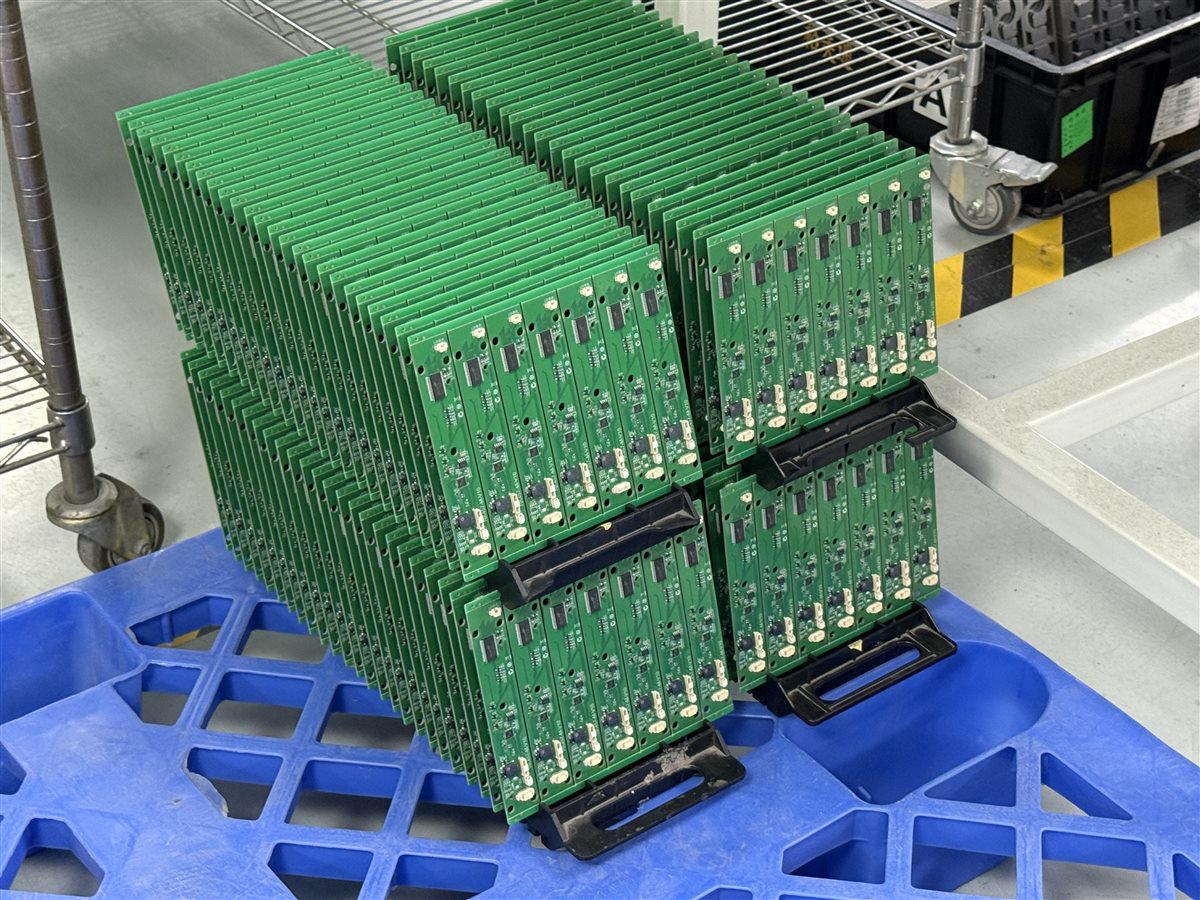
For higher-risk products, define traceability by the investigation the team must be able to perform. If a component lot or process shift fails later, can the affected finished assemblies be identified? IPC-1782 frames manufacturing and supply-chain traceability levels around risk agreed between user and supplier. The right record depth is a product decision; buying a larger lot does not by itself require a particular level. The procurement question is what evidence is needed to isolate and disposition affected units without treating the entire inventory as suspect.
Set a release gate for the next quantity increase
Increase the batch only when a named owner has approved the design baseline, material plan, process evidence, test coverage, and demand case. That gate can be lighter for a stable, simple board or more formal for a complex or regulated device. The principle is the same: a larger purchase order should reference a released configuration, not a draft that engineering expects to revise during production.
| Gate item | Evidence to attach | Hold the larger release when |
|---|---|---|
| Revision and build package | Approved Gerber or ODB++, BOM, placement data, assembly drawing, firmware, and change history | Files disagree on reference designators, polarity, approved parts, or revision. |
| Process and first article | Pilot inspection findings, setup instructions, defect disposition, and corrective action closure | A repeated assembly defect has no controlled corrective action or confirmation run. |
| Functional screen | Fixture revision, stimuli, limits, result format, and escalation path | A passing board depends on undocumented bench judgment or rework. |
| Supply and demand | Approved alternates, material commitment, delivery schedule, and inventory owner | Unused material or a likely design change would exceed the saving from volume pricing. |
The high-volume assembly service scope can be relevant once the product and forecast support a sustained release. Before comparing offers, ask each supplier to quote the same design revision, quantities, delivery splits, inspection criteria, test boundary, and ownership of excess materials. Otherwise, a cheap high-volume unit price may exclude costs carried elsewhere in the program.
Make the batch-size decision from one controlled scenario
Batch size is a release decision, not a label for a factory line. Start with the expected consumption before the next design review. Add a realistic design-change scenario and price the units that could be reworked, retested, or left unused. Then compare the fully scoped small and large quotes. If the larger lot’s savings survive that exposure and the pilot gate passes, increase the release. If they do not, buy the smaller lot and schedule the next decision using what it must prove.
When the project is ready to compare options, provide the fabrication package, BOM, placement data, quantities, delivery splits, and required test records for a joined PCB fabrication, sourcing, assembly, and inspection review. Ask for the fixed and variable costs, excess-material terms, and change-control assumptions to be stated separately, so the purchasing decision can be made against the same approved configuration.
Technical sources accessed October 22, 2026. Example costs are hypothetical. Apply current supplier quotes, component documentation, and product-owner acceptance criteria to the actual assembly.
Latest Blog
Contact Info
Phone: +86-755-82882936
Email: [email protected]
WhatsApp: +86-13570802455
Wechat: +86-13570802455
Address: 2nd floor,D Bldg.,Electric Link Technology Bldg.,Gongming,Guangming New Dist.,518106 Shenzhen, China