
Compare PCB Quotes by Tooling, Test Scope and Delivered Cost
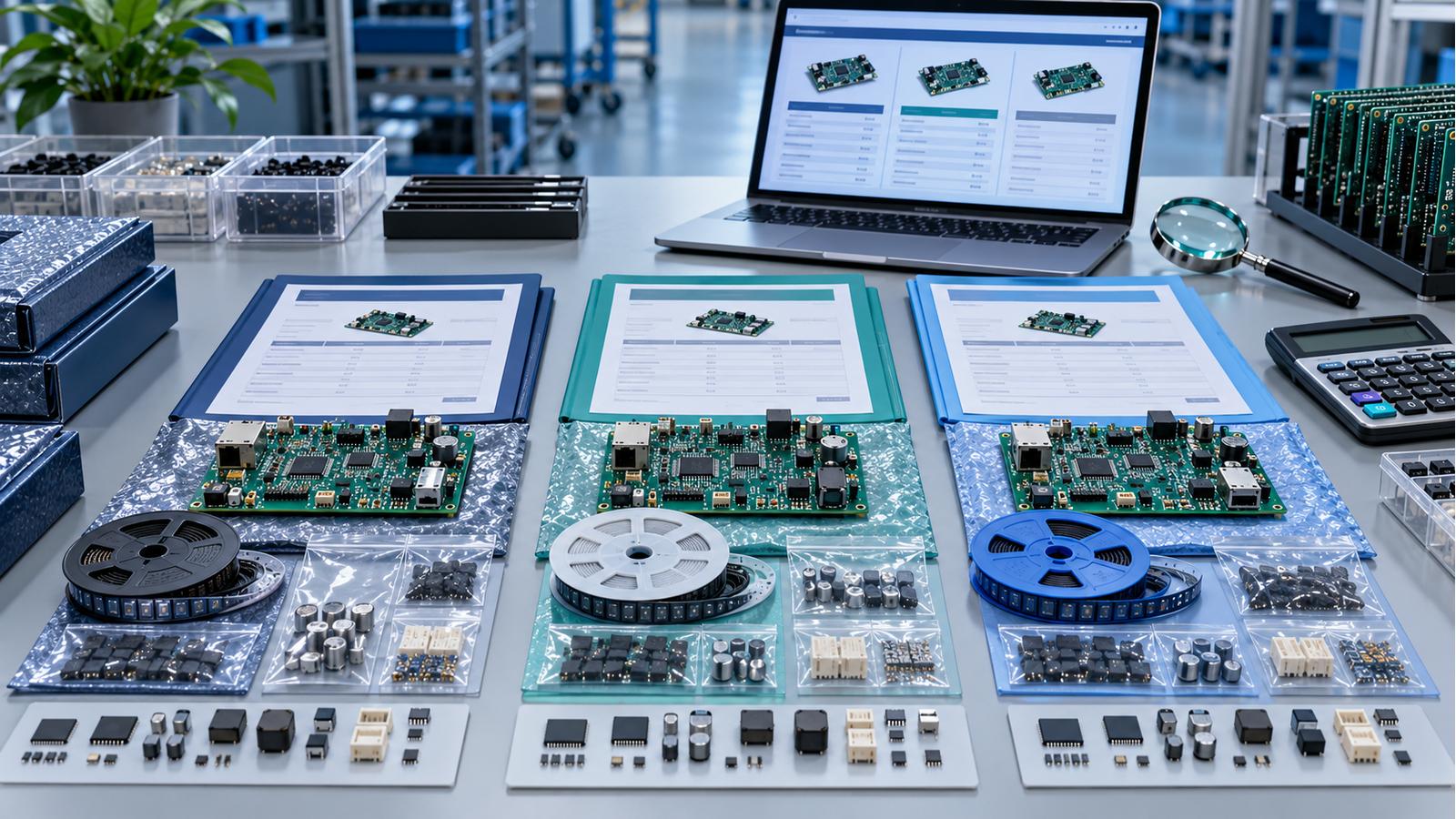
Table of Conent
Table of Conent
To compare PCB assembly quotes accurately, first normalize the scope and then compare total delivered cost, not only the unit price. Every supplier must price the same board revision, BOM, approved alternates, quantity, tooling, inspection, test, packaging, delivery term, and destination. A lower line-item price is not a lower-cost offer if it excludes setup, uses different component assumptions, omits test coverage, or transfers freight and import costs to the buyer.
This guide provides a practical comparison method for OEM engineering and procurement teams. It shows how to separate recurring and non-recurring charges, expose assumptions, price risk, and select the offer that best represents the required build.
Why PCB quotes are often not directly comparable
PCB and PCBA quotations are estimates for a defined scope. When scope differs, the totals answer different questions. One quote may include bare-board fabrication, full component procurement, stencil, SMT and through-hole assembly, X-ray, programming, functional test, packaging, and delivery. Another may price only assembly labor against a customer-supplied kit.
The first comparison task is therefore to identify the commercial boundary of each offer. The PCBA quote breakdown explains the common cost groups. A comparison worksheet should go further by matching each cost group to the same technical and delivery assumptions.
Do not infer inclusion from a zero or blank line. A zero may mean included, not required, customer-supplied, or not evaluated. Ask the supplier to state the basis. Record every clarification in the quote comparison so the final decision remains traceable.

Freeze one RFQ baseline before comparing prices
A quote comparison is valid only when every supplier receives the same controlled input package. Freeze the candidate baseline and issue it with a stable RFQ identifier. The package normally includes:
- Gerber, ODB++, or IPC-2581 fabrication data and NC drill files;
- fabrication drawing, stackup, material, copper, impedance, finish, and inspection requirements;
- controlled BOM with exact manufacturer part numbers, quantities, reference designators, and approved alternates;
- centroid or pick-and-place data, assembly drawing, variant and DNP definition;
- panel, stencil, special-process, cleanliness, coating, hardware, and labeling requirements;
- programming files, procedure, checksum, target hardware revision, and traceability needs;
- inspection and test scope, acceptance criteria, fixture responsibility, and data-reporting requirements;
- build quantity, expected repeat quantity, delivery destination, requested schedule, and delivery term.
Use a revision matrix to confirm that the BOM, centroid file, assembly drawing, and PCB data describe the same product. A supplier should not absorb the risk of reconciling conflicting releases inside a fixed price. If the package is incomplete, request explicit assumptions rather than treating the first number as a firm production price.
Run a manufacturability review before final commercial comparison when feasible. Issues identified in a PCB DFM report can change panel utilization, drill selection, solder-mask clearances, stencil design, process steps, inspection methods, and yield risk. Quotations prepared before those issues are resolved may require later revision.
Build a normalized quote comparison worksheet
The comparison worksheet should preserve each supplier’s original quote and create a separate normalized view. Never overwrite the supplier’s numbers to force alignment. Add adjustment rows that explain how you converted each offer to the common baseline.
| Comparison field | What to normalize | Evidence to request |
|---|---|---|
| Quantity and lot structure | Finished units, panels, spares, first articles, and attrition allowance | Quoted quantity, panel count, and overage policy |
| Bare PCB | Material, layer count, thickness, copper, finish, impedance, test, and certification scope | Fabrication assumptions and exceptions |
| Components | Exact MPNs, approved alternates, source, packaging, MOQ, excess, and consigned items | Priced BOM and sourcing notes |
| Assembly | SMT sides, placements, through-hole, odd-form, hand operations, cleaning, coating, and hardware | Process scope and unit basis |
| NRE and tooling | Stencil, panel fixtures, carriers, programming adapters, test fixtures, setup, and engineering | Ownership, useful life, storage, and repeat-charge policy |
| Inspection and test | AOI, X-ray, electrical test, programming, functional test, sample size, and reports | Method, coverage, limits, and data deliverables |
| Quality and traceability | Lot records, certificates, first-article data, serialization, and special documentation | Included records and retention scope |
| Packaging and logistics | ESD packaging, trays, labels, cartons, freight, insurance, duties, fees, and destination | Named delivery term, place, carrier basis, and exclusions |
| Schedule | Material lead time, fabrication, assembly, test, transit, and approval holds | Assumptions, milestones, and quote validity |
Convert prices to the same currency and state the exchange-rate date if conversion is required. Keep taxes, tariffs, freight, and fees separate when they depend on destination or importer status. Do not apply a generic uplift without documenting its basis.
Separate recurring cost from non-recurring cost
Recurring cost changes with the number of units. Non-recurring engineering and tooling cost is incurred to prepare or validate the process. The split matters because prototype and production quantities amortize NRE differently.
For each offer, calculate at least three comparable totals:
- First-lot total: all recurring charges plus all NRE, tooling, freight, and expected import costs for the quoted lot.
- First-lot unit equivalent: first-lot total divided by accepted units, with scrap or overage assumptions stated.
- Repeat-lot total: recurring charges plus any recurring setup, storage, maintenance, freight, and test charges that remain after the initial tooling exists.
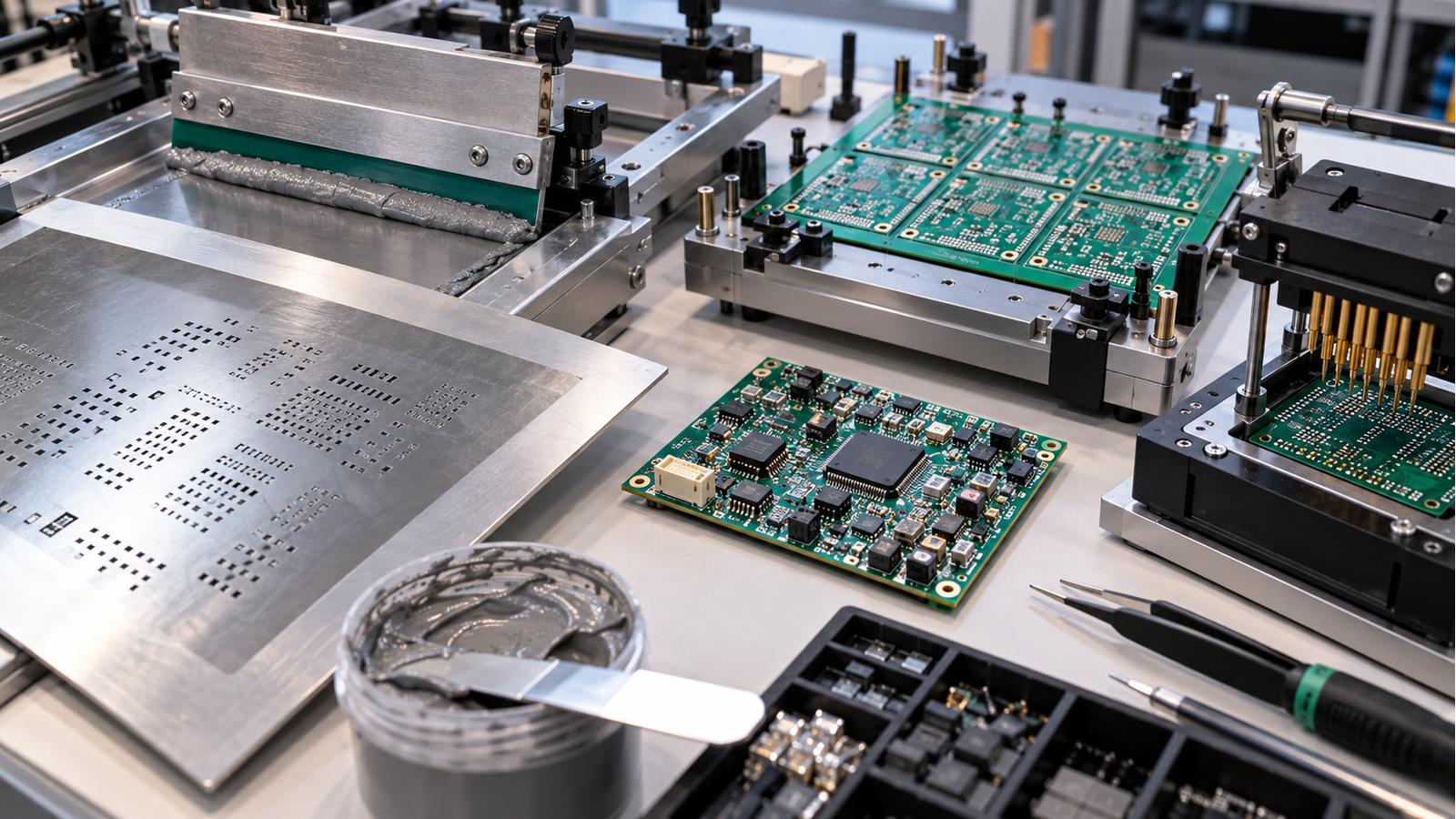
Do not assume a stencil, pallet, or functional fixture will be free on the next order. Clarify ownership, storage duration, revision compatibility, maintenance, and transfer rights. If one supplier amortizes tooling into unit price while another lists it separately, reconstruct both offers on the same basis.
Tooling may be technically different even when the labels match. A laser-cut stencil, stepped stencil, selective-solder pallet, programming adapter, simple cable harness, and automated functional fixture serve different purposes. Ask what is physically delivered and which revision it supports.
Compare component cost by exact sourcing assumption
Component cost often dominates a turnkey PCBA quote, but the lowest BOM total may reflect a different source, package, lead time, or substitute part. Compare the exact manufacturer part number and approved alternate for every material item that affects cost or risk.
Separate customer-supplied, supplier-procured, and no-bid items. Identify minimum order quantities, reel multiples, cut-tape charges, attrition, excess-material ownership, and the treatment of unused inventory. A unit price that excludes unavoidable MOQ purchases can understate the first-lot cash requirement.
Apply engineering control to alternates. The BOM alternate approval workflow describes how to check package, ratings, tolerances, lifecycle, and application-specific behavior before release. A commercial equivalence is not automatically a technical equivalence.
For high-risk or expensive parts, ask for source traceability and identify whether authorized distribution is required. If broker sourcing is allowed, document the approval, inspection, and test plan. Compare that risk separately instead of hiding it inside a weighted price score.
Compare assembly charges by process content
Assembly labor and machine charges depend on the actual process route. Placement count alone does not capture fine pitch, bottom-terminated packages, large thermal pads, mixed technology, odd-form insertion, hand soldering, press-fit, secondary operations, coating, wiring, hardware, or cleaning.
Record whether the price includes incoming material verification, solder-paste printing, SPI, placement, reflow, AOI, X-ray, through-hole processing, touch-up, depanelization, cleaning, final inspection, labeling, and packing. A line named “assembly” can cover very different operations.
Compare panel assumptions as well. Panel count, rails, fiducials, tooling holes, breakaways, array orientation, and units per panel affect handling and machine time. If suppliers propose different panels, evaluate fabrication yield, assembly stability, depanelization risk, and usable unit count before accepting the lower apparent price.
For buyers evaluating a single-source model, the PCB turnkey assembly service scope provides a commercial reference for combining PCB fabrication, component sourcing, and assembly. The comparison still needs to state which inspection, test, logistics, and documentation items are included in the specific offer.
When your baseline package is ready, you can share the Gerber data, controlled BOM, placement files, quantities, and test assumptions for a scope review. The response should confirm the priced boundary and identify inputs that could change fabrication, sourcing, assembly, or test cost.
Compare inspection and test as defined coverage
Testing should be compared by method, coverage, sample size, acceptance limits, and evidence—not by the presence of the word “test.” AOI, X-ray, in-circuit test, flying probe, programming verification, boundary scan, and functional test address different failure mechanisms.
For every test line, record:
- who provides the fixture, cables, software, golden unit, and procedure;
- whether coverage is 100 percent or sampled;
- which nodes, functions, operating modes, or interfaces are exercised;
- the limits, revision, equipment, calibration, and cycle-time assumptions;
- what happens after a failure, including retest and troubleshooting boundaries;
- which raw results, summaries, serial-number records, or certificates are delivered.
The PCBA testing guide explains the roles of common inspection and test methods. Use it to confirm that a proposed lower-cost scope still addresses the defect and performance risks that matter to the product.
A supplier may reasonably charge more for a test that needs fixture design, instrument control, traceable logging, long cycle time, or engineering troubleshooting. Compare that cost with the value of earlier defect containment and usable evidence. Do not award points for a vague test line that has no agreed procedure or acceptance criteria.
Calculate delivered cost and define the delivery term
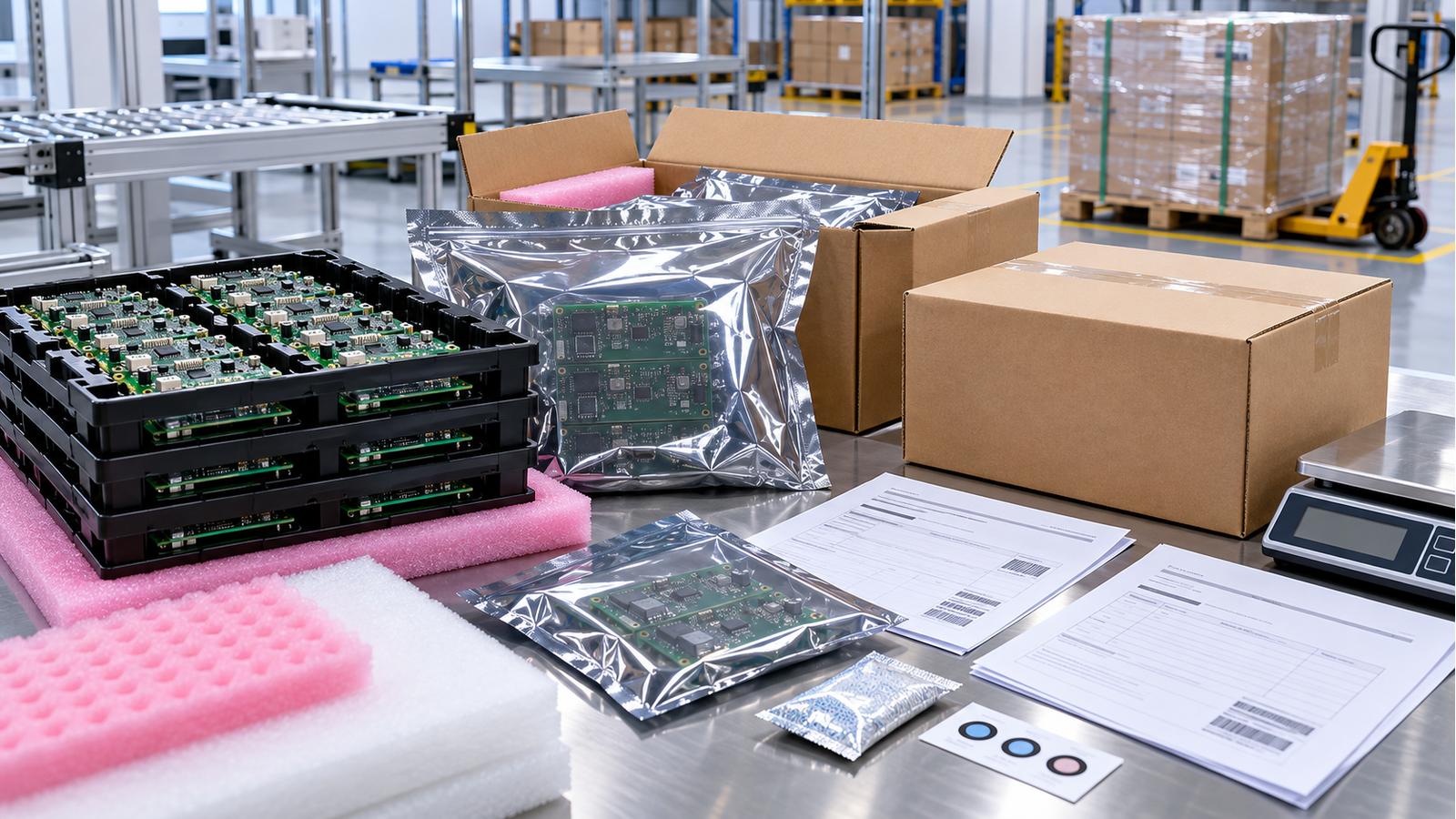
Delivered cost includes the commercial consequences of moving accepted assemblies to the named destination. Packaging, freight, insurance, customs clearance, duties, taxes, user fees, brokerage, and handling can sit with different parties depending on the contract and shipment.
ICC Incoterms® 2020 guidance explains that the selected rule allocates costs, risks, and obligations between seller and buyer. Record the rule, version, and precise named place or port. A three-letter term without a named place is not enough for a dependable comparison.
For U.S. imports, U.S. Customs and Border Protection notes that duties and other fees can apply based on the goods and entry. Classification, origin, importer status, mode, and current trade measures can affect the actual amount. Use a qualified customs professional for the transaction rather than assuming one universal percentage.
Normalize each quotation to the same destination and delivery responsibility. Include expected packaging, pickup, origin charges, main carriage, insurance, clearance, duties and fees, domestic delivery, and any expedited service required by the schedule.
Price schedule and risk without inventing precision
A quote with a shorter stated lead time is not automatically the faster executable plan. Compare the schedule from the same start condition: complete files, approved DFM answers, material authorization, deposit or purchase order, and availability of consigned items.
Break the schedule into material procurement, PCB fabrication, tooling, assembly, programming, test, approvals, and transit. Identify which stages can run in parallel and which dates depend on customer responses. Record the quotation validity period and any components whose price or lead time must be reconfirmed.
Use a separate risk register instead of hiding uncertainty inside a subjective score. Typical risks include sole-source parts, unapproved alternates, incomplete test procedures, immature fixtures, incomplete mechanical data, uncertain tariff treatment, aggressive panel assumptions, or unresolved DFM issues. Assign an owner and decision date to each risk.
NIST supplier-selection guidance cautions against focusing only on price when the total cost of ownership may be higher. For a PCB program, total cost can include engineering time, schedule disruption, excess inventory, rework, failed tests, logistics, and the cost of changing suppliers.
Use a decision gate, not a hidden weighted score
A weighted score can be useful, but it should not allow a severe technical or commercial gap to disappear behind a low price. Apply pass/fail gates before scoring. Examples include:
- the supplier priced the released revision and required quantity;
- all critical BOM items have an approved source or documented exception;
- fabrication, assembly, inspection, and test scope meet the baseline;
- delivery responsibility and destination are defined;
- material, tooling, and excess-inventory ownership are understood;
- deviations, exclusions, and schedule dependencies are accepted by the responsible owners.
After the gates pass, score the remaining tradeoffs: normalized first-lot total, repeat-lot economics, schedule confidence, technical response quality, sourcing risk, test coverage, documentation, and commercial terms. Keep the evidence beside each score.
A practical PCB quote comparison sequence
- Release one RFQ baseline. Use the same controlled files, quantity, destination, and requirements.
- Preserve original offers. Build adjustments in a separate normalized worksheet.
- Map inclusions and exclusions. Resolve every blank, allowance, and customer-supplied item.
- Separate recurring and non-recurring charges. Calculate first-lot and repeat-lot views.
- Reconcile the priced BOM. Check MPNs, sources, alternates, MOQ, attrition, and excess ownership.
- Compare the process route. Include panel assumptions, special operations, inspection, and documentation.
- Compare test coverage. Match method, fixture, software, limits, sample size, and reports.
- Normalize delivery. Use the same currency, destination, delivery term, freight, and import assumptions.
- Gate technical and commercial compliance. Do not let price offset a blocking scope gap.
- Document the award basis. Save clarifications, assumptions, risks, approvals, and the final as-ordered scope.
Frequently asked questions
Should NRE be divided by the quoted quantity?
Calculate a first-lot unit equivalent for comparison, but keep NRE visible as a separate charge. Also calculate repeat-lot cost because tooling and setup may not recur in the same way.
How should free-issue components be handled?
Show their purchase cost and risk separately even when they do not appear in the supplier total. Include shipping, incoming verification, shortages, attrition, handling, and the responsibility for damaged or missing parts.
Is the lowest delivered cost always the best choice?
No. The selected supplier must first meet the technical, quality, schedule, documentation, and commercial gates. Delivered cost is one decision input after scope is normalized.
Can two suppliers use different Incoterms?
Yes, but procurement should normalize the resulting costs and responsibilities to the same destination. Record the exact Incoterms rule, version, and named place for each offer.
What should be saved after supplier selection?
Retain the RFQ baseline, original quotations, clarifications, normalized comparison, approved alternates, risk register, award decision, purchase order, and final released scope. These records support later change control and repeat-order comparison.
Compare the offer you will actually execute
A reliable PCB quote comparison uses one controlled baseline and a transparent total-cost model. Normalize quantity, fabrication, components, assembly, NRE, tooling, inspection, test, packaging, logistics, and commercial responsibility. Then apply technical and commercial gates before weighing price, schedule, and supplier risk.
For a comparable project quotation, provide the released fabrication and assembly package, approved sourcing rules, test requirements, quantities, destination, and delivery expectations. The resulting review can identify scope gaps before they become change orders, material holds, or schedule surprises.
Latest Blog



Contact Info
Phone: +86-755-82882936
Email: [email protected]
WhatsApp: +86-13570802455
Wechat: +86-13570802455
Address: 2nd floor,D Bldg.,Electric Link Technology Bldg.,Gongming,Guangming New Dist.,518106 Shenzhen, China