
IPC-6012 Class 2: What a Ribbon-Tension PCB Build Requires
Table of Conent
Table of Conent
An IPC-6012 Class 2 callout for a ribbon-tension control board should define the rigid-board performance class, standard revision, board type, materials, stackup, copper, finish, special features, inspection, coupons, electrical test, and allowable deviations. The class alone is not a complete fabrication specification, and it does not automatically define assembly workmanship. For a production build, the fabrication drawing and purchase order must translate the controller’s motor-current, sensor, connector, mechanical, and service requirements into a controlled set of deliverables.
This distinction prevents two common failures: assuming “Class 2” resolves every technical choice, or receiving quotations based on different interpretations. A supplier can only build and verify the intended board when the customer names the applicable documents and provides product-specific requirements that those documents leave to agreement between user and supplier.
Understand what IPC-6012 Class 2 covers
IPC-6012 is the qualification and performance specification for rigid printed boards. IPC’s description of IPC-6012F says it applies to finished rigid-board constructions including single- and double-sided boards, multilayers with plated-through holes, boards with buried or blind vias and microvias, embedded circuitry, and metal-core constructions. It establishes acceptance criteria for performance classes defined through IPC-6011 and recognizes board Types 1 through 6.
Class 2 is therefore a bare-board performance classification selected from customer and end-use requirements. It controls applicable fabrication and acceptance requirements, but it does not select the laminate, finished thickness, copper weights, surface finish, impedance targets, hole tolerances, or special testing for a specific product. Those decisions still belong in the controlled design and procurement package.
IPC-A-600 provides visual interpretations of externally and internally observable printed-board conditions. IPC states that it is used with the IPC-6010 performance specifications and the IPC-2220 design series. Treat these documents as a coordinated system: design requirements guide the layout, IPC-6012 sets rigid-board performance requirements, and IPC-A-600 helps interpret observable acceptance conditions. Always specify the contractual revision rather than writing only “latest IPC.”
Do not confuse bare-board and assembly requirements
IPC-6012 applies to rigid printed-board fabrication. It does not by itself define solder paste, component placement, reflow, hand soldering, cable installation, or completed assembly acceptability. Those activities require the applicable assembly documents and customer requirements, commonly including J-STD-001 for soldered assemblies and IPC-A-610 for assembly acceptance when contractually specified.
A purchase order that says only “PCB assembly to IPC Class 2” is ambiguous. State separately what applies to the bare board and what applies to the assembled PCBA. Include revision levels, exceptions, customer drawings, workmanship class, test coverage, cleanliness requirements, marking, packaging, and any product-specific acceptance criteria. The PCB assembly drawing checklist is useful for keeping these assembly instructions aligned with the BOM, placement data, and approved variants.
Translate ribbon-tension functions into board requirements
A ribbon-tension controller typically combines motor or actuator drive, position or tension sensing, communications, and low-voltage digital control. The electrical and mechanical risks are not identical across the board. Motor startup and stall current challenge copper paths, vias, connectors, and thermal spreading. Sensor channels can be sensitive to noise, leakage, reference stability, and return-current routing. Connectors and mounting points see cable loads and machine vibration.
Document the maximum continuous and peak currents, duty cycle, allowable copper temperature rise, supply transients, connector pin assignments, sensor types, grounding strategy, and mechanical environment. Use those inputs to select copper weight, conductor geometry, via structures, layer count, dielectric spacing, and connector land patterns. If the power stage needs heavier copper, evaluate the design and fabrication tradeoffs described for a thick-copper PCB rather than assuming Class 2 establishes the current capacity.
Finished board thickness also affects connector fit, stiffness, routing, impedance, and panel yield. Define the nominal value and tolerance from the mechanical and electrical requirements. A general PCB thickness selection review can help expose enclosure, edge-connector, and depaneling constraints before the stackup is released.
Specify the standard, revision, class, and board type
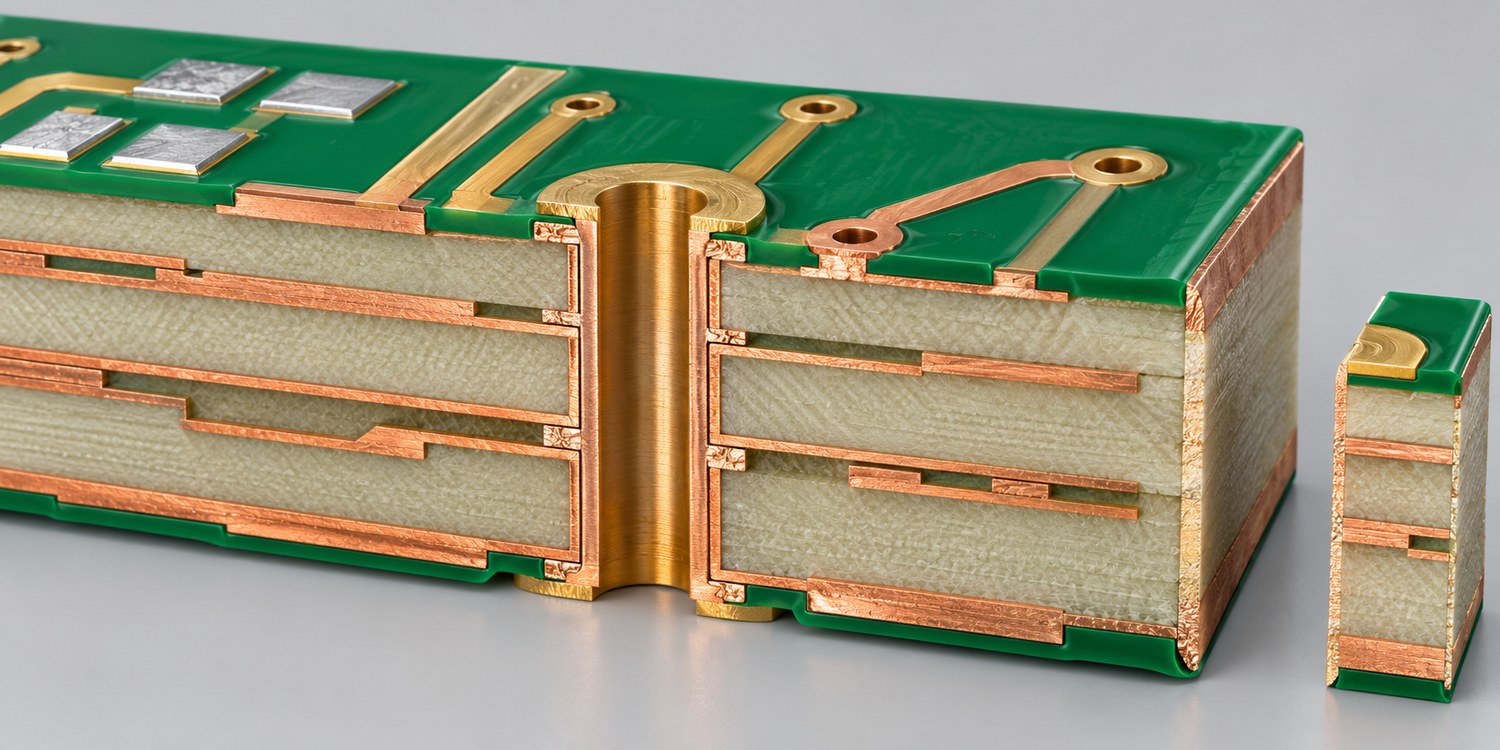
The fabrication drawing and purchase order should identify the governing IPC-6012 revision, Performance Class 2, and the correct printed-board type. A conventional multilayer board with plated-through holes and no blind or buried vias is different from a design that uses those structures. Do not rely on the supplier to infer the type from marketing language or a partial PDF plot.
Also state whether any addendum applies. Automotive, medical, military, or space requirements are not automatically activated by selecting Class 2. If a customer specification, addendum, regulatory requirement, or approved deviation changes the base requirement, name it explicitly and define document precedence. IPC-6012 recognizes that deviations from the general performance classifications can be agreed between user and supplier.
When the class, construction, and risk assumptions are stable, send the Gerbers or ODB++, fabrication drawing, stackup, drill data, netlist, BOM, placement files, quantities, and inspection requirements for a coordinated PCB and assembly review. This gives the fabricator and assembler one controlled package for checking manufacturability, materials, test access, sourcing, and build scope.
Define materials, stackup, copper, and finish
Specify laminate performance requirements that matter to the product, such as Tg, decomposition behavior, z-axis expansion, dielectric properties, flammability requirements, and compatibility with the assembly thermal profile. Do not substitute a trade name for a performance definition unless the exact material is required. If equivalents are allowed, define the approval process and the data needed to demonstrate equivalence.
The stackup should state layer order, copper weights, dielectric thicknesses or finished dielectric targets, finished board thickness, and any controlled-impedance constructions. Identify plane connections, copper balancing concerns, resin requirements for dense copper areas, and whether impedance coupons and reports are required. The released stackup must match the layout assumptions; a quotation stackup should not silently replace the design basis.
Define the surface finish, solder mask, legend, edge plating, castellations, press-fit holes, via plugging or filling, and other special features. Include tolerances that affect connectors, mounting, sensors, and the ribbon-tension mechanism. Avoid copying a long generic note block that conflicts with the actual data. A focused PCB DFM report should identify conflicts among the Gerbers, drill files, stackup, drawing, and supplier process rules before production release.
Plan coupons, inspection, and lot verification
Class 2 procurement should define the verification evidence needed for the product and lot. IPC’s printed-board resources describe test coupons used to assess registration, structural integrity, surface insulation resistance, solderability, and peel strength. The applicable coupon design, panel location, sampling, test method, and report requirement must match the construction and contract.
Electrical test should use the released netlist and identify the method and coverage expected. Define how opens, shorts, isolation, and continuity are evaluated, and whether the customer needs serialized reports. For controlled impedance, specify traces, layers, target values, tolerances, coupon construction, measurement method, and report content. Visual inspection alone cannot verify internal copper, plating, dielectric, or registration conditions.
Microsection requirements should state the features and acceptance purpose. Representative plated-through holes, high-aspect-ratio structures, blind or buried features, or other critical constructions may need evaluation. Document sample selection, cross-section location, preparation, measurement, and record retention. The full acceptance criteria belong in the purchased IPC standard and contract; do not replace them with unverified values copied from a supplier blog.

Control documentation and allowable deviations
A complete fabrication package should contain the fabrication data, drill and route files, netlist, stackup, drawing, controlled notes, material requirements, finish, tolerances, marking, panelization expectations, coupon requirements, inspection and test records, packaging, and revision identifier. The supplier should have a clear path for questions and proposed deviations before material is ordered or panels are released.
Use an approval record for any substitution or deviation. It should identify the affected requirement, proposed change, technical basis, risk, validation needed, authorized approver, and the lots or revisions covered. Verbal approval is difficult to trace and can create inconsistency between prototype and production.
Traceability should connect incoming laminate and copper records, traveler information, inspection results, electrical-test output, coupon or microsection evidence, certificates, and shipment identifiers to the delivered lot. Define the retention period and the records that must accompany the shipment rather than requesting an undefined “full quality report.”
For comparison between suppliers, normalize the same stackup, materials, test coverage, coupons, reports, panel assumptions, and delivery terms. Otherwise, a lower price may reflect a narrower verification package. The method used to compare PCB quotes by test scope and delivered cost applies directly to Class 2 sourcing.
Verify the assembled ribbon-tension controller
Bare-board conformance is necessary, but system performance still depends on assembly and functional validation. Inspect the completed PCBA to the contractually specified assembly criteria, then verify programming, power rails, motor-driver current, sensor inputs, communications, fault outputs, and recovery behavior. Use representative loads and the correct ribbon mechanism or a characterized simulator.
High-current paths should be measured under startup, acceleration, steady tension, and controlled stall conditions. Sensor channels should be checked over their input range and with motor switching active. Confirm that mounting, connectors, and cable routing do not introduce strain or intermittent contact. The newly published guide to thermal transfer printer control-board reliability tests provides a framework for turning these risks into validation and production-test evidence.
Class 2 should not be treated as a promise that every assembled product will meet its lifetime or application requirements. Reliability depends on design margin, materials, fabrication, assembly, component selection, firmware, mechanics, environment, and test. Qualification and lot acceptance need to be aligned with the actual failure mechanisms.
Procurement checklist for a Class 2 build
- State the IPC-6012 revision, Performance Class 2, and printed-board type.
- Name the applicable design, bare-board acceptance, assembly, and customer documents separately.
- Define document precedence, addenda, exceptions, and the deviation-approval process.
- Release the stackup, materials, copper, finished thickness, finish, solder mask, legend, and special features.
- Identify critical current paths, sensors, connectors, mechanical interfaces, and controlled-impedance needs.
- Define coupons, electrical test, inspection, microsections, reports, sampling, traceability, and record retention.
- Keep Gerbers or ODB++, drill data, netlist, fabrication drawing, BOM, and placement data at the same revision.
- Specify PCBA workmanship, programming, functional test, cleanliness, packaging, and acceptance separately.
- Require written approval before material, construction, or acceptance requirements change.
Conclusion
An IPC-6012 Class 2 ribbon-tension PCB build succeeds when the class is one part of a complete, controlled specification. Define the revision, board type, construction, material and dimensional needs, verification evidence, assembly requirements, and product-specific tests. That package lets the supplier quote the same scope, build the intended board, and provide evidence tied to the actual design.
For a one-stop PCBA review, provide the controlled fabrication package, BOM, placement data, operating-current profile, ribbon-tension interfaces, build quantity, and required inspection and functional-test records. OrinewPCB can then evaluate fabrication, component sourcing, assembly, programming, and test as one coordinated production scope.
References
Latest Blog


Contact Info
Phone: +86-755-82882936
Email: [email protected]
WhatsApp: +86-13570802455
Wechat: +86-13570802455
Address: 2nd floor,D Bldg.,Electric Link Technology Bldg.,Gongming,Guangming New Dist.,518106 Shenzhen, China